
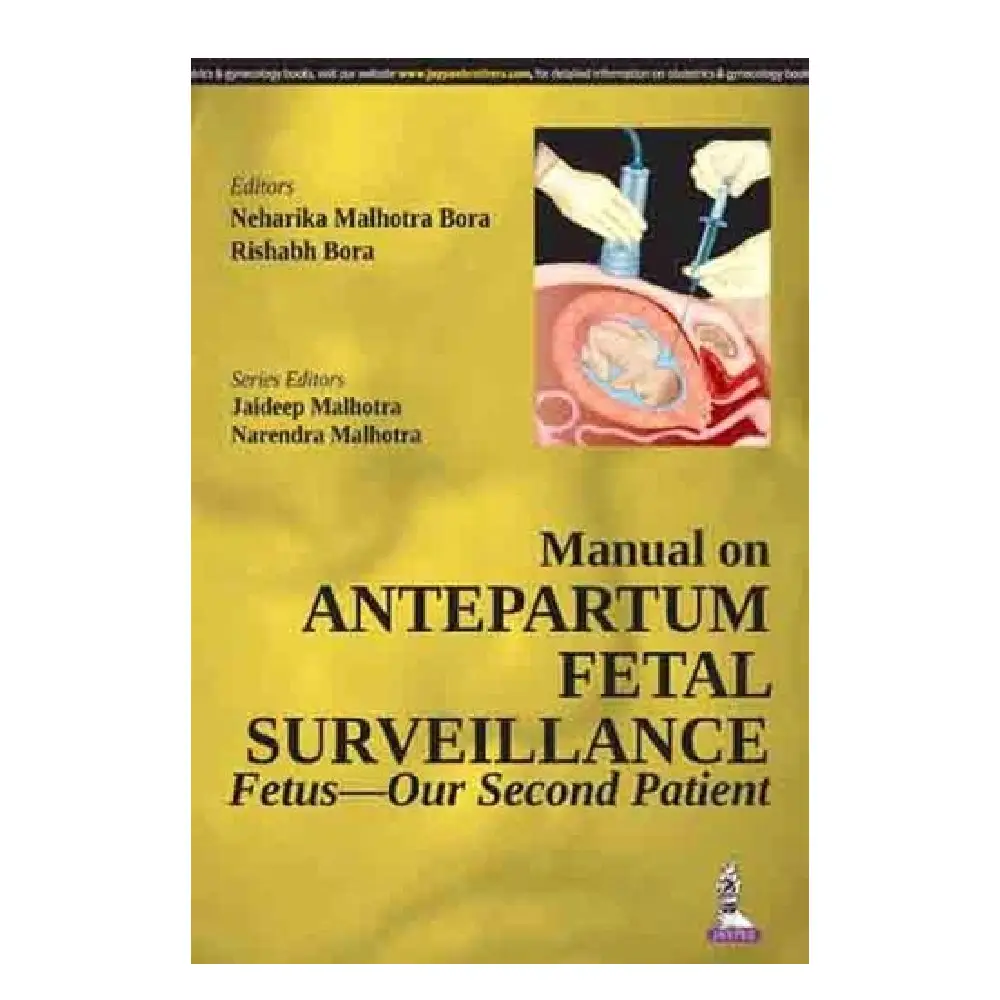


Manual on Antepartum Fetal Surveillance: Fetus – Our Second Patient
Manual on Antepartum Fetal Surveillance: Fetus – Our Second Patient is a clinically focused guide dedicated to the principles and practice of monitoring fetal wellbeing during pregnancy. Designed for obstetricians, postgraduate trainees, residents, and practicing clinicians, this manual emphasizes the concept of the fetus as a “second patient,” underscoring the responsibility of healthcare providers to assess, interpret, and respond appropriately to signs of fetal compromise before the onset of labor.
The book provides a comprehensive overview of the physiological basis of fetal surveillance. It begins by explaining fetal oxygenation, placental function, and fetal adaptive mechanisms in response to hypoxia. Understanding these physiological foundations enables clinicians to interpret surveillance tests accurately and distinguish between reassuring and non-reassuring findings. The manual highlights how fetal hypoxia evolves, the compensatory mechanisms involved, and when these mechanisms fail, leading to acidemia and potential adverse outcomes.
A major portion of the manual is devoted to commonly used antepartum surveillance tools. These include:
-
Daily fetal movement count (DFMC): Its role as a simple, cost-effective screening tool is discussed, along with practical instructions for patient education and interpretation.
-
Non-stress test (NST): The book explains the principles behind fetal heart rate accelerations, criteria for reactive and non-reactive NSTs, and causes of false-positive results.
-
Biophysical profile (BPP): Detailed coverage is given to the components—fetal breathing movements, gross body movements, fetal tone, amniotic fluid volume, and NST. The scoring system and clinical implications of each score are clearly outlined.
-
Modified biophysical profile: Its advantages in busy clinical settings are discussed.
-
Doppler velocimetry: Special attention is given to umbilical artery, middle cerebral artery, and ductus venosus Doppler studies. The manual explains waveform interpretation and their significance in high-risk pregnancies such as intrauterine growth restriction (IUGR), preeclampsia, and multiple gestations.
The book strongly focuses on high-risk pregnancies. It provides evidence-based surveillance protocols for conditions such as gestational diabetes mellitus, hypertensive disorders of pregnancy, fetal growth restriction, postdated pregnancy, Rh isoimmunization, and decreased fetal movements. Clear algorithms help clinicians decide when to continue observation and when to intervene.
One of the strengths of this manual is its practical orientation. It includes flowcharts, tables, and case-based discussions to bridge theory and real-world practice. Readers are guided on:
-
Frequency of surveillance in different risk categories
-
Interpretation pitfalls
-
Timing of delivery in compromised fetuses
-
Counseling patients regarding test results
The text also addresses medico-legal aspects of fetal surveillance, documentation standards, and communication strategies with expectant mothers and families. Emphasis is placed on individualized care rather than rigid protocols, encouraging clinicians to integrate clinical judgment with test findings.
Importantly, the manual discusses the limitations of antepartum tests. It cautions that no surveillance method guarantees prevention of stillbirth and that clinical correlation is always necessary. False reassurance and unnecessary interventions are both addressed, helping practitioners strike a balance between vigilance and over-management.
The writing style is concise yet clinically rich, making it suitable as both a quick-reference handbook and a deeper academic resource. Illustrations of cardiotocography (CTG) tracings and Doppler waveforms enhance understanding. Practical tips and summary boxes at the end of chapters facilitate revision for postgraduate examinations.
Overall, Manual on Antepartum Fetal Surveillance: Fetus – Our Second Patient serves as a valuable resource in modern obstetrics, where timely recognition of fetal compromise can significantly improve perinatal outcomes. By treating the fetus as an independent patient requiring systematic assessment, the book reinforces a proactive approach to antenatal care. It is particularly useful in tertiary care centers managing high-risk pregnancies, but its principles are equally applicable in routine obstetric practice.
If you would like, I can also provide structured product details (Author, Edition, Publisher, Year, ISBN, Print Length, Category) in the same format as your previous requests.






Reviews
There are no reviews yet