
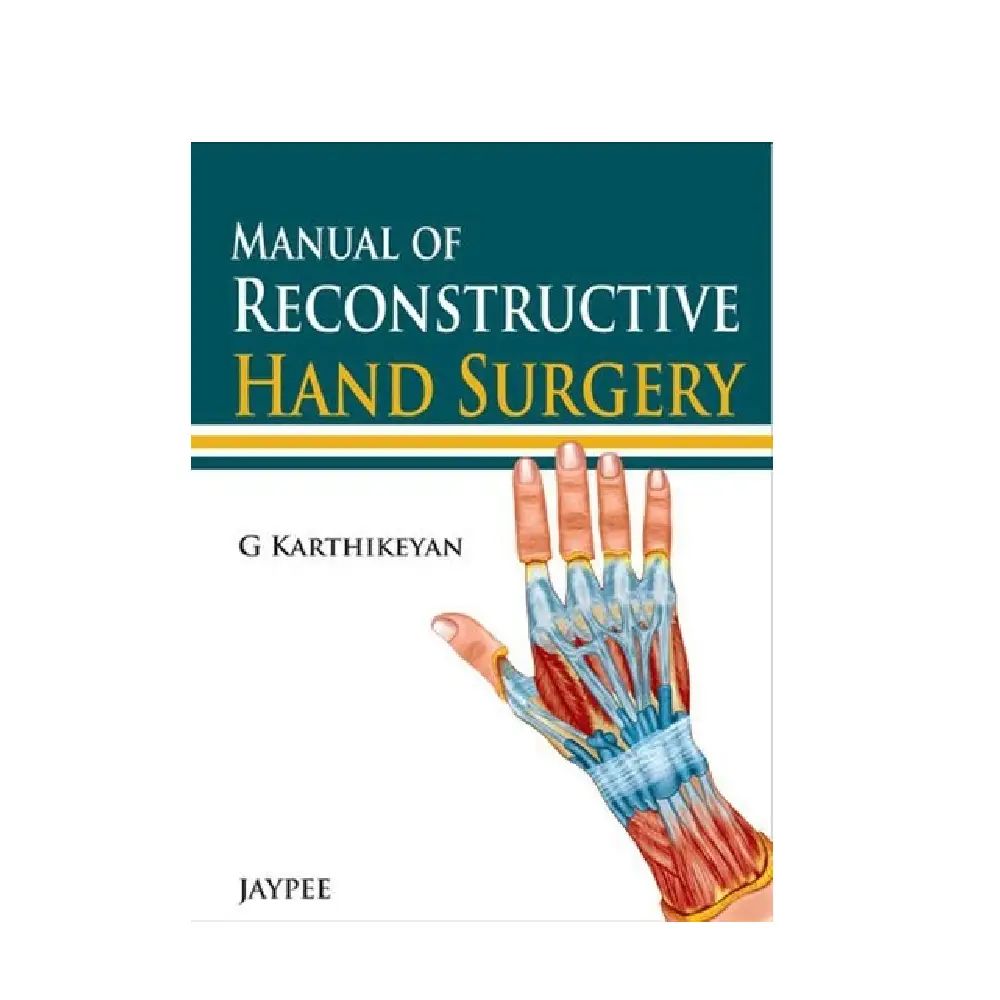


Manual of Reconstructive Hand Surgery
The human hand is an intricate structure combining bones, joints, muscles, tendons, ligaments, nerves, and blood vessels, allowing for fine motor skills, strength, and dexterity. Reconstructive hand surgery is a specialized branch of orthopaedics and plastic surgery focused on restoring both function and aesthetics to the hand after trauma, congenital anomalies, tumors, infections, or degenerative conditions. Mastery of anatomy, biomechanics, surgical techniques, and postoperative rehabilitation is critical for optimizing outcomes in this delicate region.
Anatomical and Functional Overview
The hand consists of 27 bones: 8 carpal bones in the wrist, 5 metacarpals, and 14 phalanges. These bones form complex joints stabilized by ligaments and controlled by extrinsic and intrinsic muscles. Extrinsic muscles, originating from the forearm, facilitate gross movements, whereas intrinsic muscles, such as the lumbricals and interossei, enable fine motor control. Tendons transmit forces from muscles to bones, and the intricate digital nerve network provides tactile sensation and proprioception. Blood supply is primarily via the radial and ulnar arteries, forming superficial and deep palmar arches, critical for tissue viability in reconstructive procedures.
Principles of Reconstructive Surgery
Reconstructive hand surgery follows several guiding principles: restoration of function, preservation of sensation and vascularity, maintenance of joint mobility, minimization of scarring, and consideration of cosmetic outcomes. Surgeons aim to restore the pre-injury or pre-disease hand function while preventing secondary deformities such as contractures, stiffness, or joint instability.
A foundational concept is the “reconstructive ladder,” which advocates escalating intervention from the simplest technique to more complex procedures. Simple methods include wound care, skin grafting, and tendon repair. If these are insufficient, local or regional flaps, free tissue transfers, and microsurgical techniques may be employed. Microsurgery allows vascularized tissue transfer, enabling reconstruction of extensive defects while preserving both form and function.
Common Indications for Surgery
Trauma is the most frequent indication, including fractures, tendon lacerations, crush injuries, and amputations. Early assessment involves careful evaluation of vascular status, nerve function, tendon integrity, and skeletal alignment. Open fractures require meticulous debridement and stabilization. Tendon injuries necessitate precise repair and tension adjustment to restore flexion and extension without impairing range of motion.
Congenital hand anomalies, such as syndactyly, polydactyly, and cleft hand, require reconstructive procedures to optimize both function and aesthetics. Syndactyly release, for instance, involves careful separation of fused digits with interposing skin flaps and grafts to prevent contracture and maintain webspace depth.
Tumors and infections can necessitate excision with reconstruction. Benign tumors such as ganglion cysts may require simple excision, while malignant lesions often demand wide excision followed by soft tissue reconstruction using local or free flaps. Infective conditions like chronic osteomyelitis require eradication of infection, skeletal stabilization, and soft tissue coverage to restore hand integrity.
Surgical Techniques
Reconstructive techniques are selected based on defect size, location, tissue availability, and functional requirements. Common procedures include:
-
Tendon Repair and Grafting: Flexor and extensor tendon injuries are repaired with fine, non-absorbable sutures. In cases of tendon loss, autologous tendon grafts (e.g., palmaris longus) can restore continuity. Postoperative immobilization and early controlled mobilization are crucial to prevent adhesions.
-
Nerve Repair and Grafting: Digital nerve lacerations are repaired using microsurgical techniques. Nerve autografts, such as sural nerve segments, may bridge gaps, promoting sensory recovery.
-
Fracture Fixation: Hand fractures require precise reduction and stable fixation, often with mini-plates, screws, or K-wires. Maintaining alignment and joint congruity is essential for functional recovery.
-
Skin and Soft Tissue Coverage: Local flaps, such as cross-finger or thenar flaps, are used for small defects. Larger or more complex wounds may require regional flaps (radial forearm flap) or free flaps (anterolateral thigh flap) with microvascular anastomosis.
-
Amputation and Replantation: In traumatic amputations, replantation may restore function if vascular, neural, and tendon repairs are feasible. When replantation is not possible, prosthetic options and stump optimization are considered.
Postoperative Care and Rehabilitation
Rehabilitation is integral to reconstructive hand surgery. Early mobilization, guided physiotherapy, and splinting prevent stiffness, enhance tendon gliding, and maintain joint range of motion. Occupational therapy focuses on restoring grip strength, dexterity, and functional use of the hand in daily activities. Scar management, edema control, and patient education are vital to optimizing long-term outcomes.
Complications
Potential complications include infection, flap necrosis, tendon adhesions, joint stiffness, nerve injury, and vascular compromise. Meticulous surgical technique, careful tissue handling, and early recognition of complications are crucial for success. Microsurgical procedures require special attention to anastomotic patency and monitoring for ischemia.
Recent Advances
Modern reconstructive hand surgery incorporates microsurgery, tissue engineering, and 3D printing. Microsurgical free flaps allow the reconstruction of extensive defects with restoration of sensation and mobility. Tendon and nerve transfers can salvage function in severe injuries or chronic paralysis. Advances in prosthetics and bioengineered tissue offer new possibilities for patients with irreparable damage.
Conclusion
Reconstructive hand surgery is a highly specialized field demanding detailed anatomical knowledge, surgical precision, and an understanding of biomechanics and rehabilitation. The surgeon’s goal is to restore both function and appearance, balancing conservative and complex interventions according to patient needs. Success relies on careful assessment, meticulous operative technique, and comprehensive postoperative management. With ongoing advancements in microsurgery, tissue engineering, and rehabilitation strategies, reconstructive hand surgery continues to evolve, offering patients the opportunity to regain both mobility and quality of life.






Reviews
There are no reviews yet