
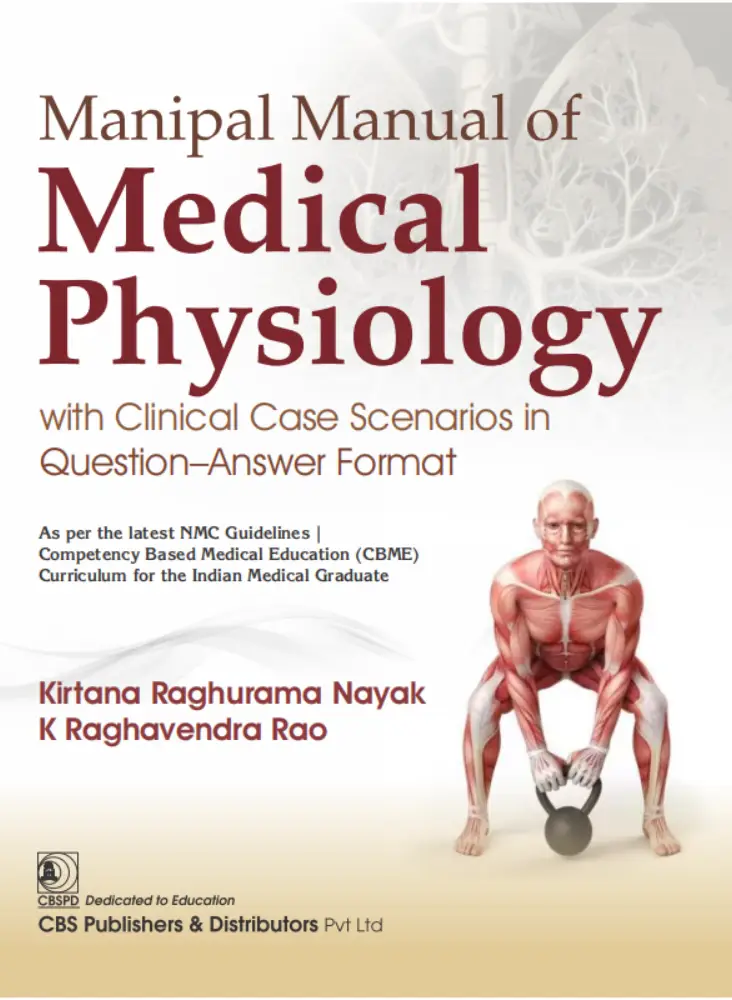
Manipal Manual of Medical Physiology with Clinical Case Scenarios in Question–Answer Format (PB, 2026) is a modern, exam-oriented physiology resource designed specifically for MBBS students following the Competency-Based Medical Education (CBME) curriculum. This book stands out by integrating core physiological concepts with clinical case-based learning, making it highly relevant for both university examinations and clinical understanding.
At its core, the book adopts a case-based question–answer format, which is one of its strongest features. Instead of presenting physiology as isolated theory, it introduces real-life clinical scenarios supported by investigative data. Each case is followed by structured questions and detailed answers, allowing students to understand not just “what” happens in the body, but also “why” and “how” physiological mechanisms are altered in disease states. This approach enhances critical thinking and helps bridge the gap between theory and clinical application.
The book begins each chapter with a “rapid reading” section, which provides a concise overview of the essential concepts of that system. These summaries act as quick revision tools and guide students in approaching the clinical cases that follow. This layered learning method ensures that students first revise the basics and then apply them in problem-solving situations.
One of the major highlights of this manual is the extensive practice material it offers. It includes over 600 solved clinical cases and multiple-choice questions (MCQs), making it a powerful tool for self-assessment and exam preparation. These questions are designed not only for university exams but also to align with competitive exams and formats such as NEXT and even USMLE-style questions, giving students broader exposure.
The book also features nearly 400 simple, hand-drawn diagrams, which significantly enhance understanding of complex physiological processes. These illustrations are easy to reproduce in exams, making them particularly useful for scoring higher marks. Diagrams, tables, and flowcharts are used throughout the book to simplify difficult concepts and improve retention.
In terms of content coverage, the manual comprehensively addresses all major systems, including general physiology, cardiovascular system, respiratory system, central nervous system, renal physiology, endocrine system, and hematology. Special emphasis is given to cardiovascular and central nervous system physiology, ensuring in-depth understanding of these high-yield topics. Additionally, the book includes detailed sections on acid–base balance, integrating physiology with biochemistry for a more holistic understanding.
Another notable feature is its alignment with competency-based learning objectives. The content is structured according to competency requirements, helping students achieve the skills and knowledge expected by modern medical education standards. This makes the book highly relevant for current MBBS curricula in India.
The language of the book is simple, clear, and student-friendly, which makes it accessible even for beginners. Complex physiological mechanisms are broken down into easy-to-understand explanations, ensuring better comprehension. The question–answer format also helps students learn how to frame answers effectively in exams.
This book is particularly useful for first-year MBBS students, interns, and those preparing for competitive exams. It serves as both a primary study aid and a revision tool. During exams, students can quickly go through the rapid reading sections and practice case-based questions to strengthen their understanding.
Overall, Manipal Manual of Medical Physiology with Clinical Case Scenarios in Question–Answer Format (2026) is an excellent blend of theory, clinical application, and exam preparation. Its structured approach, extensive practice questions, and emphasis on clinical reasoning make it a valuable resource for mastering physiology. By focusing on both conceptual clarity and application, the book helps students build a strong foundation and perform confidently in both written and practical examinations.



Reviews
There are no reviews yet