
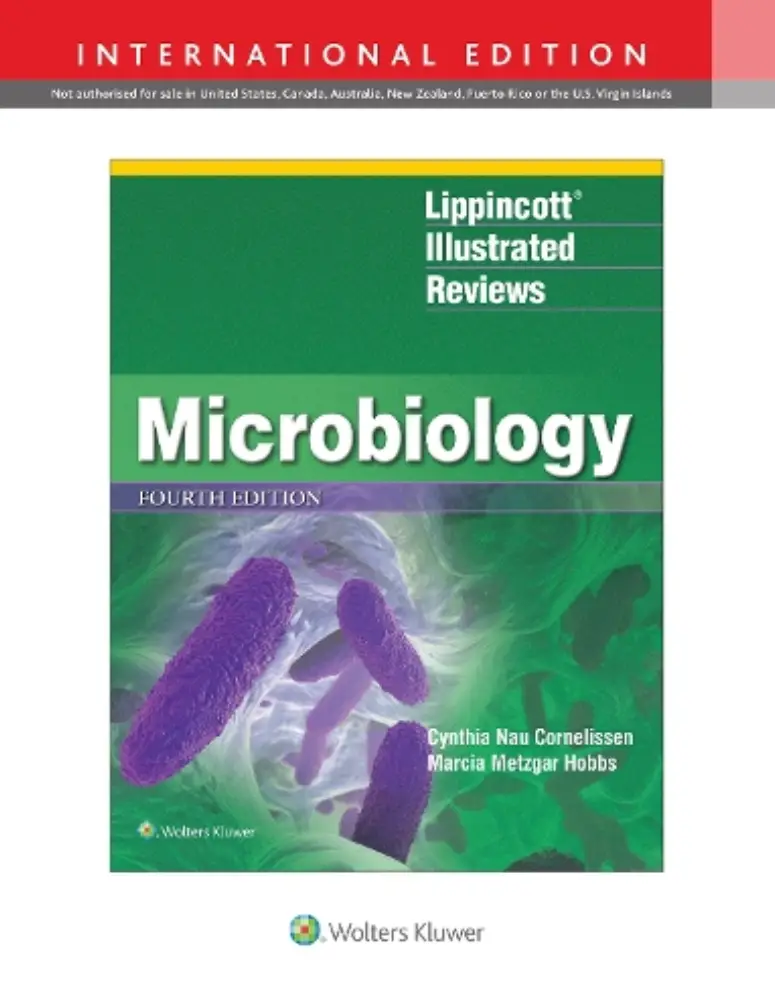
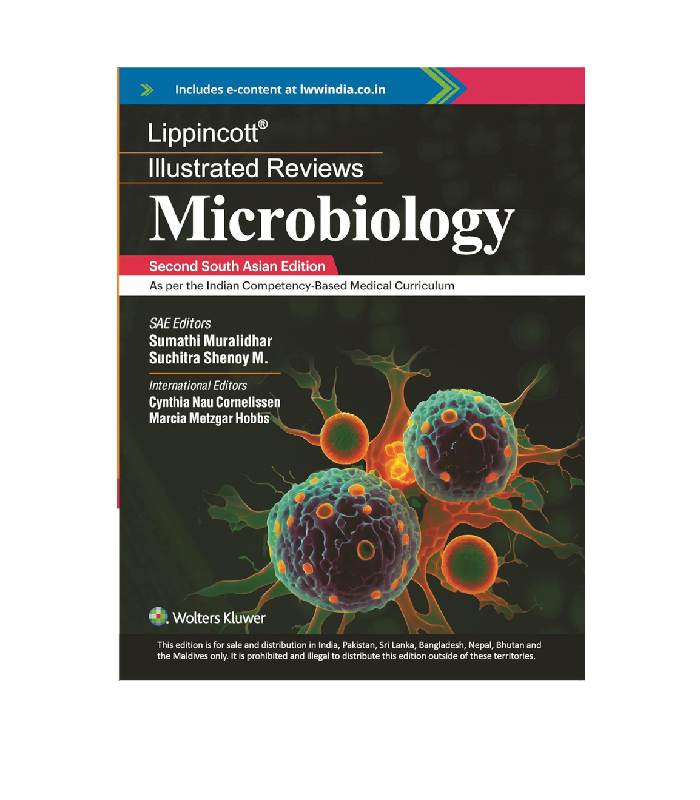
Lippincott® Illustrated Reviews: Microbiology is a widely used medical textbook that provides a clear and visually rich introduction to microbiology for medical and health-science students. Part of the renowned Lippincott Illustrated Reviews Series, the book is designed to simplify complex microbiological concepts through detailed illustrations, concise explanations, and clinically relevant examples. It is authored by Cynthia Nau Cornelissen and Karen C. Carroll and published by Wolters Kluwer under the Lippincott Williams & Wilkins imprint. The textbook is especially popular among medical, dental, nursing, pharmacy, and allied health students preparing for examinations and clinical practice.
The book is structured to provide a systematic understanding of microorganisms and their role in human health and disease. It begins with the basic principles of microbiology, introducing fundamental topics such as microbial cell structure, metabolism, genetics, and mechanisms of infection. These foundational chapters help readers understand how microorganisms grow, reproduce, and interact with host organisms. The text also explains how microbes evolve and develop resistance to antimicrobial agents, an increasingly important issue in modern medicine.
One of the defining characteristics of Lippincott Illustrated Reviews: Microbiology is its visual learning approach. Each chapter includes numerous full-color diagrams, charts, and illustrations that clarify complicated processes such as bacterial replication, viral life cycles, and immune responses to infection. These visuals help students quickly grasp key ideas and remember important details, making the book particularly effective for exam preparation.
The textbook covers the major groups of microorganisms responsible for human diseases. These include bacteria, viruses, fungi, and parasites. Each section discusses the characteristics, classification, pathogenesis, clinical manifestations, diagnosis, treatment, and prevention of infections caused by these organisms. For example, the bacterial section explains the structure of bacterial cells, mechanisms of virulence, and the diseases caused by various species. The viral section describes viral replication, host interactions, and important viral infections such as influenza, hepatitis, and HIV.
In addition to describing pathogens, the book emphasizes the clinical relevance of microbiology. Many chapters include clinical case studies and examples that illustrate how microbial infections present in real patients. These cases help students understand the connection between microbiological theory and medical practice. Diagnostic methods, including culture techniques, molecular tests, and serological assays, are also explained to show how infections are identified in laboratory settings.
Another important topic addressed in the book is antimicrobial therapy and resistance. The text explains how antibiotics and antiviral drugs work, the mechanisms by which microbes develop resistance, and strategies used to combat antimicrobial resistance. This information is essential for understanding modern infectious disease management and for promoting responsible use of antimicrobial drugs.
The book’s format is designed for efficient learning. Each chapter begins with learning objectives that outline the key topics to be covered. Important concepts are summarized in bullet points and tables, making them easier to review. At the end of each chapter, review questions and summary sections reinforce essential information and help students test their understanding. These features make the textbook particularly useful for exam preparation, including major medical licensing examinations.
Another strength of the book is its integration with modern digital learning resources. Many editions include access to online materials such as practice questions, interactive images, and additional study aids. These resources enhance the learning experience and allow students to review microbiology concepts in multiple formats.
Overall, Lippincott Illustrated Reviews: Microbiology is considered one of the most effective introductory textbooks in the field of microbiology. Its combination of clear explanations, detailed illustrations, and clinically oriented content helps students build a solid understanding of infectious diseases and microbial biology. Because of its accessible style and comprehensive coverage, the book continues to be a trusted resource for students and healthcare professionals seeking to master the principles of microbiology.

Reviews
There are no reviews yet