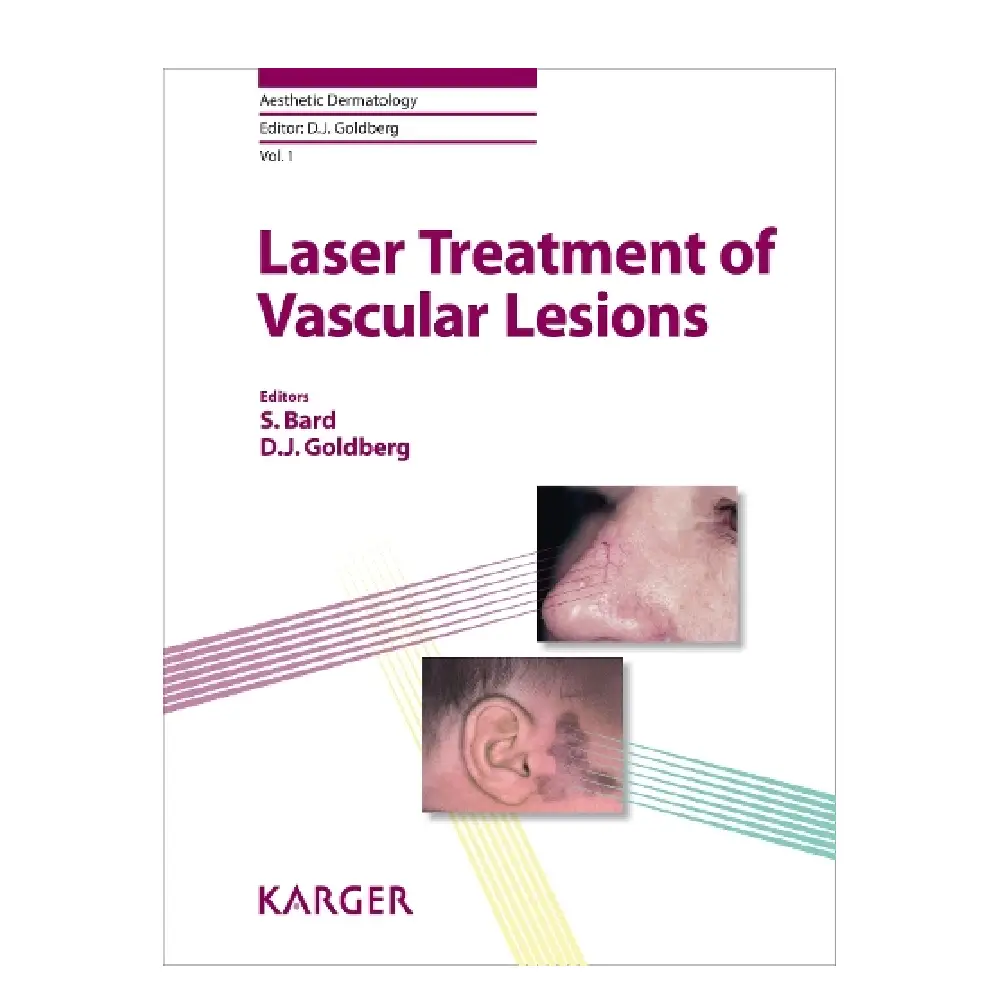


Laser Treatment of Vascular Lesions — A Complete Overview
Laser Treatment of Vascular Lesions is the first volume in the Aesthetic Dermatology series, edited by leading experts D. J. Goldberg and S. Bard. Published by S. Karger AG in 2014, this specialist textbook focuses on the dermatologic use of laser and light technologies to treat vascular skin lesions, which are common cosmetic and medical concerns.
The book is aimed at dermatologists, plastic surgeons, laser practitioners, and trainees who wish to deepen their understanding of laser physics, clinical applications, safety considerations, and treatment protocols for a wide range of vascular conditions.
1. Scope and Purpose
At its core, this textbook explores how various laser systems and light-based devices can be used to selectively target and treat cutaneous vascular lesions — abnormalities of blood vessels in the skin that manifest as visible redness, dilated capillaries, or vascular malformations. Common examples include telangiectasia, rosacea-related erythema, port-wine stains, hemangiomas, and cherry angiomas.
The book’s primary purpose is twofold:
-
To present the scientific principles and physics of lasers relevant to vascular targeting.
-
To provide evidence-based guidance and clinical insights from internationally recognized specialists on how to employ specific laser modalities for different lesion types.
By combining theoretical knowledge with practical treatment parameters and expert commentary, it serves as both a reference and a guide to real-world clinical practice.
2. Foundational Concepts: Laser Physics and Tissue Interaction
The book begins with foundational material on laser physics and selective photothermolysis, the underlying scientific principle that enables modern vascular laser therapy. In this process:
-
Specific chromophores — structures in tissue like hemoglobin found in blood vessels — absorb laser light at particular wavelengths.
-
Absorption converts light to heat, resulting in controlled thermal injury and coagulation of abnormal vessels, while sparing surrounding skin structures.
Understanding this mechanism is essential because it informs choice of laser wavelength, pulse duration, and treatment settings — all of which influence clinical outcomes and safety.
3. Coverage of Laser Modalities
A distinctive strength of the book is its chapter-by-chapter focus on specific lasers and light systems, detailing their clinical indications, mechanisms, and comparative advantages. While earlier chapters review classic laser technologies (such as argon or krypton, now largely obsolete), later chapters emphasize the devices most relevant to contemporary practice.
Key technologies reviewed include:
-
Pulsed Dye Lasers (PDL): Often considered the gold standard for superficial vascular lesions like port-wine stains and facial telangiectasia due to high hemoglobin absorption and minimal surrounding damage.
-
Nd:YAG Lasers: Penetrate deeper and are useful for larger or deeper blood vessels.
-
Intense Pulsed Light (IPL): Not technically a laser but a broadband light source effective for mixed redness and pigmented lesions.
-
Other light-based systems and emerging modalities with expanding clinical utility.
Each chapter describes physical parameters (wavelength, pulse width), indications, contraindications, and expected clinical response, allowing readers to tailor treatments to specific patient presentations.
4. Clinical Indications and Lesion Types
The book discusses a broad spectrum of vascular conditions, including:
-
Telangiectasias and facial erythema: Diffuse or localized redness and tiny vessels, often associated with rosacea or sun damage.
-
Port-wine stains and capillary malformations: Congenital vascular anomalies requiring repeated laser treatments for optimal results.
-
Hemangiomas: Benign vascular tumors that can be treated with pulsed lasers in select cases.
-
Spider angiomas and venous lakes: Smaller, often cosmetically bothersome lesions addressed with specific wavelengths.
In each case, the book emphasizes not just whether a laser can be used, but how to select parameters and measures of response, including anticipated improvement and number of sessions.
5. Safety, Complications, and Expert Pearls
Important aspects of laser therapy — safety and complication management — are thoroughly addressed. While lasers are powerful tools, they carry potential risks such as:
-
Pigment changes (hypo- or hyperpigmentation)
-
Blister formation or burns
-
Scarring or textural changes
-
Pain and transient erythema
The book’s final chapter specifically highlights pitfalls and how to avoid them, based on contributors’ clinical experience. This includes guidance on patient selection, realistic outcome expectations, and post-treatment care — all critical for ethical and safe practice.
6. Educational Value and Clinical Relevance
Reviewers note that this volume fills an important niche by focusing on laser platforms and settings, rather than exclusively on individual vascular conditions. While some critics wished for a lesion-based structure, the approach is valuable for clinicians seeking a device-centric understanding that can be applied across indications.
With illustrations, expert recommendations, and evidence summaries throughout, the book functions both as:
-
A textbook for trainees learning laser principles, and
-
A reference for experienced practitioners updating their knowledge on newer devices and protocols.
Conclusion
Laser Treatment of Vascular Lesions stands as a comprehensive, clinician-oriented resource that bridges science and practice. By systematically presenting laser modalities, clinical indications, safety principles, and expert guidance, it equips practitioners to deliver effective and safe laser treatment for a variety of vascular skin lesions — helping patients improve both function and aesthetics.




Reviews
There are no reviews yet