
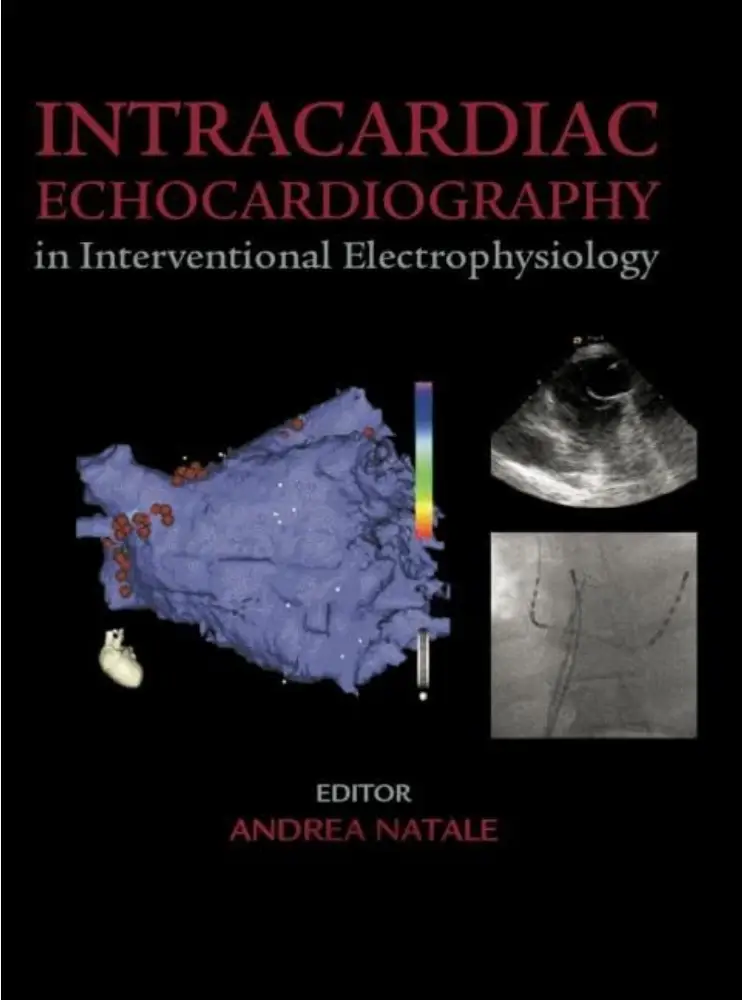


Intracardiac Echocardiography in Interventional Electrophysiology
Intracardiac echocardiography (ICE) has emerged as a transformative imaging modality in the field of interventional electrophysiology (EP). By providing real-time, high-resolution ultrasound images from within the heart chambers, ICE enhances procedural precision, improves safety, and optimizes outcomes during catheter-based electrophysiologic interventions. Its integration into EP laboratories has significantly advanced the management of complex arrhythmias.
Principles of Intracardiac Echocardiography
ICE utilizes a specialized ultrasound catheter introduced via the femoral vein and advanced into the right atrium, right ventricle, or other cardiac chambers. Unlike transthoracic or transesophageal echocardiography, ICE delivers direct intracardiac visualization without requiring general anesthesia or esophageal intubation. The ultrasound transducer, mounted at the catheter tip, generates two-dimensional and Doppler images, enabling detailed assessment of cardiac structures and catheter positions in real time.
Modern ICE systems offer high-frequency imaging (typically 5–10 MHz), providing excellent spatial resolution of intracardiac anatomy. Some platforms also incorporate three-dimensional reconstruction capabilities, further enhancing anatomical guidance during complex ablation procedures.
Role in Atrial Fibrillation Ablation
One of the most important applications of ICE is during catheter ablation for atrial fibrillation (AF). Procedures targeting pulmonary vein isolation require precise transseptal puncture and accurate lesion placement within the left atrium. ICE allows direct visualization of the interatrial septum, fossa ovalis, and needle position during transseptal access, reducing the risk of complications such as aortic puncture or pericardial tamponade.
During pulmonary vein isolation, ICE provides continuous monitoring of catheter–tissue contact and helps identify complications such as thrombus formation or pericardial effusion. By visualizing left atrial anatomy and pulmonary vein ostia, ICE improves procedural efficiency and reduces fluoroscopy time, thereby decreasing radiation exposure for both patients and operators.
Guidance in Other Ablation Procedures
Beyond atrial fibrillation, ICE is valuable in multiple arrhythmia interventions:
-
Atrial flutter and atrial tachycardia ablation: ICE assists in mapping complex right and left atrial circuits.
-
Ventricular tachycardia ablation: Visualization of ventricular structures, papillary muscles, and scar regions enhances precision.
-
Supraventricular tachycardia (SVT): ICE helps confirm catheter positioning in anatomically challenging cases.
In procedures involving the left ventricle, ICE can guide retrograde aortic or transseptal approaches and monitor for thrombus or valvular injury.
Transseptal Puncture and Structural Navigation
Transseptal puncture is a critical step in many EP procedures. ICE enables direct imaging of the septal tenting produced by the transseptal needle, confirming optimal positioning before puncture. This real-time visualization significantly reduces complications and has made ICE a preferred imaging method in many centers.
ICE also aids in anatomical orientation within the left atrium, particularly in patients with variant pulmonary vein anatomy or prior ablation scars. It complements electroanatomic mapping systems by providing structural context to electrical data.
Complication Detection and Safety Enhancement
Safety monitoring is one of ICE’s major advantages. It allows early detection of:
-
Pericardial effusion and tamponade
-
Intracardiac thrombus formation
-
Air embolism
-
Valvular injury
-
Pulmonary vein stenosis (in follow-up imaging)
Immediate recognition of complications enables prompt intervention, improving patient safety. Continuous visualization reduces reliance on fluoroscopy, thereby lowering radiation exposure and orthopedic strain on operators.
Advantages Over Other Imaging Modalities
Compared to transesophageal echocardiography (TEE), ICE offers several benefits:
-
No need for general anesthesia
-
Continuous imaging controlled by the electrophysiologist
-
Improved patient comfort
-
Reduced procedure time in many cases
Unlike fluoroscopy, ICE provides soft-tissue visualization rather than just catheter silhouettes, making it invaluable for structural assessment.
Limitations and Challenges
Despite its advantages, ICE has certain limitations. The disposable catheter increases procedural cost, which may limit its use in resource-constrained settings. Operator expertise is essential for optimal image acquisition and interpretation. Additionally, most ICE imaging originates from right-sided chambers, which can restrict direct visualization of some left-sided structures without strategic catheter manipulation.
Emerging Applications
Advances in ICE technology are expanding its role beyond arrhythmia ablation. Three-dimensional ICE and integration with electroanatomic mapping systems allow enhanced procedural planning. ICE is increasingly used in structural heart interventions such as left atrial appendage closure, transcatheter valve procedures, and device implantation.
Conclusion
Intracardiac echocardiography has become an indispensable tool in modern interventional electrophysiology. By providing real-time intracardiac visualization, ICE improves procedural accuracy, reduces complications, enhances safety, and decreases radiation exposure. Its application in atrial fibrillation ablation, transseptal puncture, ventricular arrhythmia management, and complication monitoring underscores its value in contemporary EP practice. As imaging technology continues to evolve, ICE is poised to play an even greater role in guiding complex catheter-based cardiac interventions and improving patient outcomes.







Reviews
There are no reviews yet