
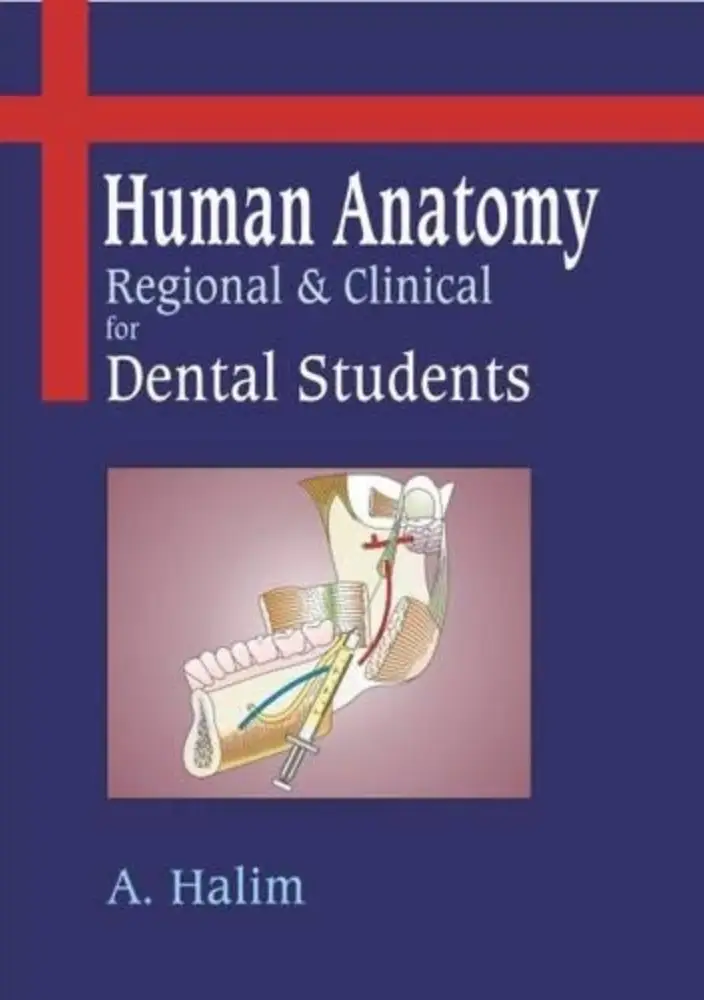
Human Anatomy: Regional & Clinical for Dental Students
Human Anatomy: Regional & Clinical for Dental Students is a specialized textbook designed to meet the unique needs of dental students by combining detailed anatomical knowledge with clinically relevant applications. Unlike general anatomy books, this text focuses specifically on regions of the human body that are most significant in dental practice, such as the head, neck, oral cavity, and associated structures. It serves as a foundational resource for undergraduate dental students, helping them build a clear understanding of anatomical relationships essential for diagnosis, treatment planning, and clinical procedures.
The book adopts a regional approach to anatomy, which allows students to study body structures in a systematic and organized manner. Each section explores a specific region, detailing bones, muscles, nerves, blood vessels, and other tissues in a logical sequence. This method enhances spatial understanding and helps students visualize how different structures interact within a particular area. The emphasis on the head and neck region is particularly valuable, as these areas are central to dental education and practice.
One of the key strengths of this textbook is its integration of clinical relevance throughout the content. Anatomical descriptions are frequently linked to dental procedures such as tooth extraction, local anesthesia administration, and management of oral diseases. These clinical correlations help students understand why anatomical knowledge is important, making learning more engaging and practical. For example, the pathways of nerves are explained in the context of nerve blocks, while vascular structures are discussed with reference to bleeding control during oral surgery.
The book is richly illustrated with high-quality diagrams, photographs, and labeled figures that aid in visual learning. These illustrations simplify complex anatomical details and make it easier for students to grasp intricate structures. Many diagrams are presented in a step-by-step manner, guiding learners through layers of tissues and helping them understand depth and orientation. This visual approach is especially beneficial for students who may find anatomy challenging.
Another important feature is the inclusion of surface anatomy and radiological anatomy. Surface anatomy helps students relate internal structures to external landmarks, which is crucial for clinical examination and procedures. Radiological images, such as X-rays and scans, provide a modern perspective and help students interpret diagnostic images commonly used in dental practice. This integration ensures that students are well-prepared for both theoretical and clinical aspects of their education.
The textbook also supports exam preparation through concise summaries, key points, and review questions at the end of chapters. These elements reinforce learning and help students revise effectively before examinations. The language used is clear and accessible, ensuring that even complex topics are easy to understand. Definitions and explanations are presented in a straightforward manner, making the book suitable for beginners.
In addition to its academic value, the book emphasizes the importance of anatomical precision in patient care. Understanding anatomical variations and relationships is critical for avoiding complications during dental procedures. By highlighting these aspects, the textbook encourages students to develop a careful and informed approach to clinical practice.
Another important feature of the book is its exam-oriented design. Each chapter includes summaries, key points, and review questions that aid in quick revision. These elements help students consolidate their knowledge and prepare effectively for university examinations and viva voce. The language used throughout the book is simple and clear, making it accessible even to beginners who may find anatomy challenging.
Overall, Human Anatomy: Regional & Clinical for Dental Students is an essential guide that bridges the gap between basic anatomy and dental application. Its focused content, clinical integration, and student-friendly presentation make it an invaluable resource for dental students aiming to build a strong anatomical foundation.




Reviews
There are no reviews yet