
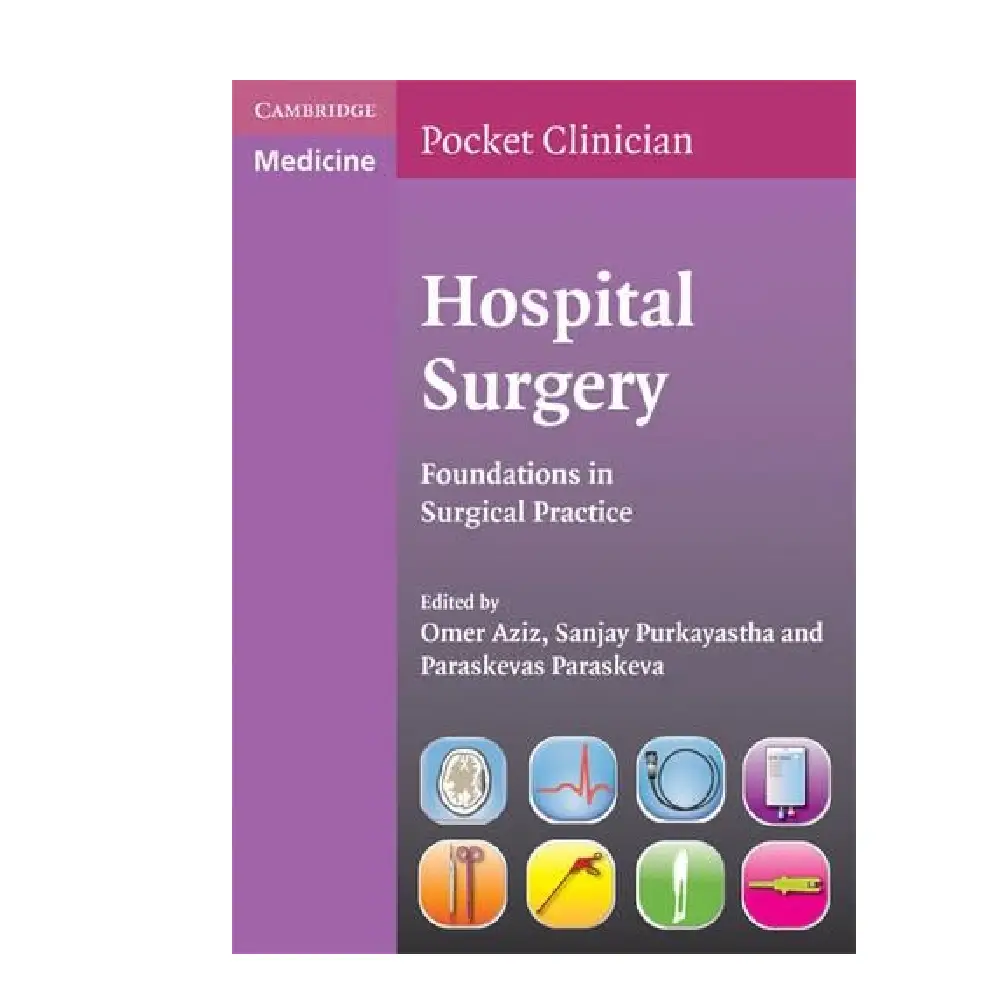
Hospital Surgery: Foundations in Surgical Practice is a comprehensive, pocket-sized surgical guide that blends core surgical principles with practical, clinical knowledge in a clear, concise, and highly structured format. It’s part of the Cambridge Pocket Clinician series — a set of books designed to support clinicians in day-to-day hospital practice by providing essential information quickly and efficiently.
Edited by Omer Aziz, Sanjay Purkayastha, and Paraskevas Paraskeva, this book reflects the expertise and clinical experience of its contributors, aiming to equip readers with both foundational understanding and operative confidence. It’s especially useful for medical students preparing for exams, junior doctors on surgical rotations, and residents consolidating core surgical knowledge.
Purpose and Approach
Unlike large, exhaustive surgical textbooks, Hospital Surgery focuses on practical application and decision-making at the bedside and in the operating theatre. Its strengths lie in:
-
Concise explanations of surgical principles and practice
-
Step-by-step guidance on investigations, procedures, and patient management
-
Logical organisation following the surgical patient’s journey
-
Illustrations and lists that help distil complex content into easy-to-read, actionable points
The book’s layout emphasises lists, bullet points, and clinical flow rather than lengthy prose, making it ideal for quick reference during ward rounds, emergencies, and clinical revision.
Structure and Key Sections
The content is organised into logical, clinically relevant sections that mirror the typical progression of a surgical case — from presentation through to postoperative care. Major areas include:
1. Peri-operative Care
This foundational section introduces principles of:
-
Preoperative evaluation and optimisation
-
Anaesthesia considerations
-
Fluid balance, antibiotics, and pain management
-
Risk stratification and patient consent
By focusing on core peri-operative elements, it ensures that readers understand not just what to do surgically, but how to prepare patients safely for operative intervention.
2. Surgical Emergencies
Covers acute surgical presentations that demand rapid assessment and management, such as:
-
Abdominal pain and peritonitis
-
Bowel obstruction
-
Trauma
-
Acute vascular emergencies
Each condition is distilled into recognition, initial management, key investigations, and when to intervene surgically. This section equips clinicians to make urgent clinical decisions confidently.
3. Surgical Disease
Detailed yet succinct coverage of common surgical pathologies — including:
-
Hernias
-
Appendicitis
-
Gallstone disease
-
Peptic ulcer complications
-
Inflammatory bowel conditions
For each disease, the text outlines presentation, differential diagnosis, investigation strategies, and surgical indications.
4. Surgical Oncology
Addresses principles of cancer surgery, such as:
-
Tumour staging and resectability
-
Biopsy and resection strategies
-
Multidisciplinary decision-making
-
Peri-operative oncological care
This section blends surgical technique with broader cancer management principles, which is especially useful for trainees rotating through surgical oncology units.
5. Practical Procedures, Investigations, and Operations
One of the most clinically handy parts of the book, this segment provides:
-
Step-by-step instructions for common procedures
-
Practical tips on technique and complications
-
Relevant radiologic and laboratory investigations
The content here acts as a mini-operating manual for typical ward and theatre procedures.
6. Radiology and Clinical Examination
Recognising that surgical decisions are tightly linked to patient assessment:
-
There’s a dedicated section on clinical examination skills, helping clinicians interpret signs accurately.
-
Another part focuses on radiologic interpretation, enabling better integration of imaging into surgical planning.
7. Appendices
Provide condensed reference material, formulas, and quick-access tables that support clinical decision-making and help during exam revision.
Pedagogical Features
Hospital Surgery incorporates several educational strengths:
-
Concise language and structure make it highly accessible even under time constraints.
-
Bullet points and lists emphasise high-yield facts and clinical pearls.
-
Illustrations and surgical diagrams enhance understanding of anatomy and operative steps.
-
Sections are designed to parallel real-world clinical workflows, aiding immediate application on the wards.
Because of this, many users find it helpful both as a preparation tool for exams like the MRCS (Member of the Royal College of Surgeons) and as a quick reference during surgical rotations.
Audience and Use Cases
This book is particularly suited to:
-
Medical students preparing for surgical exams
-
Junior doctors and foundation level trainees working on surgical wards
-
Residents needing a compact yet comprehensive surgical reference
-
Clinicians seeking a quick checklist-style review of surgical practice
Its blend of core principles, clinical pragmatism, and succinct presentation make it a valuable everyday companion in hospital surgical practice.
Summary
Hospital Surgery: Foundations in Surgical Practice is a practical, user-friendly surgical handbook that distils essential surgical knowledge into an accessible, logically structured format. It supports clinicians in delivering safe peri-operative care, understanding surgical diseases, managing emergencies, and performing key procedures — all while reinforcing clear decision-making and clinical reasoning. It remains a trusted resource for surgeons in training and early-career practitioners alike.




Reviews
There are no reviews yet