
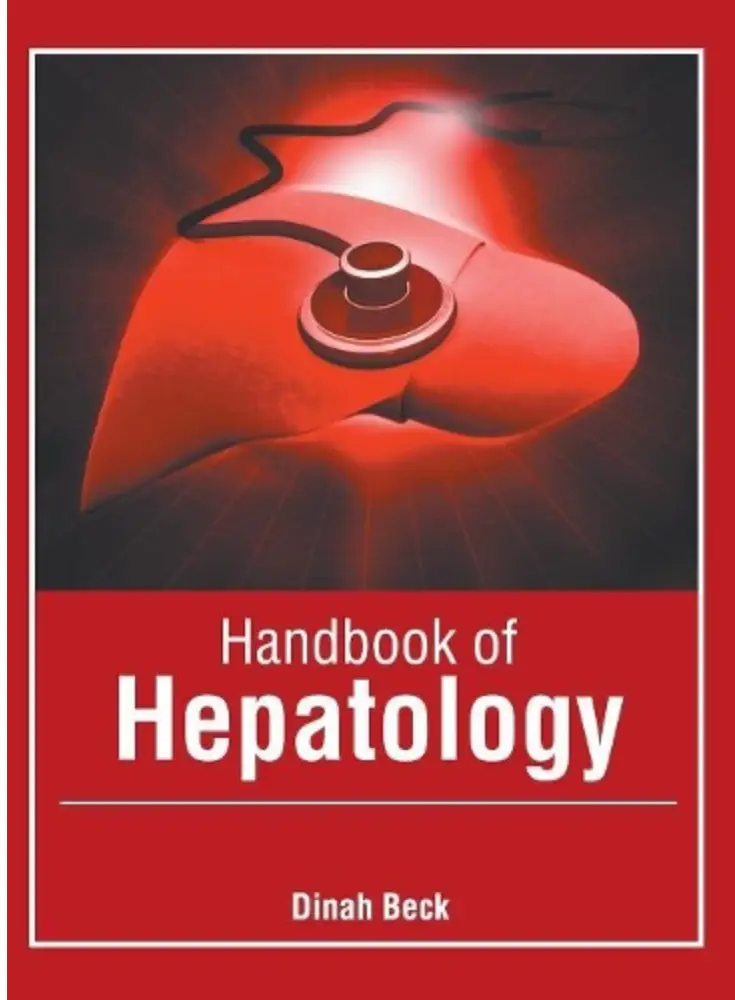

Handbook of Hepatology
Handbook of Hepatology is a practical, concise, and clinically oriented guide to liver diseases, designed to meet the needs of medical students, residents, hepatology trainees, and practicing clinicians. The book provides a structured and accessible approach to understanding the complex field of hepatology, combining essential pathophysiological principles with clear guidance on diagnosis, management, and clinical decision-making.
The text begins with foundational concepts in hepatology, including liver anatomy, physiology, and the mechanisms of liver injury. It explains hepatic metabolic pathways, detoxification processes, and the role of the liver in systemic homeostasis. Understanding these physiological fundamentals enables clinicians to interpret laboratory results and clinical presentations effectively, forming the basis for accurate diagnosis and appropriate intervention.
A key strength of the handbook is its organization around common clinical scenarios and liver diseases. It provides comprehensive coverage of hepatocellular disorders, including viral hepatitis (hepatitis A, B, C, D, and E), autoimmune hepatitis, alcoholic liver disease, and non-alcoholic fatty liver disease (NAFLD). Each condition is discussed in terms of epidemiology, etiology, pathogenesis, clinical features, diagnostic criteria, and management strategies. The book emphasizes evidence-based medicine, referencing current international guidelines and consensus statements to support clinical decisions.
Cholestatic and biliary disorders are also addressed, including primary biliary cholangitis, primary sclerosing cholangitis, and drug-induced cholestasis. The handbook outlines key laboratory and imaging markers, such as liver function tests, bilirubin levels, and cholangiography findings, to aid early recognition and monitoring. Practical tips for interpreting liver biopsy results and understanding histopathological patterns are included, giving readers confidence in evaluating complex cases.
The book dedicates a section to acute and Hepatology chronic liver failure, highlighting their pathophysiology, clinical presentation, complications, and management. Key concepts such as hepatic encephalopathy, coagulopathy, ascites, and portal hypertension are explained with practical algorithms for diagnosis and treatment. The management of complications, including variceal bleeding, spontaneous bacterial peritonitis, and hepatorenal syndrome, is clearly outlined with stepwise approaches that reflect real-world clinical practice.
Transplant hepatology is covered in a Handbook of Hepatology concise and practical manner, including indications for liver transplantation, pre- and post-transplant evaluation, immunosuppressive therapy, and monitoring for complications. The book addresses the multidisciplinary nature of liver transplantation, emphasizing collaboration between hepatologists, surgeons, and supportive care teams.
A distinctive feature of the handbook is its emphasis on bedside clinical application. Case vignettes, summary tables, and flowcharts allow rapid reference and reinforce key concepts. The book also includes guidance on interpreting laboratory abnormalities, using imaging modalities such as ultrasound, CT, and MRI, and integrating non-invasive techniques like elastography for assessing liver fibrosis.
The text also explores emerging areas in hepatology, including novel antiviral therapies, biologics for autoimmune liver disease, and evolving management strategies for NAFLD and NASH. Discussions of lifestyle interventions, diet, and pharmacologic therapy are integrated to provide holistic care strategies.
In addition, the handbook Handbook of Hepatology emphasizes patient-centered care, including counseling, monitoring, and follow-up strategies, as well as recognizing and managing comorbidities commonly associated with liver disease. Ethical considerations in hepatology, such as transplantation allocation and end-of-life care, are also briefly addressed.
In summary, Handbook of Hepatology is an essential, practical guide for clinicians and trainees. Its concise yet comprehensive coverage, clear explanations, structured algorithms, and emphasis on evidence-based practice make it a valuable resource for navigating the complexities of liver disease. Whether used for study, reference, or clinical decision-making, the handbook equips healthcare professionals with the knowledge and tools necessary to provide effective and informed hepatology care.



Reviews
There are no reviews yet