
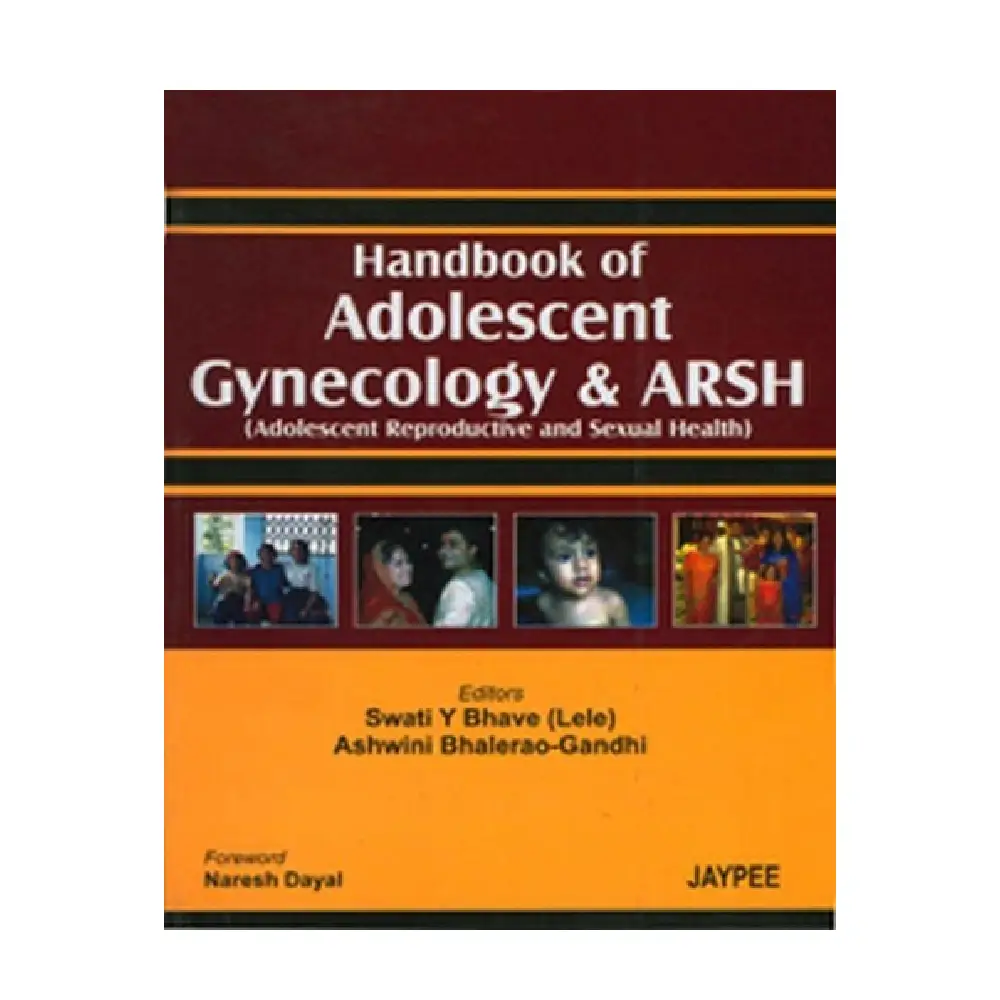
Handbook of Adolescent Gynecology & ARSH
The Handbook of Adolescent Gynecology & ARSH is a specialized medical reference book focusing on the reproductive health needs of adolescents. Adolescence is a critical developmental stage characterized by physical, psychological, and hormonal changes that influence reproductive health outcomes. This handbook provides comprehensive clinical guidance for healthcare professionals dealing with adolescent girls and young women. The book is particularly relevant in the context of programs promoted by the Federation of Obstetric and Gynecological Societies of India, which supports adolescent reproductive and sexual health education.
The handbook addresses the concept of adolescent reproductive and sexual health (ARSH), which emphasizes preventive healthcare, education, counseling, and early detection of reproductive disorders. ARSH programs aim to reduce teenage pregnancy, sexually transmitted infections, and menstrual health problems through awareness and accessible healthcare services. The book serves as a practical clinical guide for gynecologists, pediatricians, and primary healthcare providers working with adolescents.
One of the major topics covered in the handbook is menstrual disorders in adolescents. Irregular menstruation is common during the early years after menarche due to immaturity of the hypothalamic-pituitary-ovarian axis. Conditions such as dysfunctional uterine bleeding, primary dysmenorrhea, and secondary amenorrhea are discussed in detail. The text provides diagnostic approaches and treatment strategies tailored to young patients, considering both medical efficacy and psychological sensitivity.
The book also explores pubertal development and its variations. Normal puberty involves a coordinated sequence of hormonal events leading to secondary sexual characteristics and reproductive maturity. Disorders such as precocious puberty and delayed puberty are clinically important because they may indicate underlying endocrine abnormalities. The handbook explains evaluation methods, including hormonal assays and imaging studies, to assist clinicians in early diagnosis.
Sexual and reproductive education is another key focus of the handbook. Adolescents require accurate information regarding body changes, contraception, and prevention of sexually transmitted infections. The text stresses the importance of confidential counseling and adolescent-friendly healthcare services. Risky sexual behaviors, peer pressure, and lack of awareness are identified as major contributors to adolescent reproductive health problems.
The prevention of teenage pregnancy is an essential public health goal discussed in the book. Early pregnancy is associated with obstetric complications, socioeconomic challenges, and increased maternal and neonatal risks. The handbook provides guidance on contraceptive counseling, emergency contraception, and safe sexual practices suitable for adolescent populations. Healthcare providers are encouraged to adopt non-judgmental communication strategies when discussing contraception.
Polycystic ovarian syndrome (PCOS) is increasingly recognized among adolescents and is discussed extensively in the handbook. PCOS may present with irregular menstruation, acne, obesity, and hyperandrogenism. Early diagnosis and lifestyle modification are important to prevent long-term metabolic complications. The book highlights the role of diet control, physical activity, and hormonal therapy in management.
Psychological health is given special attention because adolescence is a vulnerable period for mental health disorders. Body image concerns, anxiety, depression, and social pressures can significantly affect reproductive health behavior. The handbook emphasizes integrated care involving counselors, pediatricians, and gynecologists.
The management of sexually transmitted infections is another important topic. Adolescents are at increased risk due to limited awareness and social stigma. The handbook provides protocols for screening, diagnosis, and treatment of common infections, along with counseling strategies for prevention.
Nutrition and lifestyle factors influencing adolescent reproductive health are also discussed. Iron deficiency anemia, obesity, and vitamin deficiencies are common problems among teenage girls. Proper nutritional counseling is essential to ensure healthy growth and reproductive function.
The book also outlines clinical examination techniques suitable for adolescents. Since young patients may experience anxiety during gynecological examination, the handbook stresses the importance of privacy, consent, and gentle examination methods.
From a public health perspective, the handbook supports adolescent-friendly healthcare services as recommended by the World Health Organization. The integration of education, prevention, and treatment is considered the cornerstone of effective adolescent reproductive healthcare.
In conclusion, Handbook of Adolescent Gynecology & ARSH is a valuable resource that combines clinical knowledge with practical guidance for managing adolescent reproductive health issues. By emphasizing prevention, counseling, and early intervention, the book contributes to improving the overall health and well-being of adolescent girls. The handbook is particularly useful for medical students, gynecologists, and healthcare professionals involved in adolescent healthcare services.

Reviews
There are no reviews yet