
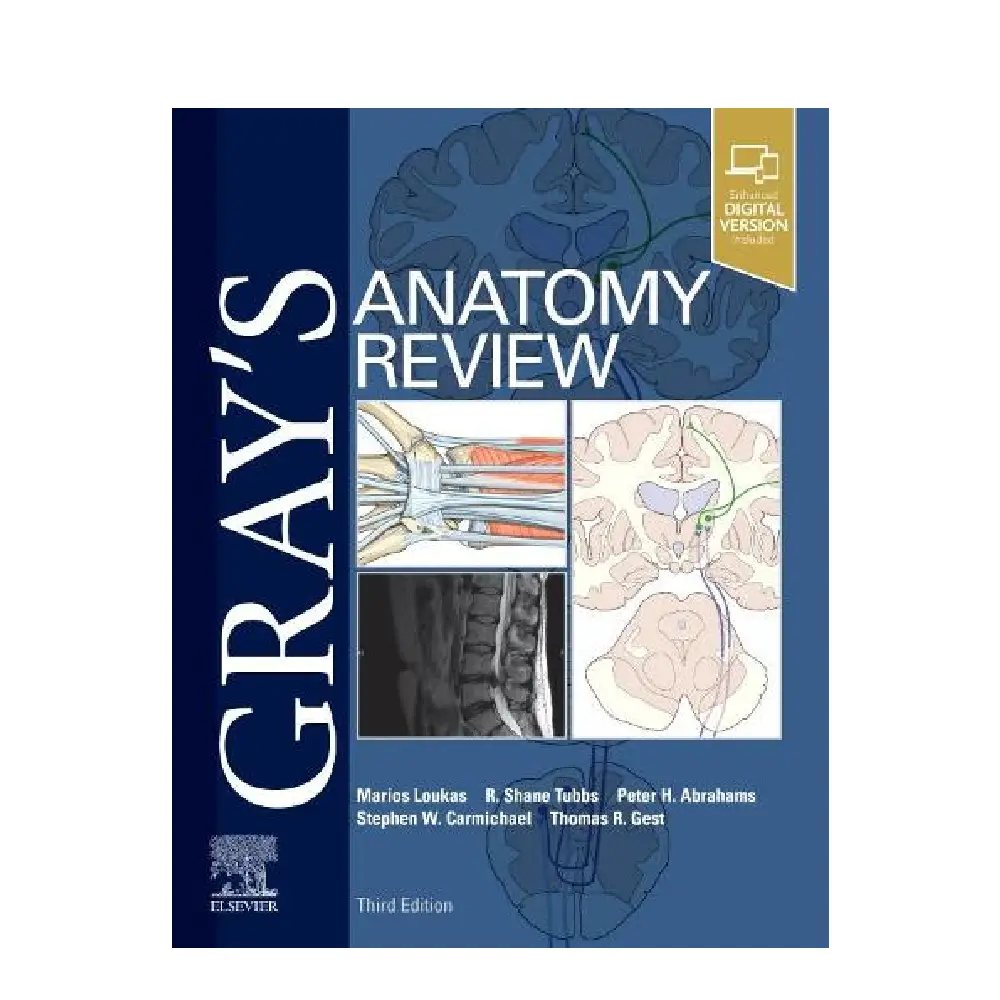


Gray’s Anatomy – A Comprehensive Review
Gray’s Anatomy is one of the most iconic and enduring textbooks in the history of medical education. First published in 1858, it was originally authored by Henry Gray and illustrated by Henry Vandyke Carter. Since its first appearance in London, the book has undergone numerous revisions and expansions, evolving from a concise anatomical manual into a massive, authoritative reference text used by medical students, surgeons, anatomists, and clinicians worldwide.
Historical Background and Development
When Henry Gray first conceived the book, his goal was to create a practical anatomy text specifically designed for medical students. At the time, anatomical knowledge was often presented in dense, highly technical formats that were difficult for students to navigate. Gray aimed to make anatomy accessible, structured, and clinically relevant. The partnership between Gray and Carter was crucial; Carter’s detailed illustrations complemented the text and helped make complex anatomical structures easier to understand.
The first edition was well received for its clarity and systematic organization. Tragically, Henry Gray died at the age of 34 from smallpox shortly after the publication of the book. However, the work continued to be revised by subsequent editors. Over the years, the book has transformed significantly, with modern editions incorporating advances in imaging, embryology, histology, and clinical correlations.
Content and Structure
Modern editions of Gray’s Anatomy are extensive, often exceeding 1,500 pages. The book is organized regionally and systemically, covering areas such as the head and neck, thorax, abdomen, pelvis, limbs, and neuroanatomy. Each section typically includes detailed descriptions of bones, muscles, vessels, nerves, and organs, along with their functional and clinical significance.
One of the key strengths of Gray’s Anatomy is its integration of basic anatomical science with clinical application. Unlike purely descriptive atlases, the text connects structure with function and pathology. For example, anatomical descriptions are frequently accompanied by explanations of surgical approaches, common injuries, and diagnostic considerations. This clinical integration makes the book especially valuable for advanced medical students and practicing clinicians.
Illustrations and Visual Aids
The illustrations have always been a defining feature of Gray’s Anatomy. Carter’s original drawings set a high standard for anatomical representation. In contemporary editions, traditional line drawings are supplemented with high-resolution photographs, radiological images (CT, MRI), and color diagrams. These visuals enhance spatial understanding and align the text with modern medical practice.
The combination of classical anatomical drawings and modern imaging techniques allows readers to bridge the gap between textbook anatomy and real-life clinical interpretation. This integration is particularly beneficial in surgical training and radiology.
Academic and Clinical Significance
Gray’s Anatomy is often considered the gold standard in anatomical reference. It is not merely a student textbook but a scholarly resource. Its depth makes it particularly suitable for postgraduate students, anatomy educators, and specialists who require comprehensive detail.
The text’s reliability and scholarly rigor have maintained its reputation for over a century and a half. Each edition reflects contemporary anatomical knowledge, ensuring that it remains scientifically accurate and pedagogically relevant. The editorial teams responsible for modern editions are composed of internationally recognized anatomists and clinicians.
Strengths
One of the primary strengths of Gray’s Anatomy is its thoroughness. It offers detailed explanations of anatomical relationships, variations, and developmental aspects. The writing style, though technical, is structured logically, making it easier to navigate despite the book’s size.
Another strength is its emphasis on anatomical variation and applied anatomy. This is particularly important because real human anatomy often deviates from textbook norms. By acknowledging variations, the book prepares students and surgeons for real-world practice.
Additionally, the historical legacy of the text contributes to its prestige. Owning or referencing Gray’s Anatomy is often seen as engaging with a foundational piece of medical literature.
Limitations
Despite its strengths, Gray’s Anatomy may not be ideal for beginners due to its depth and complexity. The sheer volume of information can be overwhelming for first-year medical students. Many learners prefer simplified or student-oriented versions for initial study before consulting Gray’s for detailed clarification.
Furthermore, because anatomy is constantly evolving with advances in molecular biology and imaging, even updated editions require continual revision to stay current. However, the editorial teams have consistently addressed this challenge.
Conclusion
Gray’s Anatomy remains a monumental achievement in medical publishing. From its origins in 19th-century London to its status as a modern global reference, it has shaped generations of medical professionals. The collaboration between Henry Gray and Henry Vandyke Carter laid the foundation for a work that transcends time.


Reviews
There are no reviews yet