
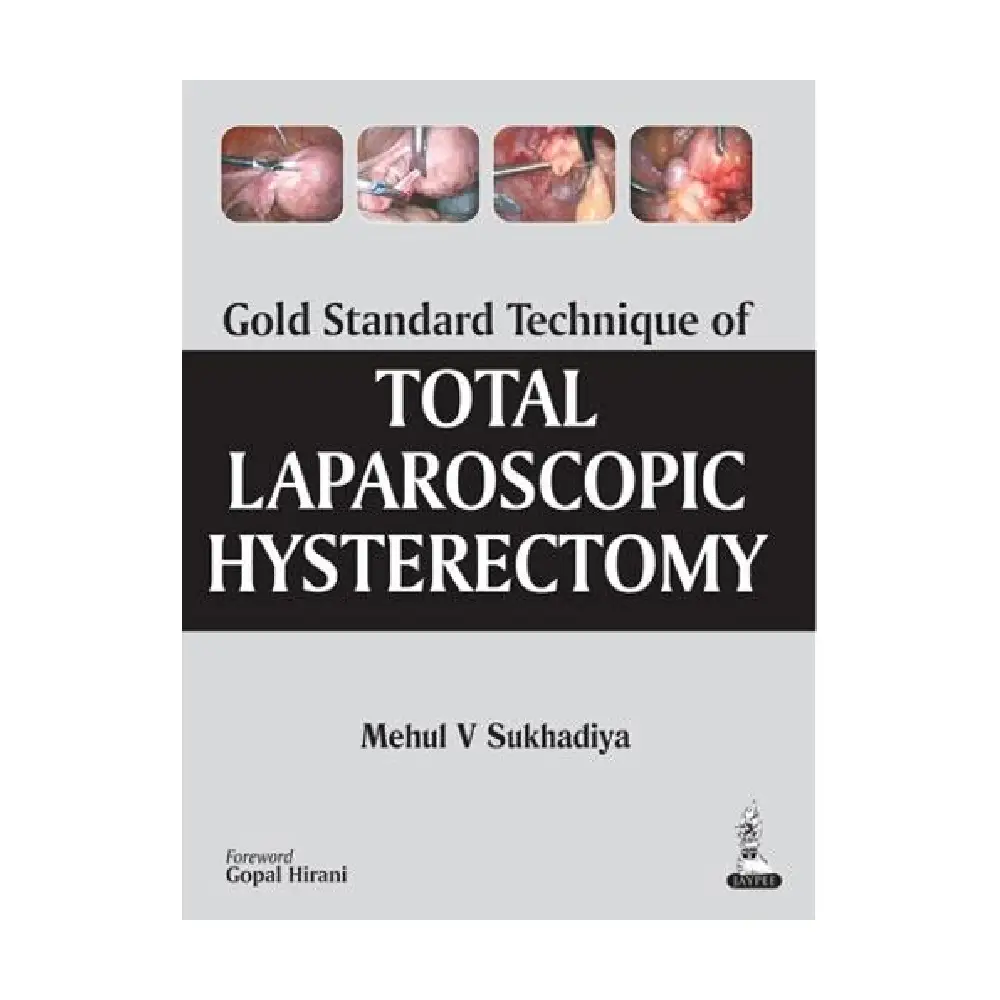
Gold Standard Technique of Total Laparoscopic Hysterectomy
Gold Standard Technique of Total Laparoscopic Hysterectomy (TLH) is a focused surgical guide dedicated to mastering one of the most refined and widely practiced minimally invasive procedures in modern gynecology. Total laparoscopic hysterectomy has become a preferred approach for the management of benign uterine conditions and selected early-stage malignancies due to its advantages of reduced blood loss, shorter hospital stay, faster recovery, and improved cosmetic outcomes compared to open surgery.
This book emphasizes a standardized, step-by-step “gold standard” technique aimed at ensuring safety, reproducibility, and optimal surgical outcomes. It is designed for gynecologic surgeons, laparoscopic trainees, and postgraduate students seeking to enhance their operative skills and understanding of pelvic anatomy.
The text begins with a detailed overview of indications and patient selection. Common indications discussed include symptomatic fibroids, adenomyosis, abnormal uterine bleeding unresponsive to medical therapy, endometriosis, chronic pelvic pain, and premalignant conditions. Contraindications and relative risk factors—such as extensive adhesions, severe cardiopulmonary compromise, or advanced malignancy—are also addressed.
A strong foundation in pelvic anatomy is highlighted as essential for safe surgery. The book reviews the anatomical relationships of the uterus, cervix, adnexa, ureters, bladder, rectum, uterine vessels, and supporting ligaments. Particular attention is given to identifying the ureter along its course near the uterine artery, a critical step in preventing injury.
The procedural chapters provide a structured description of the TLH technique:
-
Preoperative Preparation: Patient positioning in dorsal lithotomy, bladder catheterization, uterine manipulator placement, prophylactic antibiotics, and thromboprophylaxis protocols.
-
Port Placement and Entry: Safe laparoscopic entry techniques—Veress needle, open (Hasson) method, or optical entry—are described. Proper trocar placement for optimal visualization and instrument triangulation is emphasized.
-
Stepwise Dissection:
-
Inspection of the pelvis and lysis of adhesions if necessary
-
Desiccation and division of the round ligaments
-
Opening of the broad ligament
-
Identification and safeguarding of the ureter
-
Sealing and transection of the uterine vessels
-
Colpotomy using monopolar, bipolar, or advanced energy devices
-
Removal of the uterus vaginally or via contained morcellation where appropriate
-
-
Vault Closure: Techniques for laparoscopic suturing of the vaginal cuff are discussed, including intracorporeal and extracorporeal knotting methods.
Energy sources such as bipolar cautery, ultrasonic shears, and vessel-sealing devices are compared with respect to safety and efficiency. The book underscores meticulous hemostasis and minimal thermal spread to reduce complications.
A significant portion is devoted to complication prevention and management. The text discusses strategies to avoid ureteric, bladder, and bowel injuries. Recognition and intraoperative management of hemorrhage are covered comprehensively. Postoperative complications such as vault hematoma, infection, urinary retention, and thromboembolism are also reviewed.
The book integrates enhanced recovery after surgery (ERAS) principles, including early mobilization, multimodal analgesia, and early oral intake. These protocols contribute to faster patient recovery and improved satisfaction.
Special situations such as large uterus, previous cesarean section, endometriosis, and obesity are addressed with technical modifications and practical tips. The author emphasizes that surgical success depends not only on technique but also on sound clinical judgment and patient counseling.
Illustrative diagrams, intraoperative photographs, and schematic representations of each surgical step enhance clarity. Tips, cautions, and “pearls” are highlighted throughout to guide both novice and experienced surgeons.
Overall, Gold Standard Technique of Total Laparoscopic Hysterectomy serves as a concise yet comprehensive manual that promotes safe, standardized, and efficient laparoscopic practice. By focusing on anatomical precision, structured technique, and complication prevention, the book supports the ongoing evolution of minimally invasive gynecologic surgery and reinforces TLH as a benchmark procedure in modern operative gynecology.
If you would like, I can also provide structured Product Details (Author, Edition, Publisher, Year, ISBN, Print Length) for this title.




Reviews
There are no reviews yet