

Overview of the Book
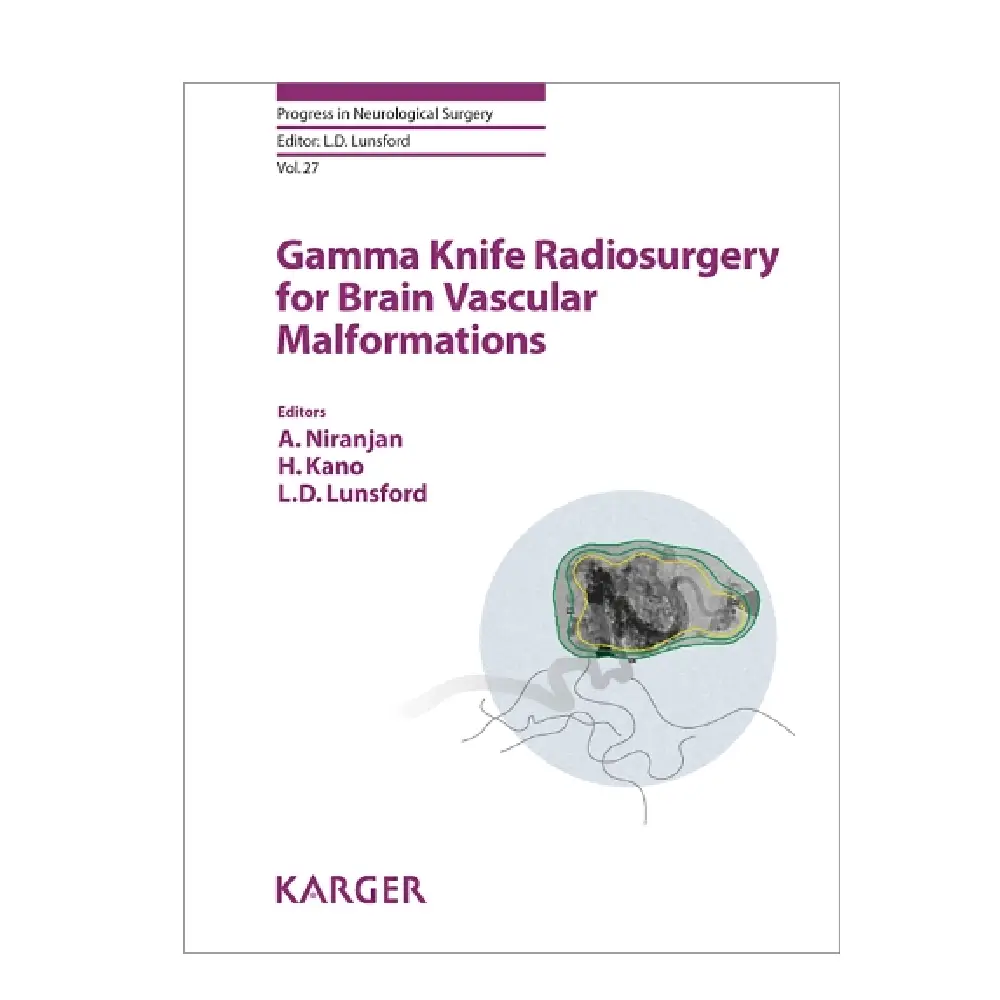
Gamma Knife Radiosurgery for Brain Vascular Malformations is a specialized medical volume published in 2012 by S. Karger AG as part of the Progress in Neurological Surgery series. It collates the extensive clinical experience of international experts in the management of complex brain vascular lesions using Gamma Knife radiosurgery (GKRS) — a refined form of stereotactic radiosurgery (SRS) that delivers focused radiation without traditional surgery.
With more than 30 years of accumulated clinical experience, the book provides an evidence-based evaluation of the role of GKRS in treating the major types of vascular malformations — arteriovenous malformations (AVMs), cavernous malformations, and dural arteriovenous fistulas (DAVFs). It discusses treatment indications, outcomes, risks, technical nuances, and evolving strategies in the context of modern multidisciplinary care.
Clinical Context and Need
Brain vascular malformations represent a challenging category of neurological disease because they carry risks of hemorrhage, seizures, neurological deficits, and sometimes sudden death if untreated. Historically, microsurgery was the mainstay of treatment, but it involves craniotomy and carries significant surgical risks. Endovascular embolization — threading instruments through blood vessels to block the malformation — became another option, though it also has limitations depending on lesion location.
Radiosurgery, pioneered with devices like the Leksell Gamma Knife, emerged as a minimally invasive alternative to traditional open surgery. It delivers many intersecting beams of radiation from multiple angles that converge on the target lesion with millimeter precision, causing gradual obliteration of abnormal vessels over months to years.
GKRS’s ability to treat lesions without incisions, especially in deep or eloquent brain regions (areas responsible for vital functions like speech and movement), has made it particularly valuable — but understanding its indications, limitations, and long-term outcomes requires comprehensive, evidence-based guidance — which this text aims to provide.
Structure and Key Topics
While the book does not follow a simple narrative format, its contents can be broadly grouped into the following key themes:
1. History and Principles of Radiosurgery
The early chapters outline the evolution of radiosurgery, particularly the development of the Gamma Knife and its precision targeting technology. These sections cover the physical and radiobiological principles underlying stereotactic radiosurgery, dose planning, imaging requirements, and technical considerations for optimal treatment delivery.
2. Arteriovenous Malformations (AVMs)
AVMs are tangles of abnormal blood vessels that shunt blood directly from arteries to veins, bypassing capillaries. This abnormal circuitry predisposes patients to bleeding (hemorrhage), which can be life-threatening. The book presents detailed reviews from clinical specialists on the long-term outcomes of AVMs treated with GKRS.
Key points include:
-
Obliteration rates for small to medium AVMs often range broadly depending on lesion size and location, with many studies showing successful closure over a latency period of 2–5 years.
-
Clinical decision algorithms highlight how GKRS can be used alone or in combination with embolization or microsurgery for optimal patient management.
The editors and contributors summarize decades of data, emphasizing how radiosurgery integrates into individualized treatment strategies for AVMs.
3. Cavernous Malformations and Dural AV Fistulas
Unlike AVMs, cavernous malformations are clusters of dilated capillaries without large feeding arteries. Their risk profile includes bleeding and seizures, and surgical resection is often difficult if they lie deep or are near critical brain structures. GKRS is discussed as a viable alternative for lesions deemed surgically risky.
Dural arteriovenous fistulas — abnormal connections between dural arteries and venous sinuses — can also be targeted with radiosurgery, and the book provides insights into their radiosurgical management, outcomes, and complication profiles.
Evidence-Based Guidelines and Future Directions
A significant strength of this book is its emphasis on evidence-based guidelines. Each section synthesizes decades of clinical data, offering practical recommendations on patient selection, radiation dosing, and expected outcomes. These guidelines help clinicians navigate complex decisions, such as:
-
When to use GKRS as a stand-alone therapy versus part of a multimodal plan;
-
How to balance the latency to obliteration with hemorrhage risk;
-
Managing treatment-related complications and follow-up strategies.
The book also highlights areas where knowledge is evolving, such as optimizing staged radiosurgical approaches for larger lesions and combining radiosurgery with embolization in selected cases.
Audience and Importance
This text is an essential reference for neurosurgeons, neurologists, radiation oncologists, neuroradiologists, and specialists in cerebrovascular disorders. Its comprehensive approach — combining technical details, clinical outcomes, and evidence-based recommendations — makes it valuable not only for seasoned practitioners but also for trainees seeking deep insight into the role of Gamma Knife radiosurgery in vascular neurosurgery.


Reviews
There are no reviews yet