
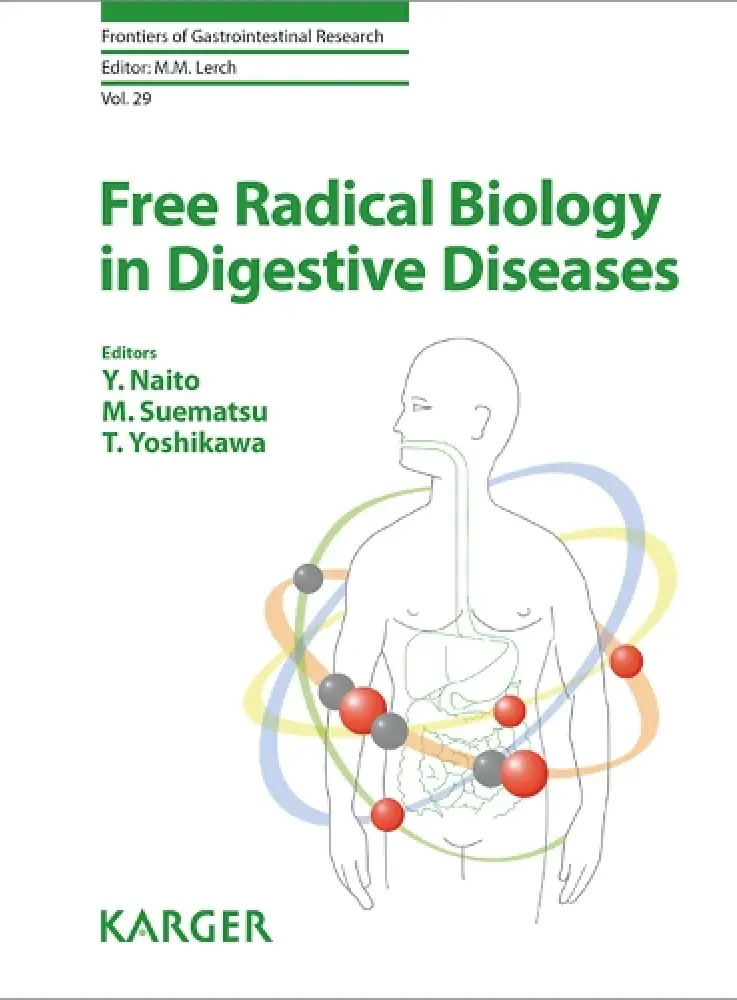
Free Radical Biology in Digestive Diseases is an important and specialized field of study that explores the role of reactive oxygen species (ROS) and reactive nitrogen species (RNS) in the pathogenesis of gastrointestinal (GI) disorders. Free radicals are highly reactive molecules generated as byproducts of normal cellular metabolism, particularly during oxidative processes. While they play essential roles in cell signaling and immune defense, excessive production or inadequate antioxidant defense leads to oxidative stress, which can damage cellular structures and contribute to disease.
The book begins by explaining the fundamental concepts of free radical biology, including the sources and types of reactive species. It highlights endogenous sources such as mitochondrial respiration, enzymatic reactions, and immune cell activity, as well as exogenous sources like environmental toxins, drugs, and dietary factors. The balance between free radicals and antioxidants is emphasized as a key determinant of cellular health. Antioxidant systems, including enzymes like superoxide dismutase, catalase, and glutathione peroxidase, are discussed for their protective role in neutralizing oxidative damage.
A major focus of the text is the involvement of oxidative stress in digestive diseases. In the gastrointestinal tract, the mucosal lining is particularly vulnerable to oxidative injury due to constant exposure to dietary components, microbes, and inflammatory stimuli. The book explains how oxidative stress contributes to conditions such as gastritis, peptic ulcer disease, inflammatory bowel disease (IBD), and colorectal cancer. For instance, in IBD, excessive activation of immune cells leads to the release of large amounts of ROS, which damage the intestinal epithelium and perpetuate inflammation.
The role of free radicals in liver diseases is also extensively covered. The liver, being a central organ in metabolism and detoxification, is highly susceptible to oxidative stress. Conditions such as alcoholic liver disease, non-alcoholic fatty liver disease (NAFLD), and hepatitis are linked to increased production of free radicals. The book describes how oxidative stress leads to lipid peroxidation, protein modification, and DNA damage, ultimately contributing to liver inflammation, fibrosis, and cirrhosis.
In addition, the book examines the impact of oxidative stress on pancreatic disorders, including acute and chronic pancreatitis. It explains how the imbalance between oxidants and antioxidants can trigger inflammatory cascades, leading to tissue injury and impaired pancreatic function. Similarly, oxidative mechanisms are discussed in relation to gastrointestinal cancers, where free radicals can induce genetic mutations and promote tumor progression.
The clinical implications of free radical biology are a key highlight of the text. It explores diagnostic approaches that measure oxidative stress markers, such as malondialdehyde and reduced glutathione levels, to assess disease severity and progression. These biomarkers provide valuable insights into the underlying mechanisms of digestive diseases and help guide therapeutic decisions.
Therapeutic strategies aimed at reducing oxidative stress are also discussed in detail. The book highlights the role of antioxidant therapy, including dietary antioxidants like vitamins C and E, polyphenols, and other natural compounds. Pharmacological agents that target oxidative pathways are explored as potential treatments for various GI disorders. Lifestyle modifications, such as dietary changes and avoidance of harmful substances like alcohol and smoking, are emphasized as important preventive measures.
Furthermore, the book addresses emerging research in the field, including the role of the gut microbiome in modulating oxidative stress and the development of novel antioxidant therapies. Advances in molecular biology and biotechnology are expected to enhance the understanding of oxidative mechanisms and lead to more targeted and effective treatments.
Overall, Free Radical Biology in Digestive Diseases provides a comprehensive and insightful overview of how oxidative stress influences gastrointestinal health and disease. By integrating basic science with clinical applications, it offers valuable knowledge for researchers, clinicians, and students interested in gastroenterology and molecular medicine.



Reviews
There are no reviews yet