
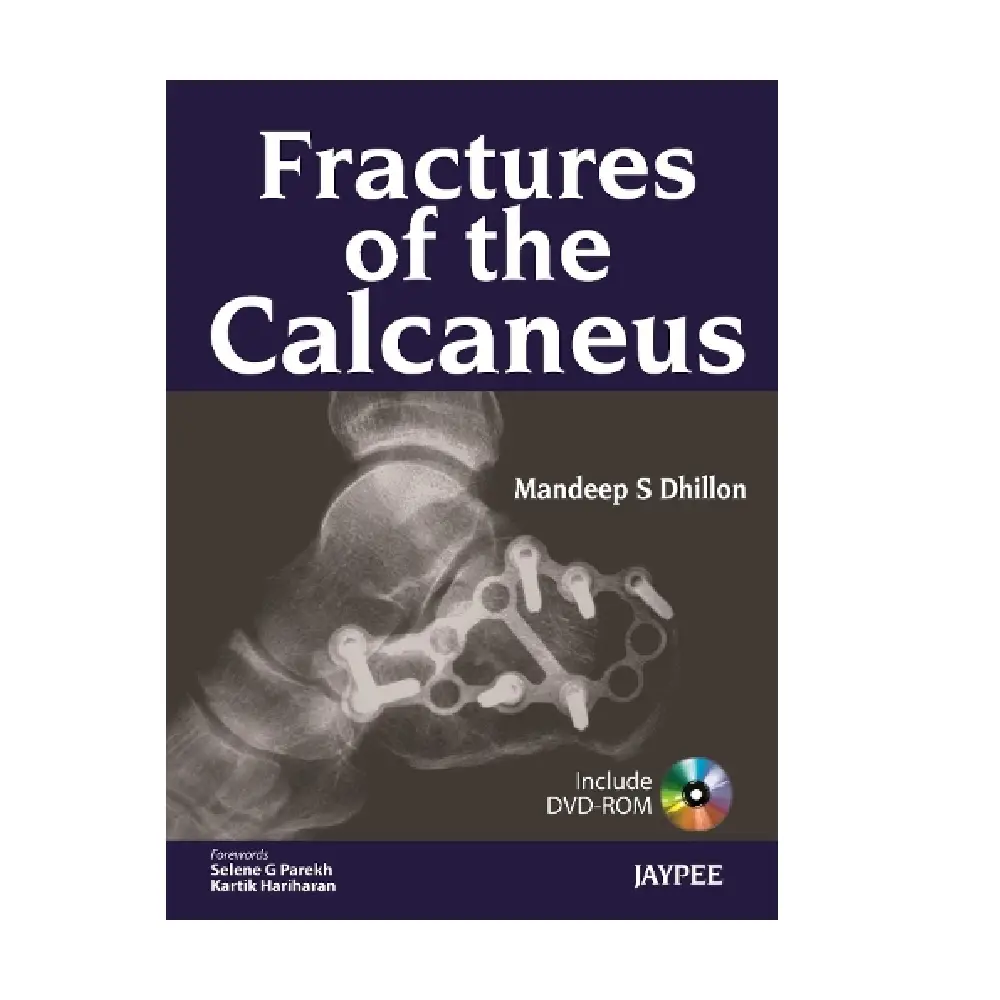


Fractures of the Calcaneus
The calcaneus, or heel bone, is the largest tarsal bone in the foot, serving as a critical weight-bearing structure and acting as the posterior lever arm for the Achilles tendon during gait. Fractures of the calcaneus are relatively uncommon, accounting for approximately 2% of all fractures, but they are the most frequent tarsal bone fractures. These injuries typically result from high-energy axial loading, such as falls from height, motor vehicle collisions, or crush injuries, and often involve significant morbidity due to their impact on foot biomechanics, subtalar joint function, and overall mobility. Proper diagnosis, classification, and management are crucial to restoring alignment, preserving joint function, and minimizing long-term complications.
Anatomy and Biomechanics
Understanding calcaneal anatomy is essential for fracture management. The calcaneus articulates with the talus superiorly at the subtalar joint, with the cuboid anteriorly at the calcaneocuboid joint, and indirectly supports the ankle joint. Its structure consists of a posterior tuberosity, sustentaculum tali medially, and anterior process laterally. The posterior facet is the primary load-bearing area in the subtalar joint, while the body of the calcaneus houses the trabecular network that distributes axial loads during ambulation. The bone’s rigid trabecular architecture makes it prone to comminution under high-energy impacts.
The subtalar joint plays a pivotal role in inversion and eversion, and calcaneal fractures often disrupt this articulation, leading to impaired hindfoot mechanics. Preservation of joint congruity, especially the posterior facet, is critical to preventing post-traumatic arthritis and long-term functional deficits.
Mechanism of Injury
Most calcaneal fractures occur due to axial loading, typically from a fall from height where the individual lands on the heel. The force is transmitted through the talus into the calcaneus, causing compression, comminution, and displacement. Less commonly, direct trauma or rotational forces can produce avulsion or extra-articular fractures. High-energy trauma may also be associated with concomitant injuries, including spinal compression fractures, ipsilateral lower limb fractures, and soft tissue trauma.
Classification
Calcaneal fractures are generally classified into intra-articular and extra-articular types.
-
Intra-articular fractures involve the posterior facet of the subtalar joint and account for approximately 75% of calcaneal fractures. They are further subclassified using the Sanders classification, which is based on CT imaging of the posterior facet:
-
Type I: Non-displaced
-
Type II: Two-part fracture
-
Type III: Three-part fracture
-
Type IV: Comminuted, highly unstable fractures
-
-
Extra-articular fractures do not involve the subtalar joint and include avulsion fractures of the anterior process, tuberosity fractures, and fractures of the sustentaculum tali. These are usually less complex but still impact heel mechanics.
Clinical Presentation
Patients typically present with heel pain, swelling, and inability to bear weight. Ecchymosis may appear on the plantar or medial aspect of the heel. A history of high-energy trauma is common, and careful neurovascular assessment of the foot is necessary to identify compartment syndrome or soft tissue compromise. Posterior tibial tendon injury or plantar fascia damage should be assessed in displaced fractures.
Imaging and Diagnosis
Plain radiographs, including lateral, axial (Harris), and oblique views, are the first-line imaging modality. The lateral view allows evaluation of Bohler’s angle and Gissane’s angle, which are indicators of fracture displacement and severity. Bohler’s angle, normally 20–40°, decreases in displaced fractures. Computed tomography (CT) scans, particularly axial and coronal reconstructions, are essential for assessing intra-articular involvement, fracture lines, and comminution, and for preoperative planning.
Management Principles
Treatment of calcaneal fractures aims to restore heel height, alignment, and subtalar joint congruity while minimizing complications. Management is individualized based on fracture type, displacement, soft tissue status, patient comorbidities, and functional demands.
-
Non-operative management is indicated for minimally displaced intra-articular fractures, extra-articular fractures, or patients unfit for surgery. It includes immobilization in a splint or cast, elevation, non-weight-bearing, analgesia, and physiotherapy. Close monitoring is necessary to ensure alignment and prevent secondary displacement.
-
Surgical management is often required for displaced intra-articular fractures, open fractures, or those with significant hindfoot deformity. Open reduction and internal fixation (ORIF) via an extended lateral approach is the standard, aiming to reconstruct the posterior facet, restore Bohler’s angle, and reestablish calcaneal height and width. Minimally invasive techniques and percutaneous screw fixation are alternatives in selected patients to reduce soft tissue complications.
Complications
Calcaneal fractures are associated with high complication rates. Early complications include wound breakdown, infection, and neurovascular compromise. Late complications include post-traumatic subtalar arthritis, malunion with heel widening or varus/valgus deformity, chronic pain, and reduced range of motion. Accurate reduction, soft tissue preservation, and early rehabilitation are key to reducing long-term morbidity.
Rehabilitation
Postoperative rehabilitation involves gradual weight-bearing, range-of-motion exercises, and gait training. Physical therapy focuses on subtalar joint mobility, strengthening of intrinsic and extrinsic foot muscles, and restoration of normal gait mechanics. Long-term follow-up is required to monitor for arthritis and functional deficits.
Conclusion
Fractures of the calcaneus are complex injuries with significant implications for foot biomechanics and patient mobility. Successful management requires detailed knowledge of anatomy, mechanism of injury, accurate classification, and appropriate selection of operative or non-operative treatment. Multidisciplinary care, including orthopedic surgeons, physiotherapists, and pain management specialists, is essential to optimize outcomes. Despite advances in imaging and surgical techniques, calcaneal fractures remain challenging, with functional recovery often dependent on meticulous reconstruction, soft tissue management, and structured rehabilitation. Early diagnosis, careful surgical planning, and individualized care plans are pivotal in reducing complications and restoring optimal foot function.





Reviews
There are no reviews yet