
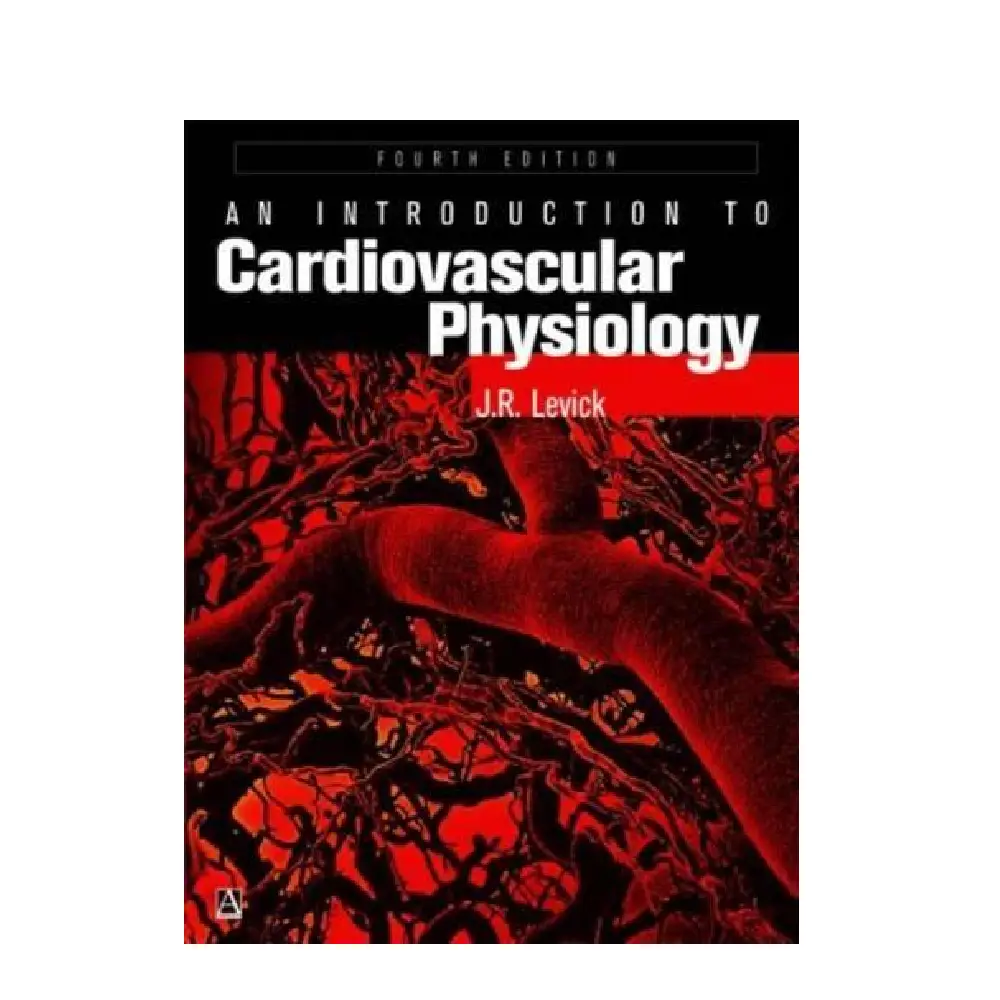
An Introduction to Cardiovascular Physiology (4th Edition) — Overview
An Introduction to Cardiovascular Physiology provides a clear, integrated, and clinically relevant explanation of how the cardiovascular system functions. Unlike texts that focus purely on isolated facts, this book emphasizes concepts and mechanisms — helping readers understand not just what happens in the cardiovascular system but why it happens and how it relates to health and disease.
Foundations of the Cardiovascular System
The cardiovascular system is composed of the heart, blood vessels, and blood. Its primary function is to deliver oxygen and nutrients to tissues and remove metabolic waste products. The heart acts as a pump, generating pressure to circulate blood, while arteries, capillaries, and veins form a network of conduits that distribute and return blood. The fourth edition begins with the fundamental properties of the heart and vasculature, laying a foundation for understanding dynamic physiological responses.
The Heart as a Pump
At the center of cardiovascular physiology is the heart, a muscular organ whose rhythmic contractions drive blood flow. The text explains the anatomy of the heart, including the four chambers, valves, and conduction system. Key concepts include:
-
Cardiac cycle: The sequence of events during a heartbeat, including systole (contraction) and diastole (relaxation).
-
Stroke volume and cardiac output: Stroke volume is the amount of blood ejected with each beat; cardiac output is the volume pumped per minute (heart rate × stroke volume).
-
Pressure–volume relationships: Graphical models showing how pressure and volume change in the ventricles during the cardiac cycle help explain how the heart adjusts to different demands.
By linking mechanical events to electrical signals — such as those represented on the electrocardiogram (ECG) — the book shows how rhythm, contractility, preload, and afterload determine cardiac performance.
Electrical Activity and Excitation–Contraction Coupling
The heart’s electrical system coordinates contraction. Pacemaker cells in the sinoatrial (SA) node generate impulses that travel through the atrioventricular (AV) node and conduction pathways. The book describes:
-
Resting membrane potential and the role of ion gradients.
-
Action potentials in pacemaker and contractile cells.
-
Calcium’s pivotal role in coupling electrical signals to contraction.
Understanding these electrical mechanisms is essential for interpreting arrhythmias and the effects of drugs that modify heart rhythm.
Regulation of Cardiac Output
Cardiac output must adjust to meet changing metabolic demands. The text explores:
-
Intrinsic control through the Frank–Starling mechanism, whereby increased venous return stretches cardiac muscle fibers and enhances contraction.
-
Extrinsic control via the autonomic nervous system: sympathetic stimulation increases heart rate and force; parasympathetic stimulation slows the heart.
Hormones such as adrenaline further modulate function during stress or exercise.
Vascular Function and Blood Flow
Blood flows through vessels according to pressure gradients and resistance. Arteries, arterioles, capillaries, venules, and veins each have distinct roles:
-
Arterioles are primary regulators of systemic vascular resistance.
-
Capillaries facilitate exchange of gases, nutrients, and waste, governed by Starling forces.
-
Veins act as capacitance vessels that store blood and return it to the heart.
The book uses Poiseuille’s law to explain how vessel radius, blood viscosity, and vessel length determine resistance and flow.
Blood Pressure — Control and Regulation
Blood pressure represents the force exerted by circulating blood on vessel walls. It is determined by cardiac output and systemic vascular resistance. The text reviews:
-
Short-term regulation: Baroreceptors in carotid sinuses and aortic arch sense pressure changes and rapidly adjust heart rate and vessel tone via neural reflexes.
-
Long-term regulation: The kidneys play a central role through fluid balance and hormones such as renin, angiotensin, and aldosterone.
By linking physiology to common clinical conditions like hypertension, the book emphasizes how dysregulation of these systems contributes to disease.
Microcirculation and Tissue Perfusion
The microcirculation — capillaries and surrounding structures — is where exchange occurs. The text explains:
-
Capillary dynamics controlled by hydrostatic and oncotic pressures.
-
Lymphatic system role in returning interstitial fluid to circulation.
-
Local autoregulation mechanisms that maintain blood flow within organs despite changes in perfusion pressure.
These principles illuminate how tissues such as the brain and kidney protect their function under variable conditions.
Integration and Homeostasis
Cardiovascular physiology does not operate in isolation. Respiratory, renal, endocrine, and nervous systems interact to maintain homeostasis. For example:
-
Exercise physiology: Increased metabolism triggers coordinated increases in heart rate, stroke volume, and vasodilation in active muscles.
-
Shock states: Failure of cardiovascular regulation — such as in hypovolemia or septic shock — illustrates how loss of homeostasis leads to organ dysfunction.
Clinical Relevance
Throughout the fourth edition, clinical examples illustrate how physiological concepts apply to real-world conditions:
-
Heart failure: Understood as impaired cardiac output due to structural or functional abnormalities.
-
Arrhythmias: Interpreted through disruptions in electrical pathways.
-
Hypertension: Linked to increased systemic resistance and the burden on the heart.
By grounding pathophysiological explanations in basic mechanisms, the text prepares readers to understand disease states and therapeutic interventions.
Conclusion
The fourth edition of An Introduction to Cardiovascular Physiology delivers a clear, concept-driven exploration of how the heart and blood vessels function. Its emphasis on mechanisms rather than memorization makes it a vital learning tool for medical students, nurses, and allied health professionals. By integrating physiology with clinical insight, the book helps readers appreciate how cardiovascular systems operate in both health and disease, and how dysfunction leads to the conditions most frequently encountered in clinical practice.

Reviews
There are no reviews yet