
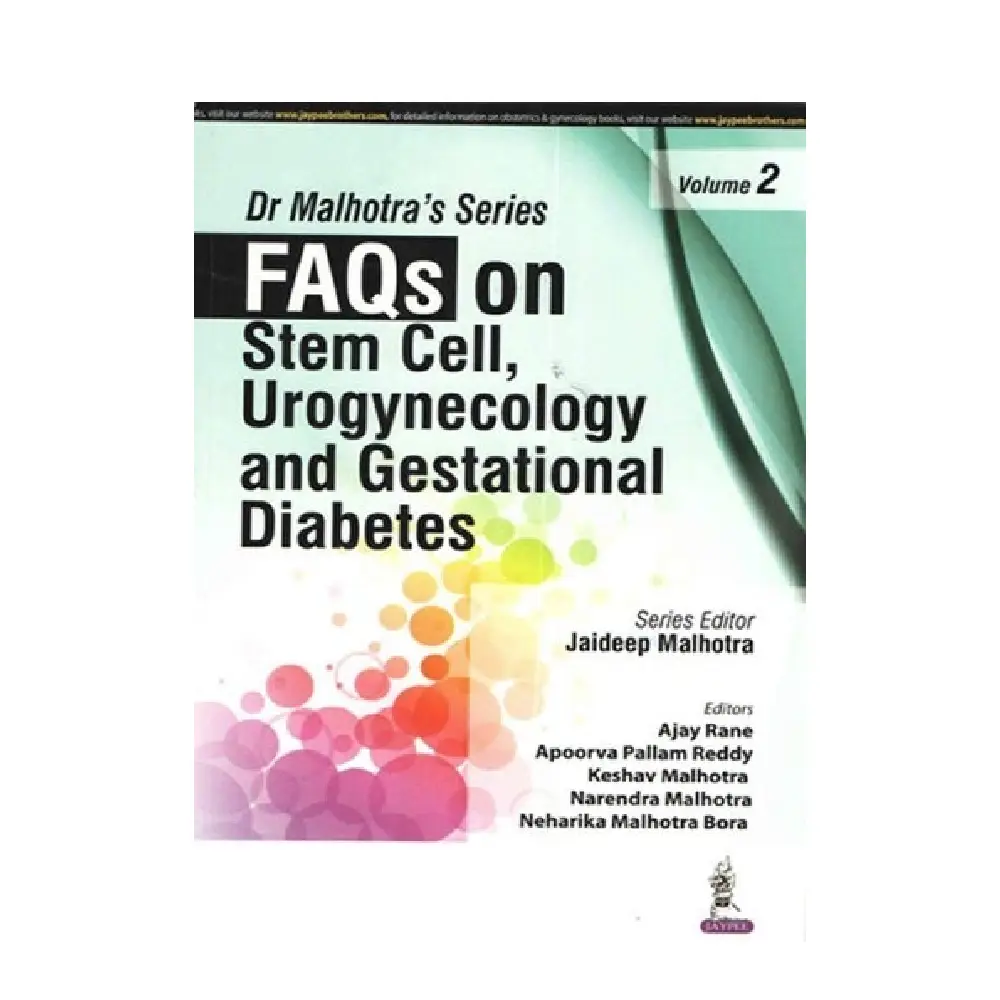


FAQs on Stem Cell, Urogynecology and Gestational Diabetes (Volume 2)
This volume presents a comprehensive, clinically oriented discussion addressing frequently asked questions in three rapidly evolving and highly relevant areas of obstetrics and gynecology: stem cell therapy, urogynecology, and gestational diabetes mellitus (GDM). Designed for postgraduate students, practicing obstetricians, gynecologists, and allied health professionals, the book adopts a practical FAQ format that simplifies complex concepts while maintaining scientific depth and evidence-based guidance.
The section on stem cells explores fundamental principles and emerging applications in reproductive medicine. It begins with essential questions such as: What are stem cells? What types exist? How are embryonic, adult, and induced pluripotent stem cells different? The discussion clarifies that stem cells possess two defining characteristics—self-renewal and the ability to differentiate into specialized cell types. In gynecology, stem cell research has opened new possibilities in ovarian regeneration, endometrial repair, treatment of Asherman’s syndrome, premature ovarian insufficiency, and even infertility management. The FAQ format explains how mesenchymal stem cells derived from bone marrow, adipose tissue, or umbilical cord blood are being investigated for regenerative therapies. Ethical considerations, regulatory issues, safety concerns, and current clinical trial evidence are presented in a balanced manner, ensuring that readers understand both the promise and limitations of this evolving field.
The urogynecology section addresses common and complex pelvic floor disorders encountered in clinical practice. Frequently asked questions cover urinary incontinence, pelvic organ prolapse, overactive bladder, voiding dysfunction, and fecal incontinence. The text explains the anatomical and physiological basis of pelvic floor dysfunction and highlights risk factors such as childbirth trauma, aging, obesity, menopause, and chronic straining. Clear answers guide readers through diagnostic approaches including detailed history-taking, bladder diaries, pelvic examination, urodynamic studies, and imaging when indicated. Management strategies are discussed stepwise, beginning with conservative measures such as pelvic floor muscle training, lifestyle modification, bladder retraining, and pharmacotherapy. Advanced options including pessary use, minimally invasive sling procedures, and reconstructive pelvic surgery are explained with indications and contraindications. The book also addresses complications of mesh surgery and contemporary recommendations for safe surgical practice. By presenting information in question-and-answer form, the section enhances clarity and practical decision-making.
The gestational diabetes mellitus (GDM) component focuses on screening, diagnosis, pathophysiology, and management of hyperglycemia during pregnancy. FAQs address why GDM develops, who is at risk, and how it impacts maternal and fetal outcomes. The text explains the role of placental hormones in causing insulin resistance and emphasizes the importance of universal or risk-based screening depending on regional guidelines. Diagnostic criteria using oral glucose tolerance tests are outlined clearly. Management strategies include medical nutrition therapy, glucose monitoring, exercise, and pharmacologic treatment when required. The volume discusses insulin as the gold standard therapy and reviews the role of oral hypoglycemic agents such as metformin and glyburide in selected cases. Emphasis is placed on preventing complications such as macrosomia, shoulder dystocia, neonatal hypoglycemia, and long-term risk of type 2 diabetes in both mother and child. Postpartum follow-up and counseling regarding lifestyle modification and future pregnancy planning are also highlighted.
A distinctive strength of this volume is its integration of evidence-based medicine with real-world clinical scenarios. Each FAQ not only answers theoretical questions but also addresses practical challenges faced in outpatient and inpatient settings. Clinical pearls, flowcharts, and summarized guidelines make the material accessible and applicable. The structured layout enables quick reference, making it especially useful during clinical rounds or examination preparation.
Interdisciplinary relevance is another important feature. Stem cell therapy intersects with reproductive endocrinology and regenerative medicine; urogynecology overlaps with urology and colorectal specialties; gestational diabetes requires collaboration with endocrinologists, nutritionists, and neonatologists. By covering these diverse yet interconnected topics in a single volume, the book encourages a holistic approach to women’s health.
In conclusion, FAQs on Stem Cell, Urogynecology and Gestational Diabetes (Volume 2) serves as a valuable academic and clinical resource. Its question-and-answer format promotes clarity, reinforces core concepts, and supports evidence-based management. Covering cutting-edge research, common clinical conditions, and multidisciplinary care strategies, the volume equips practitioners with updated knowledge essential for modern obstetric and gynecologic practice.






Reviews
There are no reviews yet