
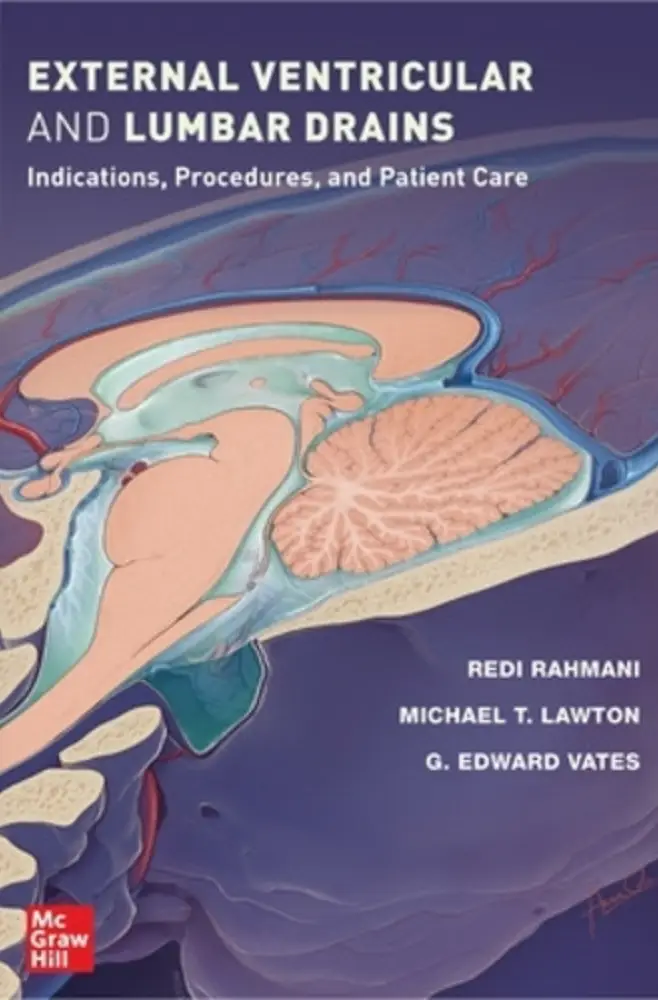

External Ventricular and Lumbar Drains: Indications, Procedures and Patient Care (PB)
External Ventricular and Lumbar Drains: Indications, Procedures and Patient Care is a specialized clinical guide that provides a comprehensive overview of cerebrospinal fluid (CSF) drainage techniques used in neurosurgical and critical care settings. This book is designed for neurosurgeons, anesthesiologists, critical care physicians, nurses, and trainees who are involved in the management of patients requiring intracranial pressure monitoring or CSF diversion. It combines theoretical knowledge with practical guidance, making it a valuable resource for both learning and clinical application.
The book begins by explaining the fundamental concepts of cerebrospinal fluid physiology and intracranial pressure (ICP). Understanding the production, circulation, and absorption of CSF is essential for recognizing pathological conditions such as hydrocephalus, intracranial hemorrhage, and traumatic brain injury. The text clearly outlines how abnormalities in CSF dynamics can lead to increased intracranial pressure, which may require urgent intervention through drainage techniques.
A major focus of the book is on external ventricular drains (EVDs) and lumbar drains, which are critical tools in neurosurgical practice. EVDs are commonly used to monitor intracranial pressure and drain excess CSF from the ventricles of the brain, particularly in conditions such as subarachnoid hemorrhage, intraventricular hemorrhage, and severe head injury. Lumbar drains, on the other hand, are typically inserted into the lumbar subarachnoid space and are used for conditions such as CSF leaks, normal pressure hydrocephalus, and to reduce intracranial pressure in selected cases.
The book provides detailed descriptions of the indications for both types of drains. It emphasizes clinical decision-making, helping practitioners determine when and why these interventions are necessary. By outlining clear guidelines and contraindications, the text supports safe and appropriate use of these procedures in various clinical scenarios.
Another key component of the book is its step-by-step explanation of procedural techniques. It covers patient preparation, equipment selection, insertion methods, and positioning. For EVD placement, the book describes anatomical landmarks, sterile techniques, and methods to ensure accurate catheter placement. Similarly, lumbar drain insertion is explained with attention to patient positioning, needle insertion, and avoidance of complications. The inclusion of diagrams and illustrations enhances understanding and helps clinicians visualize the procedures.
The text also places strong emphasis on patient care and monitoring, which is crucial for successful outcomes. It discusses how to manage drainage systems, monitor output, and assess neurological status. Proper leveling of the drainage system, prevention of over-drainage, and maintenance of sterility are highlighted as essential practices. The book also addresses common complications such as infection, blockage, hemorrhage, and catheter misplacement, along with strategies for prevention and management.
In addition to procedural guidance, the book explores the role of multidisciplinary care. Effective management of patients with EVDs and lumbar drains requires coordination among neurosurgeons, intensivists, nurses, and other healthcare professionals. The text underscores the importance of communication and teamwork in ensuring patient safety and optimizing clinical outcomes.
The language of the book is clear and concise, making complex neurosurgical concepts accessible to a wide audience. It balances technical detail with practical advice, ensuring that readers can apply the information in real-world settings. Case-based examples and clinical scenarios further enhance learning by illustrating how theoretical knowledge is translated into practice.
In conclusion, External Ventricular and Lumbar Drains: Indications, Procedures and Patient Care (PB) is an essential resource for healthcare professionals involved in neurosurgical and critical care. Its comprehensive coverage of indications, procedural techniques, and patient management provides a solid foundation for safe and effective practice. By combining clinical expertise with practical guidance, the book supports improved patient outcomes and enhances the quality of care in this critical area of medicine.



Reviews
There are no reviews yet