
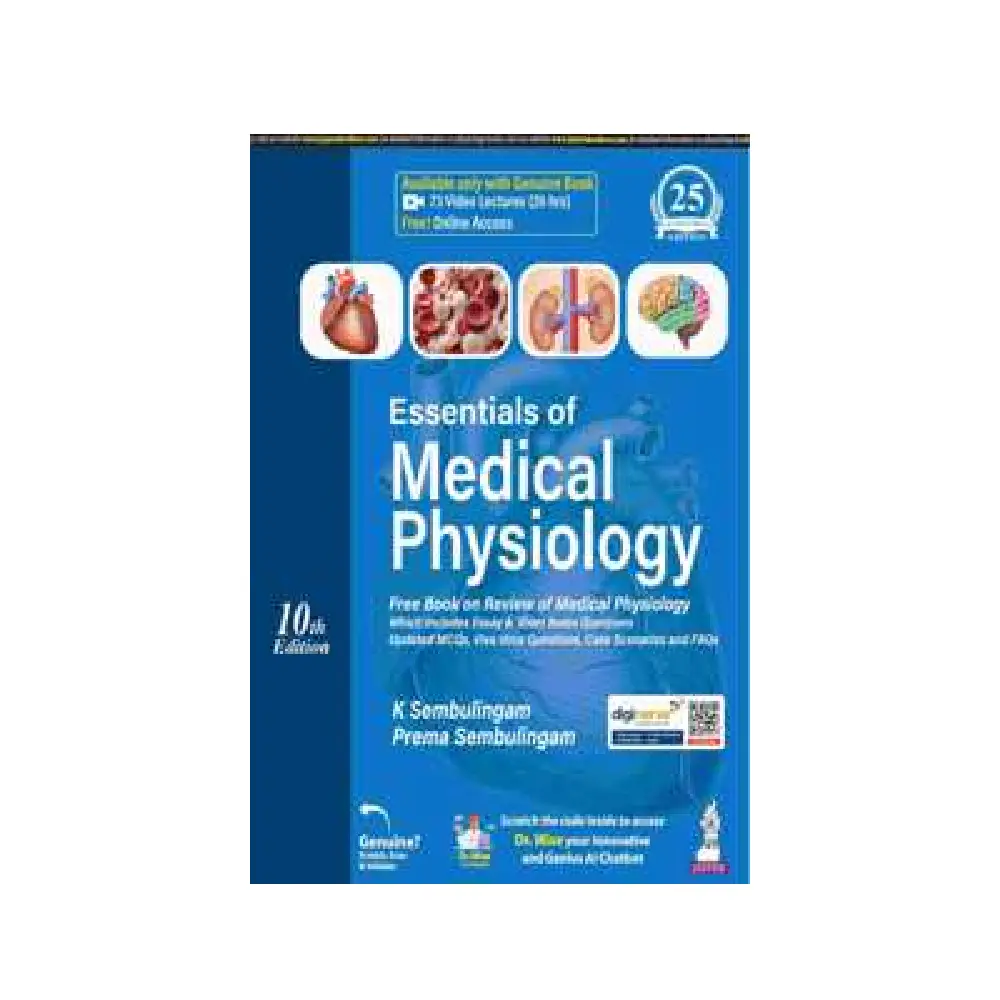

Essentials of Medical Physiology, 10th Edition
Essentials of Medical Physiology (10th Edition) is a widely respected foundational textbook in the field of human physiology, authored by K.S.embly V. N. Sharma and popularly known as “Essentials of Medical Physiology”. It is designed primarily for medical students, nursing and allied health trainees, as well as anyone seeking a clear, integrated understanding of how the human body functions. The 10th edition continues the tradition of presenting core concepts in an accessible yet scientifically rigorous format.
Purpose and Educational Value
The central aim of this book is to explain normal human physiological processes in a way that bridges basic science with clinical relevance. Physiology forms the foundation for understanding pathophysiology and clinical medicine; a strong grasp of physiological mechanisms helps students interpret clinical cases, understand disease processes, and make informed decisions in patient care.
The 10th edition is structured to present physiology systematically—from cellular and molecular principles to organ system function—highlighting how complex biological processes maintain homeostasis in health.
Organization and Approach
The book is arranged into chapters that align with major organ systems, each beginning with a description of normal anatomy followed by in‑depth explanations of physiological function. Key features include clear illustrations, summary tables, clinical correlations, and high‑yield explanations that reinforce learning.
1. Cellular and Membrane Physiology
A solid understanding of physiology begins at the cellular level. The early chapters review the cell membrane, membrane transport mechanisms (diffusion, facilitated transport, active transport, ion pumps), and resting membrane potential. These concepts form the basis for understanding excitable tissues such as neurons and muscle.
Key cellular processes—such as action potential generation and propagation—are explained with supportive diagrams that illustrate electrochemical gradients and the role of specific ion channels.
2. Nervous System Physiology
The nervous system section explores both central (CNS) and peripheral nervous system (PNS) physiology. Topics include:
-
Neuronal communication and synaptic transmission
-
Sensory physiology, including receptors for touch, pain, vision, hearing, and balance
-
Motor control and reflex pathways
-
Autonomic nervous system (ANS) and its sympathetic/parasympathetic divisions
Clinical correlations—such as how spinal cord injury affects autonomic regulation or how nerve lesions impair sensation—help bridge theory with practice.
3. Musculoskeletal Physiology
This section covers skeletal muscle contraction, sliding filament theory, excitation‑contraction coupling, and determinants of muscle strength. Bone physiology, including remodeling and mineral homeostasis, is also addressed, providing groundwork for understanding metabolic bone disorders.
4. Cardiovascular Physiology
Cardiovascular physiology is one of the most clinically relevant areas of the book and is presented in well‑integrated detail:
-
Cardiac cycle mechanics, including pressure‑volume relationships
-
Heart rate and rhythm regulation, including pacemaker physiology
-
Cardiac output, stroke volume, and factors influencing them
-
Blood pressure regulation, baroreceptor reflexes, and long‑term control
-
Microcirculation and lymphatics
Clinical correlations abound, helping readers understand hypertension, heart failure, shock, and arrhythmias in physiological terms.
5. Respiratory Physiology
Respiratory function is explained from lung mechanics to gas exchange:
-
Pulmonary ventilation and compliance
-
Alveolar gas exchange and oxygen/carbon dioxide transport
-
Regulation of breathing by central and peripheral chemoreceptors
-
Ventilation‑perfusion relationships
Important clinical applications include how airway obstruction affects gas exchange, and how acid–base balance is influenced by respiratory function.
6. Renal and Fluid–Electrolyte Physiology
The kidneys are vital in maintaining internal balance:
-
Filtration, reabsorption, and secretion in the nephron
-
Regulation of extracellular fluid volume and electrolyte balance
-
Acid–base homeostasis and the role of buffers
-
Hormonal control via renin‑angiotensin‑aldosterone system (RAAS)
Clinical cases illustrate dehydration, edema, renal failure, and electrolyte disturbances, linking physiology to practice.
7. Endocrine Physiology
Endocrine control mechanisms are reviewed by major glands:
-
Hypothalamic‑pituitary axis
-
Thyroid and parathyroid hormones
-
Adrenal hormones and stress response
-
Pancreatic hormones and glucose regulation
The physiology of hormone action, feedback loops, and metabolic effects is tied to clinical scenarios such as diabetes mellitus and thyroid dysfunction.
8. Gastrointestinal Physiology
This section explains:
-
Motility and secretions of the GI tract
-
Digestion and absorption of nutrients
-
Liver and pancreatic function
The interplay between neural and hormonal regulation of digestion is contextualized with clinical examples of malabsorption and liver disease.
9. Reproductive and Developmental Physiology
Topics include male and female reproductive physiology, menstrual cycle regulation, pregnancy, and lactation. The integration of hormonal control and physiological adaptations during pregnancy is clearly presented.
High‑Yield Features
-
Illustrations and Flowcharts: Simplify complex pathways and enhance recall.
-
Clinical Correlations: Relate normal function to disease states.
-
Summary Tables: Offer quick comparison of key concepts.
-
Conceptual Questions: Facilitate self‑assessment and exam preparation.
Why This Edition Matters
The 10th edition brings physiology into the 21st century by incorporating:
-
Updated scientific findings
-
Contemporary clinical correlations
-
Enhanced visuals and learning aids
The text emphasizes not just memorization, but understanding—vital for effective problem solving in clinical and exam settings.
Conclusion
Essentials of Medical Physiology (10th Edition) is a robust, clinically oriented guide that equips readers with a deep understanding of human physiological mechanisms and how they apply to health and disease. Its clear narrative, comprehensive scope, and focus on clinical relevance make it an indispensable resource for medical students, health professionals, and anyone seeking to master the fundamentals of human physiology.

Reviews
There are no reviews yet