
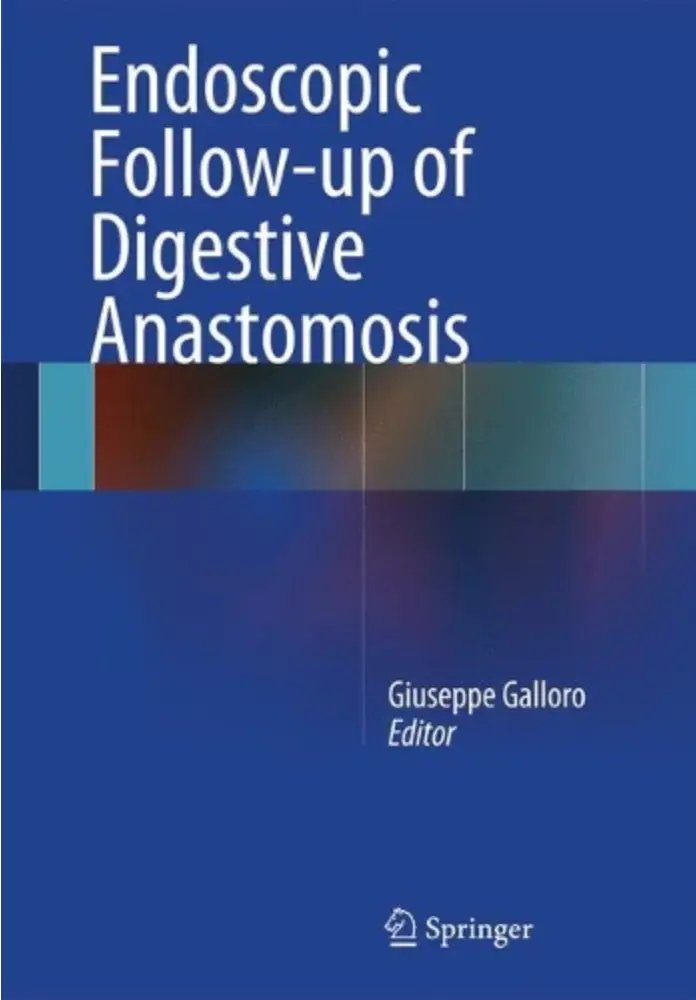
Endoscopic Follow-up of Digestive Anastomosis
Endoscopic Follow-up of Digestive Anastomosis is a specialized surgical and gastroenterological text that focuses on the postoperative evaluation and management of digestive tract anastomoses using endoscopic techniques. The book is designed for surgeons, gastroenterologists, and trainees involved in gastrointestinal surgery and endoscopy, offering a detailed understanding of how to monitor healing, detect complications, and guide therapeutic interventions after surgical reconstructions.
The book begins with an overview of digestive anastomosis, which refers to the surgical connection between two segments of the gastrointestinal tract following resection or reconstruction. It explains the indications for various types of anastomoses, such as esophageal, gastric, small intestinal, and colorectal procedures. The authors emphasize that successful outcomes depend not only on surgical technique but also on careful postoperative monitoring, where endoscopy plays a central role.
A key focus of the text is the role of endoscopy in assessing anastomotic healing. It provides detailed descriptions of normal postoperative findings, including mucosal appearance, vascularization, and tissue integration. Understanding these normal patterns is essential for distinguishing between expected healing changes and early signs of complications. The book includes high-quality endoscopic images that help clinicians recognize subtle variations in postoperative anatomy.
The detection and management of complications form a major component of the book. Anastomotic leaks, strictures, bleeding, and infections are discussed in depth. The authors explain how endoscopy can be used not only for diagnosis but also for therapeutic interventions. For example, endoscopic techniques such as stent placement, dilation, clipping, and vacuum therapy are described as minimally invasive options for managing complications. These approaches can often reduce the need for reoperation and improve patient outcomes.
The book also addresses timing and protocols for endoscopic follow-up. It outlines when and how often endoscopic evaluations should be performed based on the type of surgery and patient risk factors. Early detection of complications is emphasized, as it allows for prompt intervention and reduces morbidity and mortality. The text also discusses the role of multidisciplinary care, involving surgeons, endoscopists, radiologists, and nursing staff in the postoperative management process.
Another important aspect covered in the book is the use of advanced endoscopic technologies. Techniques such as high-definition imaging, chromoendoscopy, and narrow-band imaging are discussed in the context of improving diagnostic accuracy. These technologies enhance visualization of mucosal details and help in identifying early pathological changes that may not be visible with conventional endoscopy.
The book also explores the long-term follow-up of patients with digestive anastomoses. It discusses issues such as functional outcomes, nutritional status, and quality of life. In cases of oncological surgery, endoscopic surveillance is highlighted as an important tool for detecting recurrence or secondary malignancies. The authors stress the importance of individualized follow-up strategies tailored to the patient’s condition and surgical history.
Practical guidance is provided throughout the text, including tips for performing endoscopic procedures safely and effectively in postoperative patients. The book also addresses potential challenges, such as altered anatomy and patient discomfort, and offers solutions to overcome these difficulties. Case studies and clinical examples are included to illustrate real-world applications and decision-making processes.
In conclusion, Endoscopic Follow-up of Digestive Anastomosis is a valuable resource that highlights the critical role of endoscopy in postoperative gastrointestinal care. By combining detailed clinical insights with practical techniques, the book equips healthcare professionals with the knowledge needed to monitor healing, detect complications early, and provide effective treatment. Its focus on minimally invasive approaches and multidisciplinary care makes it an essential guide for improving surgical outcomes and patient quality of life.




Reviews
There are no reviews yet