
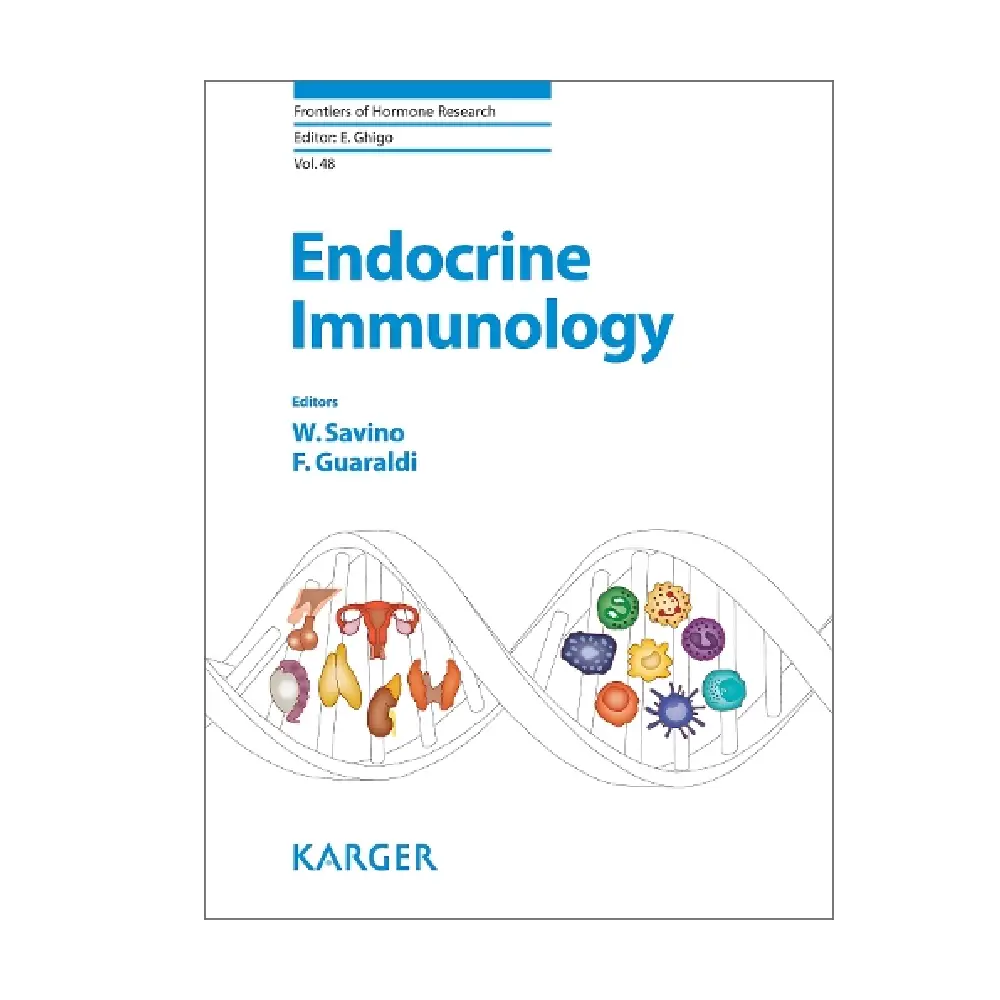


Endocrine Immunology is a specialized volume in the renowned Frontiers of Hormone Research series, published by S. Karger AG. This authoritative text explores the dynamic and complex interactions between the endocrine and immune systems—two major regulatory networks that maintain physiological balance. The book provides a comprehensive overview of how hormones influence immune function and how immune mediators, in turn, affect endocrine organs. It is particularly valuable for endocrinologists, immunologists, researchers, and postgraduate students seeking an in-depth understanding of this interdisciplinary field.
The endocrine and immune systems were once studied as independent entities. However, advances in molecular biology, cellular immunology, and neuroendocrinology have demonstrated that these systems communicate extensively through shared signaling molecules, receptors, and feedback mechanisms. This volume highlights how cytokines, chemokines, and growth factors influence hormone secretion, and how hormones such as glucocorticoids, sex steroids, thyroid hormones, and insulin modulate immune responses. The concept of bidirectional communication is central to the book’s theme, emphasizing that immune and endocrine pathways are tightly integrated.
One of the core topics covered is the role of the hypothalamic–pituitary–adrenal (HPA) axis in immune regulation. Stress-induced activation of the HPA axis leads to the secretion of glucocorticoids, which exert potent immunosuppressive and anti-inflammatory effects. The book explains how dysregulation of this axis can contribute to chronic inflammatory conditions and autoimmune diseases. It also examines how inflammatory cytokines such as interleukin-1 (IL-1), interleukin-6 (IL-6), and tumor necrosis factor-alpha (TNF-α) influence hypothalamic and pituitary function, thereby altering hormonal balance.
Autoimmune endocrine disorders form a significant focus of the volume. Conditions such as autoimmune thyroid disease (including Graves’ disease and Hashimoto’s thyroiditis), type 1 diabetes mellitus, Addison’s disease, and autoimmune polyendocrine syndromes are discussed in detail. The authors analyze genetic susceptibility, environmental triggers, and immune tolerance mechanisms that lead to endocrine gland destruction. The interplay between T lymphocytes, B lymphocytes, autoantibodies, and endocrine tissue antigens is presented with clarity, integrating both clinical and molecular perspectives.
Another important theme is the role of sex hormones in immune modulation. Estrogens, progesterone, and androgens are shown to exert differential effects on immune responses, which partly explains gender differences in autoimmune disease prevalence. Women, for example, are more susceptible to autoimmune disorders, and the book explores hormonal influences on immune cell activation, antibody production, and cytokine profiles. Pregnancy-related immunological adaptations and their endocrine control are also discussed.
The volume further addresses metabolic-endocrine–immune interactions, particularly in obesity and type 2 diabetes. Adipose tissue is described not merely as an energy storage organ but as an active endocrine organ secreting adipokines such as leptin and adiponectin. These molecules influence immune responses and systemic inflammation. Chronic low-grade inflammation associated with obesity is presented as a key mechanism linking metabolic and endocrine dysfunction with immune activation.
Emerging topics such as checkpoint inhibitors and immune-related adverse events are also included, especially in the context of cancer immunotherapy. Immune checkpoint blockade can lead to endocrine complications such as thyroiditis, hypophysitis, and adrenal insufficiency. The book discusses the pathophysiology, diagnosis, and management of these immune-mediated endocrine disorders, reflecting current clinical challenges in oncology and endocrinology.
In addition, the text explores the role of the thymus as an endocrine-immune interface and the importance of central tolerance in preventing autoimmune endocrinopathies. It also highlights advances in molecular diagnostics, including autoantibody assays and genetic testing, which aid in early detection and risk assessment of endocrine autoimmune diseases.
Each chapter is written by experts in endocrinology and immunology, ensuring scientific rigor and up-to-date references. The book combines basic science insights with clinical applications, making it both academically rich and clinically relevant. Illustrations, tables, and schematic diagrams enhance understanding of complex signaling pathways and immune mechanisms.
In summary, Endocrine Immunology (Volume 48, Frontiers of Hormone Research) provides a thorough and modern exploration of the interconnectedness of hormonal and immune systems. By bridging foundational research and clinical practice, it deepens understanding of autoimmune endocrine disorders, stress responses, metabolic inflammation, and immunotherapy-related endocrinopathies. This volume stands as an essential reference for those engaged in endocrine research, immunology, internal medicine, and related biomedical sciences.








Reviews
There are no reviews yet