
Echocardiography
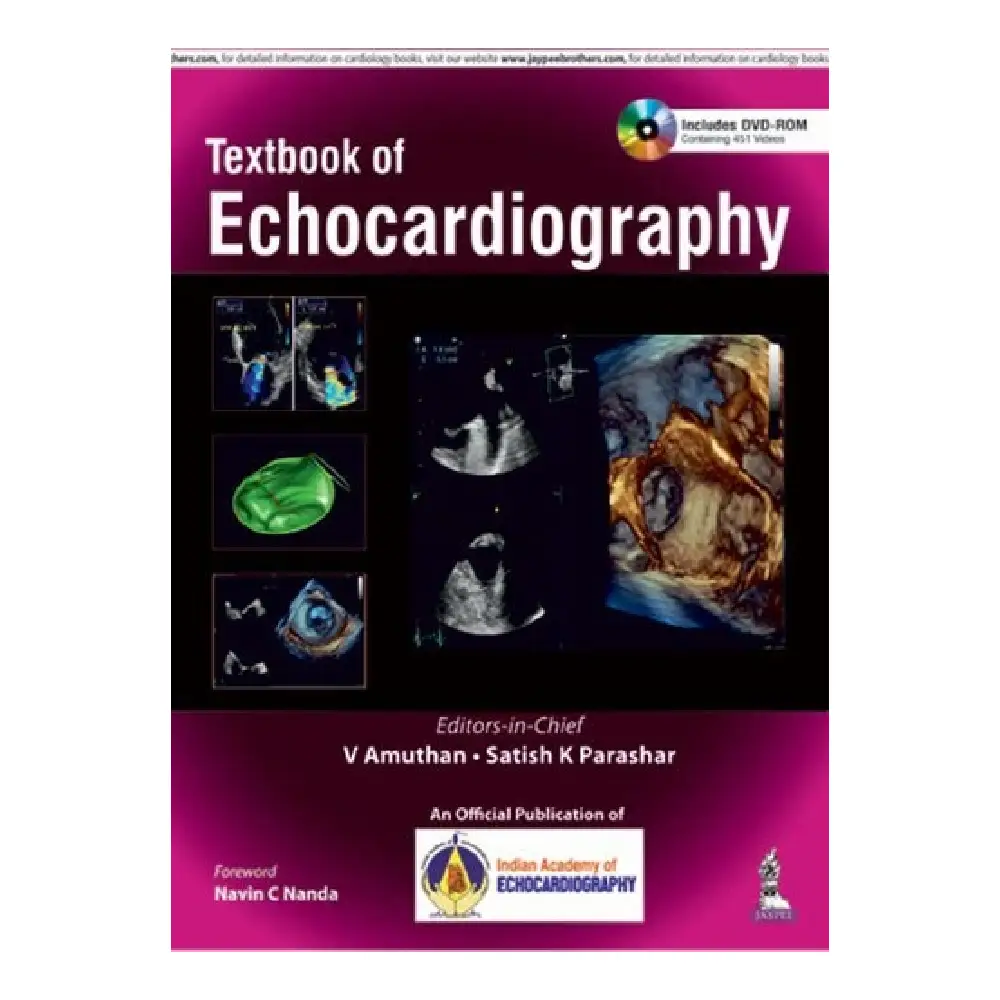
Echocardiography is a non-invasive imaging modality that uses ultrasound waves to visualize the heart’s structure, function, and hemodynamics. It is a cornerstone of cardiovascular diagnostics, allowing real-time assessment of cardiac anatomy, valve function, chamber size, wall motion, and blood flow. Echocardiography is widely used in cardiology for diagnosis, treatment planning, intraoperative guidance, and follow-up of various cardiovascular disorders.
Principles and Physics of Echocardiography
Echocardiography operates on the principles of ultrasound, using high-frequency sound waves (2–10 MHz) emitted by a transducer. These waves penetrate tissues and reflect back when they encounter interfaces with different acoustic impedances, such as blood, myocardium, and valve structures. The reflected signals are processed to create dynamic images of the heart. Key imaging modes include:
-
M-mode (Motion mode): Provides a one-dimensional, high-temporal resolution trace of cardiac structures, useful for measuring chamber dimensions, wall thickness, and valve motion.
-
2D Echocardiography (B-mode): Produces cross-sectional images of the heart, allowing visualization of chambers, valves, and surrounding structures.
-
Doppler Echocardiography: Assesses blood flow velocity and direction. Color Doppler shows flow patterns, while spectral Doppler (pulsed and continuous wave) measures precise velocities.
-
3D Echocardiography: Provides volumetric imaging of the heart, particularly useful in assessing complex valvular and structural lesions.
Types of Echocardiography
There are several approaches to echocardiography, tailored to specific clinical needs:
-
Transthoracic Echocardiography (TTE): The standard, non-invasive method where the transducer is placed on the chest wall. TTE provides comprehensive information about cardiac structure and function in most patients.
-
Transesophageal Echocardiography (TEE): The transducer is introduced into the esophagus, placing it close to the heart. TEE offers higher resolution images, especially for posterior structures, prosthetic valves, and intracardiac masses.
-
Stress Echocardiography: Combines imaging with exercise or pharmacologic stress to assess myocardial ischemia, wall motion abnormalities, and functional capacity.
-
Contrast Echocardiography: Uses microbubble contrast agents to enhance endocardial border definition and assess myocardial perfusion.
Clinical Applications
Echocardiography is versatile and applicable in a wide range of clinical scenarios:
-
Assessment of Cardiac Function: Measurement of left ventricular ejection fraction (LVEF), right ventricular function, and diastolic function are critical in heart failure, cardiomyopathies, and post-myocardial infarction evaluation.
-
Valvular Heart Disease: Echocardiography evaluates valve morphology, stenosis, regurgitation, and prosthetic valve function. Quantitative assessment with Doppler helps determine the severity of valve lesions and guides intervention planning.
-
Congenital Heart Disease: TTE and TEE identify septal defects, outflow tract abnormalities, and complex congenital anomalies in both pediatric and adult patients.
-
Intracardiac Masses and Thrombi: TEE is highly sensitive for detecting thrombi, vegetations, and tumors, particularly in atria and on prosthetic valves.
-
Pericardial Disease: Echocardiography detects pericardial effusion, tamponade, and constrictive physiology.
-
Aortic and Great Vessel Evaluation: TEE is used to identify aortic dissections, aneurysms, and coarctation.
Quantitative Measurements
Echocardiography allows accurate quantification of cardiac dimensions, wall thickness, chamber volumes, stroke volume, cardiac output, and valve gradients. Advanced techniques like speckle-tracking strain imaging assess myocardial deformation and detect subclinical dysfunction.
Intraoperative and Interventional Guidance
TEE is invaluable in the operating room and catheterization lab. It guides valve repair or replacement, detects residual defects after surgery, monitors cardiac function during anesthesia, and assists in structural heart interventions such as transcatheter aortic valve replacement (TAVR) or left atrial appendage closure.
Advantages and Limitations
Advantages of echocardiography include its non-invasive nature, portability, real-time imaging, and absence of ionizing radiation. Limitations include operator dependence, variable image quality in obese patients or those with lung disease, and limited acoustic windows for certain structures. TEE, while offering superior resolution, is semi-invasive and requires sedation.
Future Directions
Echocardiography continues to evolve with technological advances. Three-dimensional and four-dimensional imaging, fusion with other imaging modalities, artificial intelligence-based image analysis, and automated quantification are enhancing diagnostic accuracy and efficiency. Contrast-enhanced and strain imaging are increasingly used for early detection of myocardial disease and risk stratification.
Conclusion
Echocardiography is an essential tool in modern cardiology, providing detailed structural, functional, and hemodynamic information non-invasively. Its diverse applications, real-time capability, and adaptability to various clinical scenarios make it indispensable in diagnosis, procedural guidance, and patient monitoring. Mastery of echocardiographic techniques, combined with proper interpretation and integration with clinical findings, is vital for optimal cardiovascular care.



Reviews
There are no reviews yet