
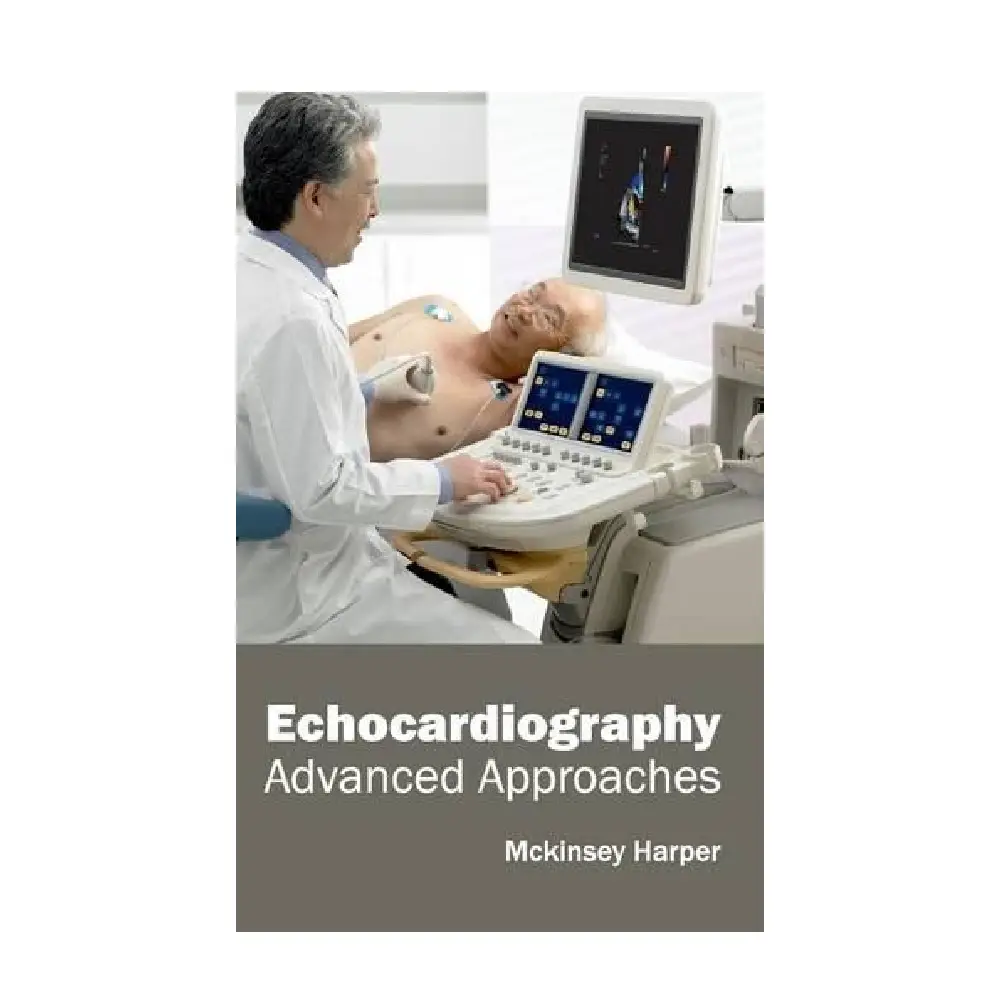
Echocardiography: Advanced Approaches
Echocardiography: Advanced Approaches is a comprehensive cardiology reference that explores sophisticated imaging techniques used in modern cardiovascular diagnosis and management. Moving beyond foundational transthoracic echocardiography (TTE), this text focuses on advanced modalities that enhance diagnostic precision, guide interventional procedures, and improve patient outcomes. Designed for cardiologists, cardiac anesthesiologists, imaging specialists, fellows, and sonographers, the book bridges the gap between basic echocardiographic principles and cutting-edge clinical application.
Advanced Imaging Modalities
A major emphasis of the book is the transition from standard two-dimensional imaging to advanced three-dimensional (3D) echocardiography. Three-dimensional imaging allows real-time volumetric assessment of cardiac chambers, valves, and congenital abnormalities. It significantly improves the evaluation of mitral valve pathology, prosthetic valve function, and structural heart disease. The text explains acquisition techniques, post-processing methods, and interpretation strategies necessary to optimize 3D image quality.
Speckle-tracking echocardiography and strain imaging are also extensively discussed. These techniques assess myocardial deformation, providing sensitive markers of subclinical ventricular dysfunction. Strain analysis is particularly valuable in detecting early cardiomyopathy, chemotherapy-induced cardiac toxicity, and ischemic heart disease before conventional ejection fraction declines. The book outlines practical guidelines for strain acquisition and highlights common technical pitfalls.
Transesophageal and Intraoperative Echocardiography
Advanced transesophageal echocardiography (TEE) forms another core section. TEE provides high-resolution images of posterior cardiac structures and is indispensable during cardiac surgery and structural interventions. The book details probe manipulation, multiplane imaging, and comprehensive TEE examination protocols. It also explores the role of 3D TEE in guiding procedures such as mitral valve repair, transcatheter aortic valve replacement (TAVR), atrial septal defect closure, and left atrial appendage occlusion.
Intraoperative echocardiography is discussed with a focus on perioperative decision-making. Advanced approaches allow real-time assessment of surgical outcomes, valve repairs, ventricular function, and hemodynamic status. Clinical case examples illustrate how echocardiographic findings influence immediate surgical strategy.
Stress Echocardiography
Stress echocardiography is examined in depth, including both exercise and pharmacologic stress protocols. Advanced techniques improve sensitivity for ischemia detection and viability assessment. The text explains wall motion scoring, myocardial contrast echocardiography, and quantitative approaches that enhance diagnostic accuracy. Special attention is given to differentiating ischemic from non-ischemic cardiomyopathies and evaluating patients with intermediate coronary artery disease risk.
Myocardial Contrast and Perfusion Imaging
Myocardial contrast echocardiography (MCE) is highlighted as an evolving technique for assessing myocardial perfusion. By using microbubble contrast agents, clinicians can evaluate coronary microcirculation and myocardial blood flow in real time. The book explains the physics of contrast agents, safety considerations, and clinical applications in acute coronary syndromes and stress testing. Advanced perfusion imaging provides a radiation-free alternative to nuclear techniques in selected cases.
Structural Heart Disease and Interventional Guidance
Modern echocardiography plays a central role in structural heart disease interventions. The book dedicates significant attention to imaging guidance for percutaneous procedures. Advanced imaging helps determine patient eligibility, device sizing, and procedural success. 3D echocardiography, fusion imaging, and real-time TEE guidance are emphasized as transformative tools in minimally invasive cardiology.
Chapters on valvular heart disease demonstrate how quantitative Doppler techniques and 3D planimetry improve the grading of stenosis and regurgitation. Accurate hemodynamic assessment supports timely intervention and better long-term outcomes.
Congenital and Pediatric Applications
Advanced echocardiographic methods are also applied in congenital heart disease. Complex anatomical visualization, shunt quantification, and postoperative follow-up require high-resolution imaging and detailed anatomical understanding. The book explains advanced imaging protocols tailored for congenital abnormalities, including atrial and ventricular septal defects, Tetralogy of Fallot, and complex cyanotic heart disease.
Diastology and Hemodynamic Assessment
Modern echocardiography extends beyond structural imaging to hemodynamic evaluation. The text covers advanced Doppler techniques, tissue Doppler imaging, and assessment of diastolic function. Detailed algorithms assist clinicians in estimating filling pressures and differentiating restrictive cardiomyopathy from constrictive pericarditis. Integration of multiple parameters enhances diagnostic confidence.
Emerging Technologies and Future Directions
The book concludes by examining emerging innovations such as artificial intelligence-assisted image analysis, automated border detection, and handheld echocardiography devices. These advancements promise improved reproducibility and expanded accessibility of cardiac imaging worldwide. The integration of multimodality imaging—combining echocardiography with cardiac MRI or CT—is also discussed as a growing trend in comprehensive cardiovascular assessment.
Educational Value and Clinical Relevance
Throughout the text, clinical case studies, high-quality illustrations, and imaging examples reinforce learning. Practical tips for avoiding artifacts, improving image acquisition, and interpreting complex findings make the content directly applicable to clinical practice. The book maintains a balance between technical detail and clinical utility, ensuring relevance for both trainees and experienced practitioners.
Conclusion
Echocardiography: Advanced Approaches provides an in-depth exploration of modern cardiac ultrasound techniques that extend far beyond basic imaging. By covering 3D imaging, strain analysis, contrast echocardiography, stress testing, interventional guidance, and emerging technologies, the book equips clinicians with the knowledge required to use echocardiography as a powerful diagnostic and procedural tool. Its emphasis on precision, innovation, and evidence-based application makes it an essential resource for advanced cardiovascular imaging practice.


Reviews
There are no reviews yet