
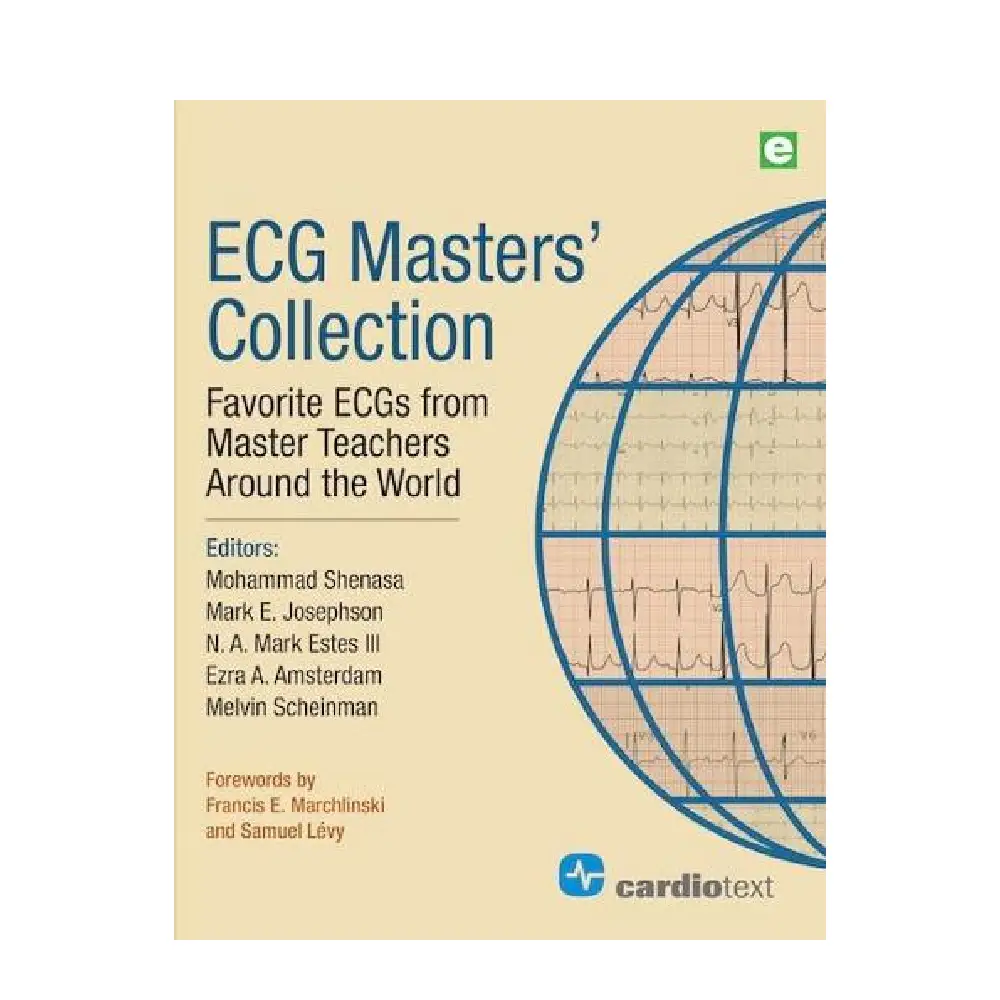

ECG Masters’ Collection: Favorite ECGs from Master Teachers Around the World
Electrocardiography (ECG) remains one of the most fundamental and powerful diagnostic tools in clinical medicine. Despite rapid advancements in imaging and laboratory diagnostics, the ECG continues to provide immediate, cost-effective, and life-saving information in emergency and outpatient settings alike. ECG Masters’ Collection: Favorite ECGs from Master Teachers Around the World represents a unique educational concept—bringing together curated ECG cases selected by internationally respected cardiologists and electrophysiologists, each accompanied by expert interpretation and teaching pearls.
Concept and Purpose
The central idea behind an ECG masters’ collection is simple yet powerful: learning directly from experts through real clinical cases. Instead of presenting dry theoretical explanations, the book (or collection) focuses on authentic ECG tracings that master clinicians consider memorable, challenging, or particularly instructive. Each case is chosen not only for diagnostic interest but also for the lessons it teaches about pattern recognition, clinical reasoning, and patient management.
This format transforms ECG learning from rote memorization into a dynamic, case-based experience.
Structure of the Collection
Typically, such a collection is organized into thematic sections, including:
-
Basic rhythm interpretation
-
Conduction abnormalities
-
Ischemia and infarction
-
Arrhythmias
-
Electrolyte disturbances
-
Drug-induced ECG changes
-
Pacemaker rhythms
-
Channelopathies and inherited arrhythmia syndromes
Each ECG tracing is usually presented with minimal initial clinical information, encouraging readers to interpret the rhythm independently before reviewing the expert explanation.
Educational Approach
The strength of a master-based ECG collection lies in its emphasis on pattern recognition combined with clinical context. Master teachers often share their personal approach to analyzing ECGs, including:
-
Systematic Interpretation:
-
Rate
-
Rhythm
-
Axis
-
Intervals
-
QRS morphology
-
ST-T changes
-
-
Clinical Correlation:
Masters highlight how ECG findings must always be interpreted in the context of patient symptoms, history, and risk factors. -
Diagnostic Pitfalls:
Many favorite ECGs are selected because they represent common mistakes or subtle findings that can easily be overlooked.
Common ECG Themes Featured
1. Acute Coronary Syndromes
Classic and atypical presentations of ST-elevation myocardial infarction (STEMI), posterior MI, Wellens’ syndrome, and de Winter T-wave patterns are often included. Master teachers emphasize early recognition to enable rapid reperfusion therapy.
2. Arrhythmias
Cases frequently include atrial fibrillation, atrial flutter with variable block, supraventricular tachycardia (SVT), ventricular tachycardia, and torsades de pointes. Experts explain distinguishing features between similar rhythms—for example, differentiating SVT with aberrancy from ventricular tachycardia.
3. Conduction Disorders
Bundle branch blocks, fascicular blocks, AV block (first, second, and third degree), and pre-excitation syndromes such as Wolff-Parkinson-White (WPW) are commonly presented with illustrative tracings.
4. Electrolyte and Drug Effects
Hyperkalemia, hypokalemia, digitalis effect, and drug-induced QT prolongation are classic teaching cases. These examples underscore the ECG’s role in systemic disease detection.
5. Rare and Fascinating Cases
Some master-selected ECGs include Brugada pattern, long QT syndrome, arrhythmogenic right ventricular cardiomyopathy, and pacemaker malfunctions—cases that test even experienced clinicians.
Teaching Pearls from Master Teachers
A defining feature of such collections is the inclusion of concise “teaching pearls”:
-
“Wide complex tachycardia is ventricular tachycardia until proven otherwise.”
-
“New left bundle branch block in chest pain should raise suspicion of acute MI.”
-
“Compare current ECG with previous tracings whenever possible.”
These pearls often reflect decades of clinical experience distilled into practical wisdom.
Importance for Different Learners
-
Medical Students: Gain structured interpretation skills.
-
Residents and Emergency Physicians: Improve rapid decision-making.
-
Cardiology Fellows: Deepen understanding of complex arrhythmias.
-
Experienced Clinicians: Refine pattern recognition and avoid diagnostic errors.
The case-based format makes it ideal for self-assessment and group teaching sessions.
Global Perspective
Because the collection includes contributions from master teachers around the world, it reflects diverse clinical experiences and healthcare settings. This global approach broadens exposure to uncommon presentations and varied patient populations.
Clinical Impact
The ultimate goal of mastering ECG interpretation is improved patient outcomes. Rapid recognition of life-threatening conditions such as acute MI, ventricular tachycardia, high-grade AV block, or hyperkalemia can be life-saving. By learning from expert-selected cases, clinicians enhance their diagnostic accuracy and confidence.
Conclusion
ECG Masters’ Collection: Favorite ECGs from Master Teachers Around the World represents more than a textbook—it is a curated learning journey guided by some of the world’s most experienced ECG interpreters. Through real-world cases, systematic analysis, and practical teaching pearls, the collection strengthens diagnostic skills and fosters deeper clinical insight. In an era of advanced imaging, the ECG remains indispensable—and mastering its interpretation continues to be a cornerstone of excellent cardiovascular care.



Reviews
There are no reviews yet