
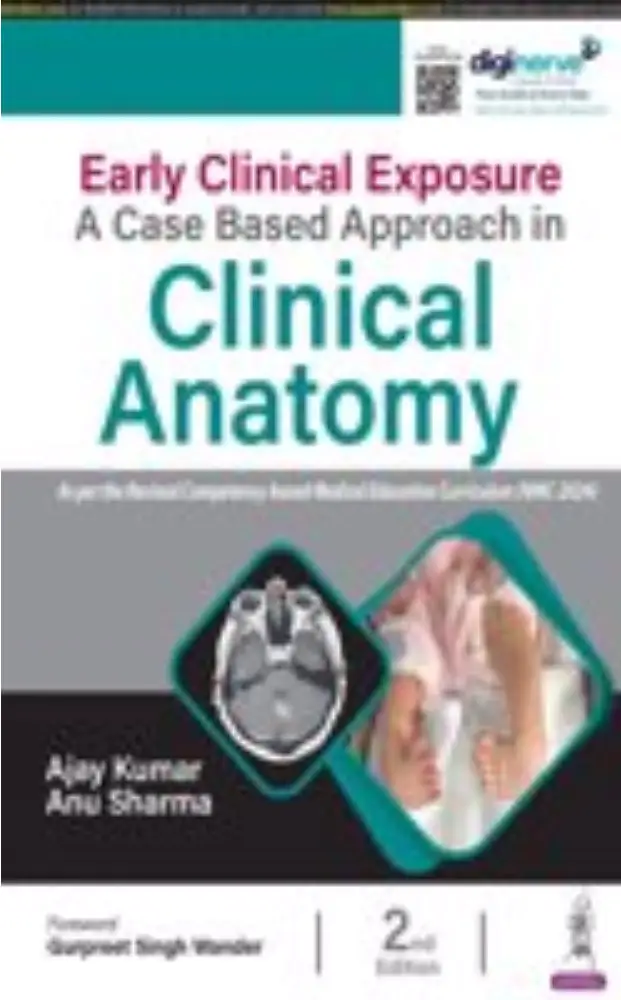

Early Clinical Exposure: A Case-Based Approach in Clinical Anatomy, 2nd Edition (Reprint)
Early Clinical Exposure: A Case-Based Approach in Clinical Anatomy (2nd Edition, Reprint) is a thoughtfully designed textbook that bridges the gap between basic anatomical sciences and their clinical application. Tailored primarily for first- and second-year medical students, this book emphasizes the integration of theoretical anatomy with real-life clinical scenarios, fostering a deeper understanding of the human body in health and disease.
The concept of Early Clinical Exposure (ECE) has become a cornerstone of modern medical education, particularly in competency-based curricula. This book aligns with that philosophy by introducing students to clinical contexts from the very beginning of their medical training. Instead of learning anatomy in isolation, students are encouraged to apply their knowledge through carefully curated case studies that simulate real patient situations. This approach not only enhances retention but also develops clinical reasoning and problem-solving skills early in the learning process.
The second edition has been revised and updated to reflect the evolving needs of medical education. It includes a wide range of case-based discussions covering all major regions of the human body such as the thorax, abdomen, head and neck, upper limb, and lower limb. Each case typically begins with a patient presentation, followed by guided questions that lead the student through relevant anatomical concepts. This structured format helps learners connect symptoms with underlying anatomical structures and mechanisms.
One of the key strengths of this textbook is its student-friendly presentation. Complex anatomical details are simplified using clear explanations, diagrams, and clinical correlations. The inclusion of high-quality illustrations and labeled images enhances visual learning, which is essential in mastering anatomy. Additionally, tables and summary boxes are strategically placed to highlight key points and facilitate quick revision.
The book also integrates radiological imaging such as X-rays, CT scans, and MRIs, allowing students to visualize anatomical structures as they appear in clinical practice. This exposure is invaluable in helping students become familiar with diagnostic tools they will encounter in their future careers. By correlating anatomical knowledge with imaging findings, the book strengthens the learner’s ability to interpret clinical data effectively.
Another notable feature is the emphasis on commonly encountered clinical conditions. The cases are selected to reflect real-world medical problems, ranging from trauma and infections to congenital anomalies and degenerative diseases. This not only makes learning more relevant but also prepares students for clinical postings and examinations. The question-and-answer format encourages active participation and self-assessment, making it an excellent resource for both classroom learning and independent study.
The textbook is also aligned with the guidelines of regulatory bodies such as the National Medical Commission (NMC), ensuring that it meets current academic standards. It supports integrated teaching methods and promotes a holistic understanding of medicine by connecting anatomy with physiology, pathology, and clinical practice.
Faculty members will find this book equally useful as a teaching aid. It can be used to facilitate interactive classroom sessions, group discussions, and problem-based learning activities. The case-based format encourages dialogue between students and instructors, making the learning experience more engaging and dynamic.
In conclusion, Early Clinical Exposure: A Case-Based Approach in Clinical Anatomy, 2nd Edition (Reprint) is an invaluable resource for medical students seeking to build a strong foundation in anatomy while developing essential clinical skills. Its case-based methodology, clear explanations, and clinical relevance make it a highly effective tool for modern medical education. By integrating basic science with clinical practice, the book prepares students to think like clinicians from the very start of their medical journey.


Reviews
There are no reviews yet