
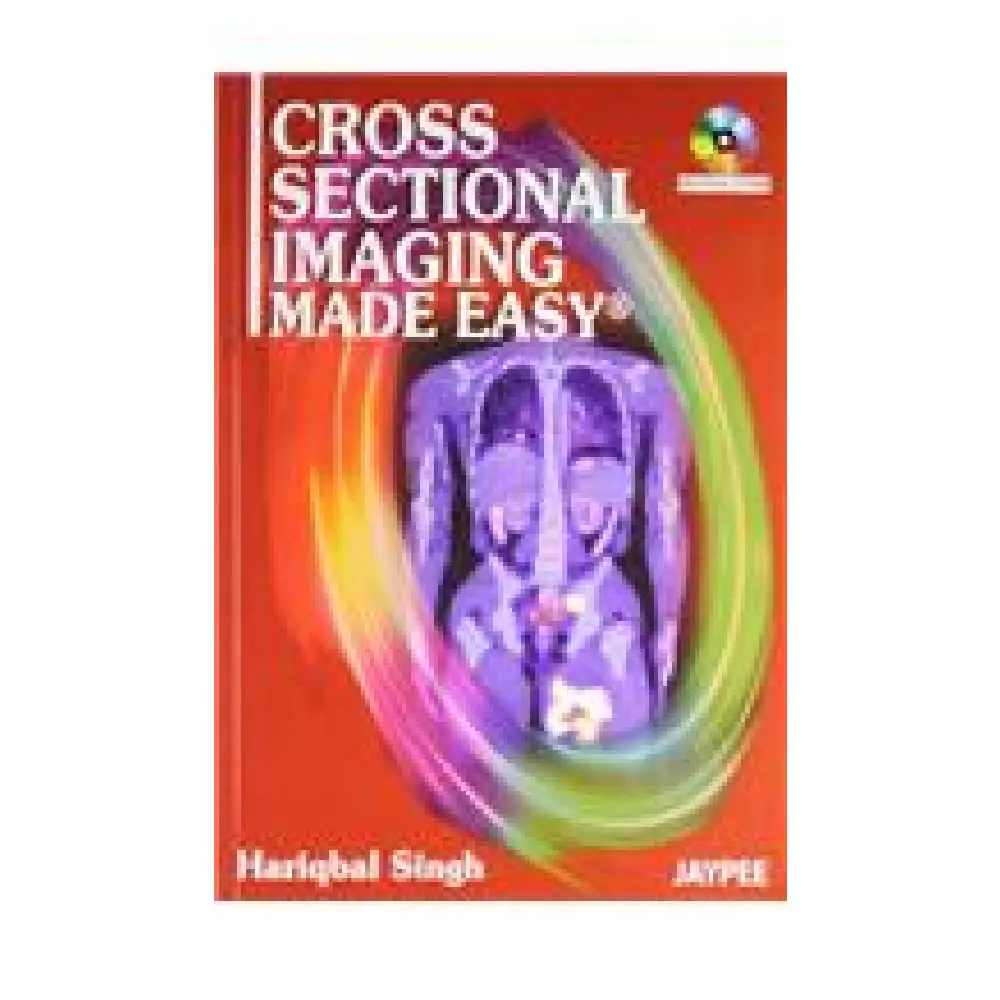

Cross-Sectional Imaging Made Easy
Cross-sectional imaging has transformed modern diagnostic medicine by allowing clinicians to visualize internal anatomy in multiple planes with exceptional detail. Techniques such as computed tomography (CT) and magnetic resonance imaging (MRI) provide sectional images of the body that enable accurate diagnosis, staging, and follow-up of a wide range of diseases. Cross-Sectional Imaging Made Easy aims to simplify these complex imaging modalities by focusing on fundamental principles, systematic interpretation, and clinical relevance.
What Is Cross-Sectional Imaging?
Cross-sectional imaging refers to imaging techniques that produce images of the body in thin slices, allowing visualization of structures in axial, sagittal, and coronal planes. Unlike conventional radiography, which compresses three-dimensional anatomy into a two-dimensional image, cross-sectional imaging offers precise anatomical localization and improved tissue contrast.
CT uses ionizing radiation to generate images based on tissue density differences, while MRI uses magnetic fields and radiofrequency pulses to produce images based on tissue composition and water content. Each modality has distinct strengths and limitations.
Indications and Clinical Value
Cross-sectional imaging plays a critical role in diagnosing trauma, infection, tumors, vascular disease, and inflammatory conditions. CT is often the first-line modality in emergency settings due to its speed and wide availability, making it ideal for evaluating head injury, chest and abdominal trauma, and acute stroke. MRI provides superior soft-tissue contrast and is particularly valuable in neurological, musculoskeletal, and pelvic imaging.
By providing detailed anatomical and functional information, cross-sectional imaging supports early diagnosis, guides intervention, and improves patient outcomes.
Understanding CT Imaging
CT imaging is based on X-ray attenuation values measured in Hounsfield units. Interpreting CT images requires understanding window settings, such as brain, lung, and soft-tissue windows, which optimize visualization of different tissues. Contrast-enhanced CT further improves lesion detection by highlighting vascular structures and enhancing pathological tissue.
Radiation exposure is an important consideration, and dose optimization strategies are essential, especially in pediatric and repeat imaging.
Understanding MRI Imaging
MRI produces images using different pulse sequences that emphasize specific tissue characteristics. Common sequences include T1-weighted, T2-weighted, and fluid-attenuated inversion recovery (FLAIR). Each sequence provides unique diagnostic information, allowing differentiation between normal and pathological tissues.
Although MRI does not use ionizing radiation, it requires careful patient screening due to contraindications such as certain implants or devices.
A Systematic Approach to Image Interpretation
A step-by-step approach is essential for accurate interpretation. Begin by confirming patient details and imaging parameters. Review images in a consistent order, assessing symmetry, anatomy, and organ systems systematically. Identify normal variants before focusing on abnormalities.
Clinical correlation is crucial—imaging findings should always be interpreted in the context of the patient’s symptoms and history.
Common Pitfalls and Tips
Misinterpretation can result from motion artifacts, partial volume effects, or unfamiliar anatomy. Awareness of these pitfalls and continuous practice help improve diagnostic accuracy. Collaboration with radiologists enhances learning and clinical decision-making.
Conclusion
Cross-Sectional Imaging Made Easy emphasizes clarity, structure, and clinical application. By understanding the principles of CT and MRI and adopting a systematic approach to interpretation, clinicians can confidently utilize cross-sectional imaging to support accurate diagnosis and effective patient care.



Reviews
There are no reviews yet