
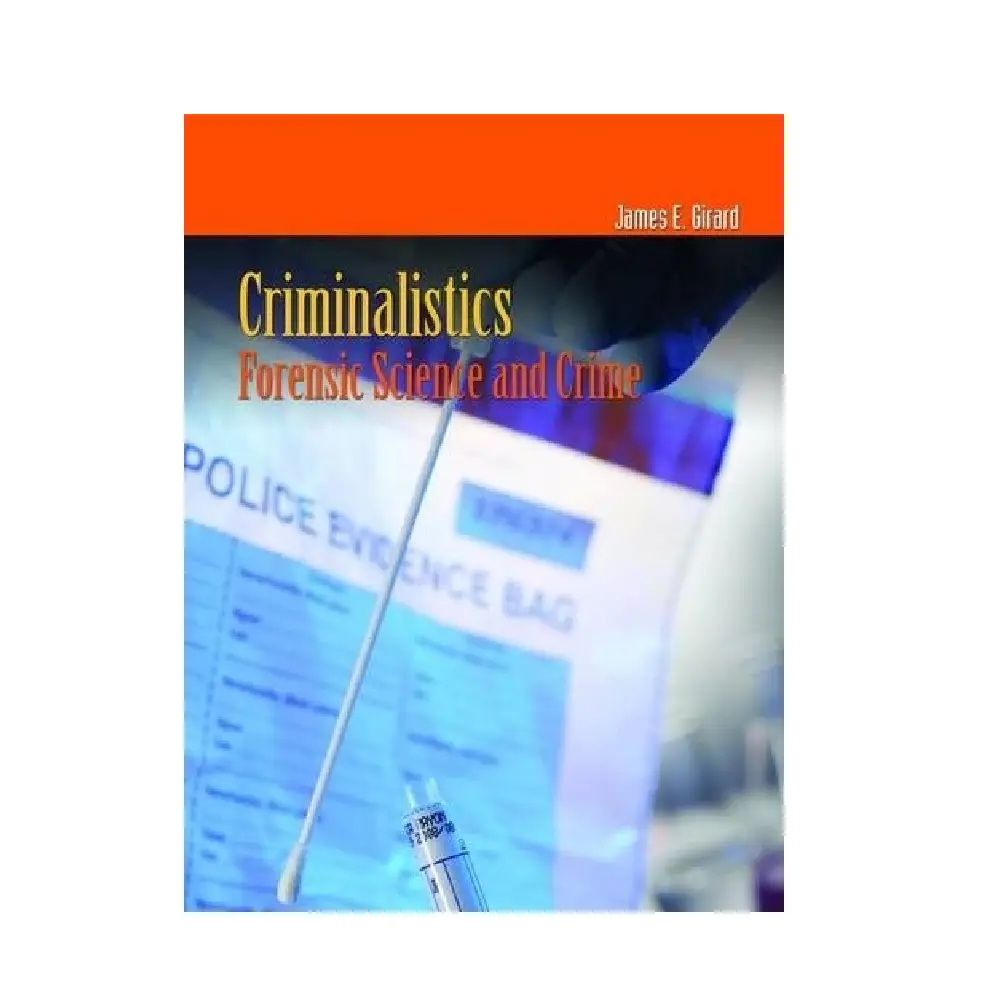

Criminalistics: Forensic Science and Crime — 700‑Word Overview
Criminalistics: Forensic Science and Crime is a comprehensive textbook that provides an in‑depth exploration of forensic science, its application in criminal investigations, and the integration of scientific techniques to solve crime. Designed for students, law enforcement professionals, and forensic practitioners, this book balances theoretical knowledge with practical, real‑world applications. It emphasizes the role of forensic science in the modern criminal justice system, making it an essential resource for understanding how evidence is collected, analyzed, and presented in court.
Purpose and Audience
The primary goal of Criminalistics: Forensic Science and Crime is to educate readers on the scientific principles and methodologies that underpin modern forensic investigation. It is intended for:
-
Undergraduate and graduate students in forensic science programs.
-
Law enforcement officers and criminal investigators seeking a scientific framework for evidence handling.
-
Legal professionals requiring a deeper understanding of forensic procedures.
-
General readers interested in the science behind crime-solving.
The book highlights how criminalistics applies biology, chemistry, physics, and other disciplines to investigate crime, linking laboratory techniques with real-life criminal cases.
Organization and Structure
The textbook is systematically organized into thematic sections, each providing detailed insight into a core aspect of forensic science:
-
Introduction to Criminalistics and Forensic Science
This section establishes foundational concepts, including the history of forensic science, its evolution, and its role within the criminal justice system. It emphasizes the importance of accuracy, objectivity, and the scientific method in criminal investigations. Key topics include the types of crime, investigative procedures, and the interplay between forensic experts and law enforcement. -
Crime Scene Investigation
One of the most critical chapters focuses on crime scene management. Topics include:-
Securing and documenting the scene.
-
Evidence recognition, collection, preservation, and chain-of-custody protocols.
-
Use of photography, sketching, and notes for accurate scene reconstruction.
Case studies demonstrate how meticulous scene handling can directly influence the outcome of criminal cases.
-
-
Physical Evidence Analysis
This section delves into types of physical evidence, including trace evidence (fibers, hairs), impressions (footprints, tire marks), firearms, and tool marks. The book describes the methods used to analyze these materials in the laboratory, including microscopic examination, chemical analysis, and pattern comparison. It emphasizes that even the smallest evidence can provide critical links between suspect, victim, and crime scene. -
Biological Evidence and DNA Analysis
Modern forensic science heavily relies on biological evidence. This section covers:-
Blood, saliva, semen, and other bodily fluids.
-
Extraction, quantification, and amplification of DNA.
-
Techniques such as STR (short tandem repeat) analysis and mitochondrial DNA profiling.
-
Touch DNA and its emerging applications.
Clinical examples show how biological evidence can definitively identify individuals or exclude suspects.
-
-
Chemical and Toxicological Analysis
The text explores how chemical analysis assists in determining substances involved in criminal activity. Key topics include:-
Detection of drugs, poisons, and toxins in biological samples.
-
Forensic toxicology protocols for post-mortem analysis.
-
Instrumental techniques such as gas chromatography, mass spectrometry, and spectroscopy.
Emphasis is placed on the reliability of methods and interpretation of results in a legal context.
-
-
Forensic Pathology and Anthropology
Understanding the human body in death is critical for forensic investigations. Chapters cover:-
Determination of cause and manner of death.
-
Autopsy procedures and evidence recovery.
-
Forensic anthropology for identifying skeletal remains.
-
Estimation of age, sex, stature, and ancestry from bones.
The book includes case examples demonstrating how pathology and anthropology provide essential clues in solving crimes.
-
-
Digital Forensics
Reflecting contemporary challenges, this section addresses cybercrime and the forensic recovery of digital evidence. Topics include:-
Data acquisition from computers, smartphones, and cloud storage.
-
Preserving digital integrity and documenting metadata.
-
Investigative techniques for cyber fraud, identity theft, and online threats.
-
-
Legal and Ethical Considerations
Forensic scientists operate within a legal framework. This section highlights:-
Rules of evidence, expert testimony, and courtroom procedures.
-
Ethical considerations in evidence handling, reporting, and maintaining objectivity.
-
Case law influencing forensic practice.
Understanding these principles ensures that scientific analysis is admissible and credible in legal proceedings.
-
High-Yield Features
-
Illustrations and Photographs: Detailed diagrams of crime scenes, laboratory procedures, and evidence types aid comprehension.
-
Case Studies: Real-world examples demonstrate the application of forensic principles to solve criminal cases.
-
Tables and Charts: Provide quick reference for classification of evidence, chemical analysis methods, and investigative protocols.
-
Review Questions: End-of-chapter questions reinforce understanding and encourage critical thinking.
Applications and Relevance
The book emphasizes the practical importance of forensic science in criminal investigations, demonstrating how proper evidence collection, analysis, and interpretation can solve crimes and support justice. It integrates scientific rigor with legal applicability, ensuring readers understand both laboratory techniques and courtroom presentation requirements.
Conclusion
Criminalistics: Forensic Science and Crime is a comprehensive guide for students and professionals seeking an integrated understanding of forensic science. By combining foundational theory, detailed laboratory procedures, biological and chemical analysis, and legal context, it equips readers to apply scientific principles effectively in criminal investigations. The text fosters a critical appreciation for the scientific method, ethical practice, and the role of evidence in modern law enforcement, making it an essential resource for aspiring forensic scientists, criminal investigators, and legal professionals.






Reviews
There are no reviews yet