
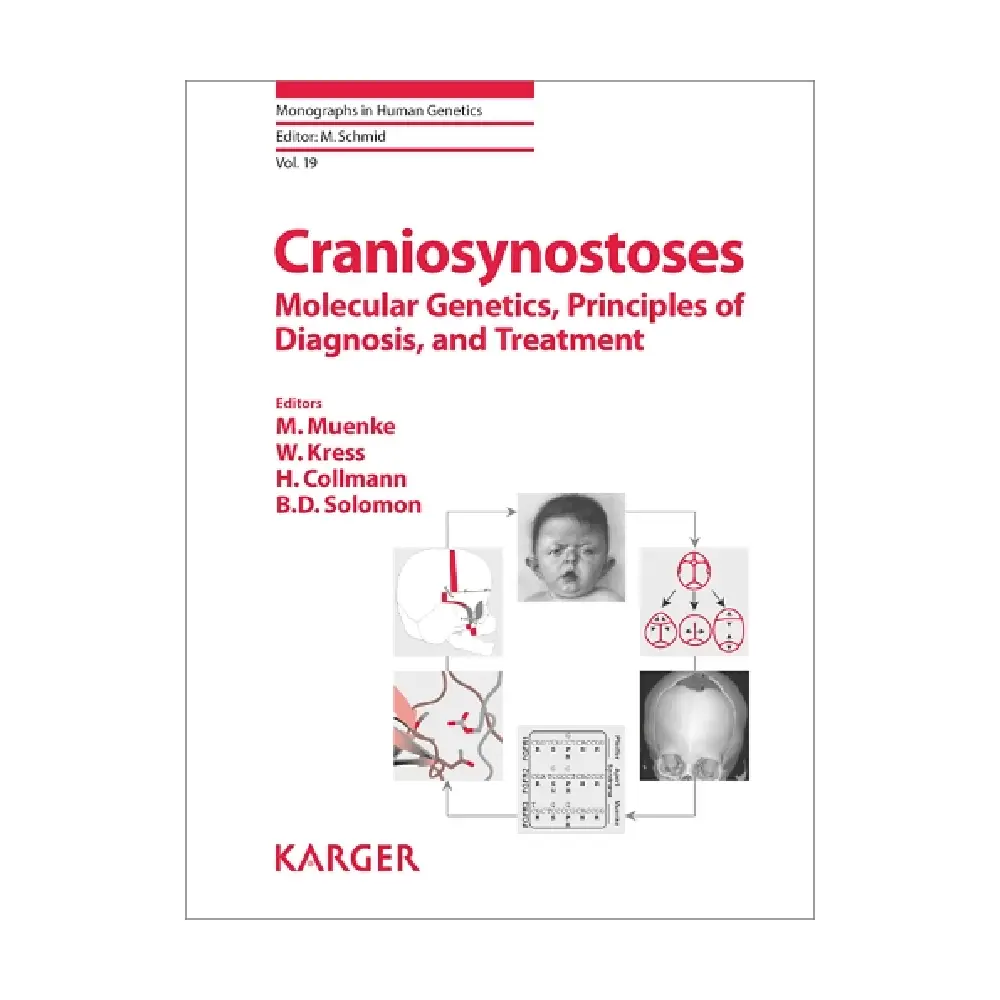


Craniosynostoses: Molecular Genetics, Principles of Diagnosis, and Treatment is a definitive scholarly volume focusing on the complex biological, clinical, and surgical aspects of craniosynostosis — a condition marked by the premature fusion of one or more cranial sutures in infancy. Edited by experts such as Maximilian Muenke, Wolfram Kress, Hartmut Collmann, and Benjamin D. Solomon, this volume (Volume 19 in Monographs in Human Genetics) integrates cutting-edge genetic insights with practical diagnostic and therapeutic approaches.
Craniosynostosis can present in isolation (nonsyndromic) or as part of a syndromic disease involving multiple organ systems. Understanding its molecular etiology has transformed both diagnostic accuracy and treatment pathways over the past two decades, a trend thoroughly reflected in this book’s multidisciplinary content.
Molecular Genetics of Craniosynostosis
Genetic Mechanisms
A central theme of this volume is the molecular basis of craniosynostosis, with detailed chapters outlining how mutations in key developmental genes disrupt normal cranial suture biology:
-
Fibroblast growth factor receptors (FGFRs) — especially FGFR2 and FGFR3 — are frequently implicated in syndromic forms like Apert, Crouzon, and Pfeiffer syndromes. Mutations in these genes alter receptor activation, affecting signaling pathways that regulate bone formation at sutures.
-
Transcription factors such as TWIST1 and MSX2 are also crucial, with mutations leading to abnormal suture closure. Chapters specifically illustrate how changes in these factors impair the delicate balance between osteogenesis and suture patency.
-
Other genetic influences include EFNB1 in craniofrontonasal syndrome and chromosomal alterations. These genetic variations underscore the diversity of molecular pathways leading to craniosynostosis.
Syndromic vs. Nonsyndromic Forms
The book contrasts the genetics of syndromic craniosynostosis (associated with defined gene mutations and systemic features) with nonsyndromic forms, which often have more complex or less well-defined genetic contributions. Detailed reviews explain how nonsyndromic craniosynostosis may arise through subtle gene-environment interactions and multifactorial genetic risk.
Principles of Diagnosis
Clinical Evaluation
A thorough diagnostic workup is crucial. The book emphasizes a multidisciplinary approach, combining:
-
Detailed clinical phenotyping, including dysmorphology examination and family history.
-
Radiological assessment to identify which suture(s) are affected and to gauge the severity of cranial deformity.
-
Genetic testing, which has become increasingly central for distinguishing syndromic from nonsyndromic cases and for guiding prognosis and family counseling.
Prenatal Diagnosis
Advances in prenatal sonography and imaging now allow some forms of craniosynostosis to be suspected before birth, enabling early counseling and planning. This is especially helpful for syndromic conditions where associated anomalies may also be evident.
Treatment Strategies
Surgical Intervention
The volume outlines contemporary surgical principles designed to:
-
Release prematurely fused sutures to allow normal brain and skull growth.
-
Correct craniofacial deformities that may affect eye protection, intracranial volume, and aesthetic concerns.
-
Techniques range from traditional vault remodeling to more sophisticated distraction osteogenesis, which gradually expands the skull to accommodate brain growth without abrupt correction.
Timing and Sequencing
Treatment strategies are tailored to the child’s age, severity of fusion, and associated syndromic features. Early intervention often yields optimal outcomes in skull shape and neurodevelopment, but decisions must balance surgical risk with potential benefits.
Multidisciplinary Care
Authors emphasize the importance of comprehensive team care — including neurosurgeons, craniofacial surgeons, geneticists, and developmental specialists — to address both functional and psychosocial outcomes.
Clinical Syndromes Reviewed
The book contains in-depth case-oriented chapters on well-recognized syndromes, including:
-
Apert syndrome: Characterized by coronal suture synostosis and limb abnormalities.
-
Crouzon syndrome: Primarily craniofacial involvement without limb defects.
-
Pfeiffer syndrome: Features both craniosynostosis and broad thumbs.
-
Muenke syndrome: Caused by a specific FGFR3 mutation, illustrating genotype–phenotype relationships.
These sections provide clinicians with both molecular insights and actionable diagnostic criteria, linking genotype to clinical phenotype.
Future Directions and Research Implications
While the primary focus is clinical, the volume also projects research directions, including:
-
Insights into signaling pathways and bone development mechanisms.
-
The potential for molecular therapies to supplement or eventually reduce the need for surgery.
-
Evolution of genetic counseling and predictive testing as genomic technologies continue to improve.
Conclusion
Craniosynostoses: Molecular Genetics, Principles of Diagnosis, and Treatment is an authoritative text that bridges basic science and clinical practice. By exploring the genetic architecture of cranial development alongside diagnostic innovations and surgical advances, it serves as an essential reference for geneticists, surgeons, pediatricians, and researchers dedicated to understanding and managing craniosynostosis.






Reviews
There are no reviews yet