
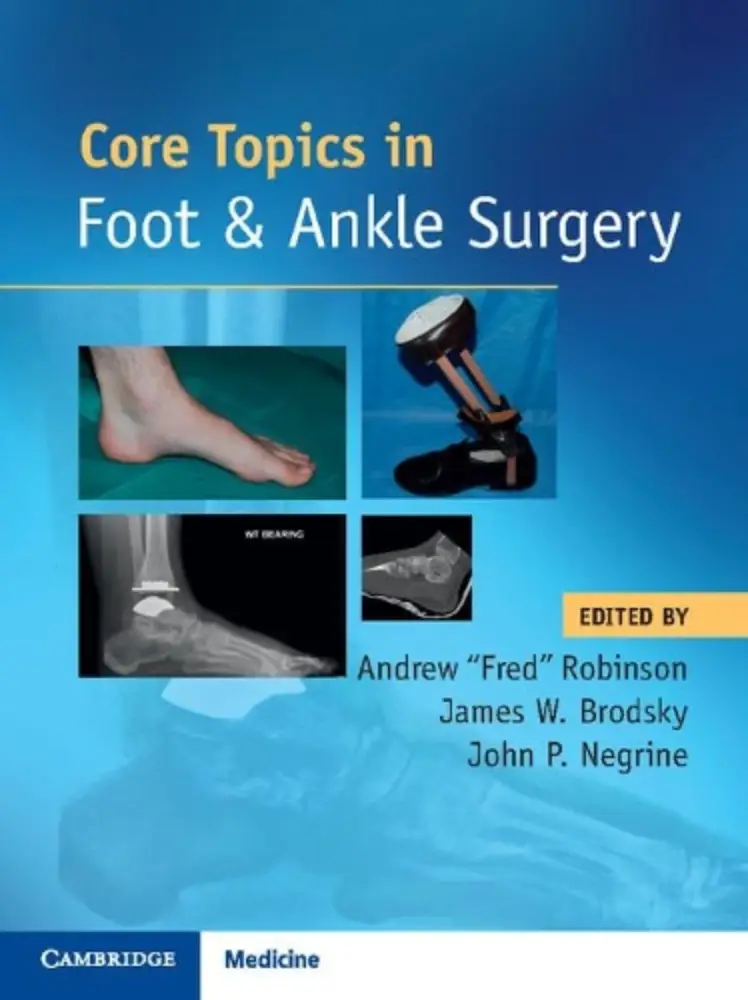

Core Topics in Foot and Ankle Surgery
Foot and ankle surgery is a specialized branch of orthopedics that focuses on diagnosing, treating, and managing conditions affecting the foot, ankle, and lower extremity. This field combines detailed anatomical knowledge, advanced surgical techniques, and an understanding of biomechanics to restore mobility, relieve pain, and improve quality of life. Core topics in foot and ankle surgery encompass a wide range of conditions, from traumatic injuries to chronic deformities and degenerative diseases.
One of the fundamental areas is trauma management. Foot and ankle injuries, such as fractures of the calcaneus, talus, and metatarsals, as well as ankle fractures, are common. Proper assessment using imaging techniques and classification systems is crucial for deciding between conservative and surgical treatment. Surgical fixation techniques, including open reduction and internal fixation (ORIF), are often required to restore alignment and joint congruity, minimizing the risk of long-term complications like arthritis.
Another key topic is deformity correction. Conditions such as hallux valgus (bunions), flatfoot (pes planus), and cavus foot deformities are frequently addressed in foot and ankle surgery. These deformities can lead to pain, instability, and difficulty walking. Surgical interventions may involve osteotomies (bone cuts), tendon transfers, and soft tissue balancing to correct alignment and restore function. Advances in minimally invasive techniques have improved recovery times and reduced complications.
Arthritis management is also central to this specialty. Osteoarthritis, rheumatoid arthritis, and post-traumatic arthritis commonly affect the ankle and foot joints. When conservative treatments such as medications, orthotics, and physical therapy fail, surgical options are considered. These include joint-preserving procedures, arthrodesis (joint fusion), and total ankle replacement. Each approach has specific indications based on patient age, activity level, and severity of joint damage.
Sports injuries represent another important domain. Athletes often suffer from ligament injuries, tendon ruptures, and overuse conditions such as Achilles tendinopathy and plantar fasciitis. Surgical repair or reconstruction may be required for severe cases, particularly when conservative treatments are ineffective. Arthroscopic techniques are increasingly used for diagnosing and treating intra-articular problems with minimal tissue disruption.
The management of diabetic foot conditions is a critical and challenging aspect of foot and ankle surgery. Diabetes can lead to neuropathy, poor circulation, and increased risk of infection. Surgeons often deal with ulcers, Charcot neuroarthropathy, and complex infections. Treatment focuses on infection control, wound care, offloading pressure, and, in severe cases, reconstructive procedures or amputation to prevent life-threatening complications.
Tendon and ligament disorders are also commonly encountered. Conditions such as posterior tibial tendon dysfunction, peroneal tendon injuries, and ankle instability require careful evaluation. Surgical options may include tendon repair, reconstruction, or ligament stabilization procedures to restore normal biomechanics and prevent further degeneration.
Another core topic is pediatric foot and ankle conditions. Congenital deformities such as clubfoot and tarsal coalition require early diagnosis and intervention. Treatment may involve both non-surgical methods, like casting, and surgical correction to ensure proper development and function as the child grows.
Advancements in imaging and technology have significantly influenced this field. Techniques such as MRI, CT scans, and intraoperative navigation help in accurate diagnosis and surgical planning. Additionally, innovations like 3D printing and biologics are being explored to enhance surgical outcomes and tissue healing.
In conclusion, foot and ankle surgery covers a diverse range of conditions requiring a multidisciplinary approach. Mastery of core topics such as trauma, deformity correction, arthritis management, and diabetic foot care is essential for improving patient outcomes and advancing this specialized field.





Reviews
There are no reviews yet