
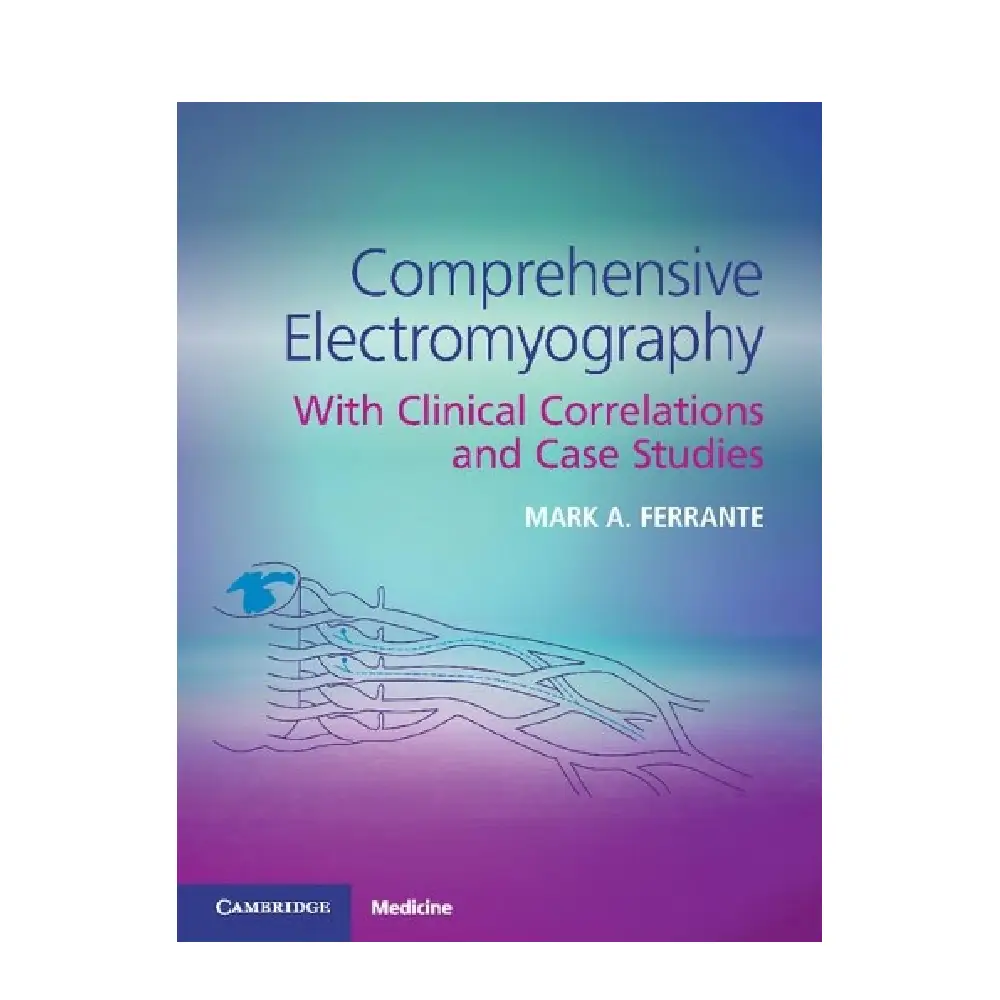

Comprehensive Electromyography: With Clinical Correlations and Case Studies — 700-Word Overview
Comprehensive Electromyography: With Clinical Correlations and Case Studies is a definitive text that bridges the gap between the theory of electromyography (EMG) and its practical, clinical application. Designed for neurologists, physiatrists, residents, and trainees in clinical neurophysiology and neuromuscular medicine, this book offers a thorough grounding in EMG principles while emphasizing real-world diagnosis and management through detailed case studies.
Understanding Electromyography
Electromyography and nerve conduction studies (NCS) are essential diagnostic tools used to evaluate disorders of the peripheral nervous system, including muscles, neuromuscular junctions, and peripheral nerves. EMG records the electrical activity produced by skeletal muscles and, when interpreted in the context of clinical findings, can localize and characterize neuromuscular pathology. Nerve conduction studies quantify the speed and strength of electrical signals along peripheral nerves, helping differentiate between axonal and demyelinating processes.
The book begins with a foundational overview of neurophysiology, including the structure and function of motor units, action potential generation, synaptic transmission, and the relationship between electrical activity and muscle contraction. This solid scientific base is critical for interpreting EMG and NCS findings accurately.
Principles of Nerve Conduction Studies
The early chapters provide a comprehensive explanation of nerve conduction studies, including:
-
Sensory and motor NCS techniques
-
Interpretation of latencies, amplitudes, conduction velocities
-
The clinical significance of prolonged distal latencies
-
Differences between demyelinating and axonal neuropathies
Clear tables and diagrams illustrate normal values, common patterns of abnormal findings, and artifacts that can mislead interpretation. Importantly, the text emphasizes that nerve conduction studies must always be interpreted in the context of the patient’s history and physical examination.
Electromyography Technique and Interpretation
Following the foundation in NCS, the book explores the technique of needle electromyography. This section covers:
-
Electrode types and placement
-
Qualitative and quantitative features of spontaneous activity
-
Interpretation of motor unit action potentials (MUAPs)
-
Recruitment patterns
Each parameter is linked to specific pathologies. For example, increased spontaneous activity at rest—such as fibrillation potentials and positive sharp waves—is typically associated with denervation, as seen in radiculopathies or motor neuron disease. Changes in MUAP morphology and recruitment can distinguish between neuropathic and myopathic processes.
Clinical Correlations and Diagnosis
One of the greatest strengths of the book lies in its consistent emphasis on clinical correlation. After presenting the technical and physiologic basis of testing, the text integrates EMG/NCS findings with typical clinical presentations. Chapters focus on common and complex conditions, such as:
-
Peripheral neuropathies: diabetic, toxic, hereditary, and inflammatory neuropathies
-
Radiculopathies and plexopathies
-
Mononeuropathies: carpal tunnel, ulnar neuropathy, peroneal nerve compression
-
Motor neuron diseases such as amyotrophic lateral sclerosis (ALS)
-
Myopathies and muscular dystrophies
-
Neuromuscular junction disorders: myasthenia gravis, Lambert-Eaton syndrome
Each condition is explored in depth, with tables outlining the typical EMG and NCS abnormalities, differential diagnosis, and clinical pearls that enhance diagnostic confidence.
Case Studies
The book’s case-based format transforms abstract concepts into concrete clinical reasoning. Case studies provide real patient scenarios, including:
-
Presenting complaint and history
-
Physical exam findings
-
EMG/NCS data with annotated tracings
-
Differential diagnosis
-
Final diagnosis and explanation
These cases cover a broad spectrum from textbook patterns to atypical or challenging presentations. By walking the reader through each step of reasoning, the book reinforces the analytic process clinicians use in real practice. Visual examples of EMG tracings and nerve conduction waveforms enhance comprehension and retention.
Artifacts and Pitfalls
Expert guidance on common pitfalls and artifacts is a valuable feature. The book discusses how technical factors, anatomical variants, and improper technique can lead to misleading results. Understanding these pitfalls is essential to avoid misdiagnosis or unnecessary further testing.
Integration with Clinical Practice
Throughout, the text stresses that EMG/NCS is one component of a comprehensive neuromuscular evaluation. Clinical history, physical examination, imaging, and laboratory studies must be integrated to arrive at a correct diagnosis and guide management. For example:
-
Distinguishing diabetic polyneuropathy from chronic inflammatory demyelinating polyneuropathy (CIDP) may require combining electrophysiologic data with cerebrospinal fluid analysis and clinical progression.
-
Differentiating myopathic from neuropathic patterns often requires muscle imaging (MRI/ultrasound) and, in some cases, muscle biopsy.
Educational Tools and Features
The book incorporates features that facilitate learning and review:
-
Summary tables that consolidate key findings
-
Review questions and answers
-
Annotated figures and waveforms
-
Differential diagnosis checklists
These tools make the text both a learning resource and a practical reference for clinical use.
Conclusion
Comprehensive Electromyography: With Clinical Correlations and Case Studies is an indispensable resource for clinicians and trainees seeking not only to understand EMG and NCS techniques but to apply them meaningfully in patient care. Its blend of clear explanations, clinical correlations, and case-based learning bridges theory and practice. By emphasizing interpretation in the context of the whole patient, this text equips readers with the skills to enhance diagnostic accuracy, improve patient outcomes, and develop confidence in managing complex neuromuscular disorders. Whether used as a primary learning text or a reference guide in clinical practice, it stands as a leading educational tool in electromyography.





Reviews
There are no reviews yet