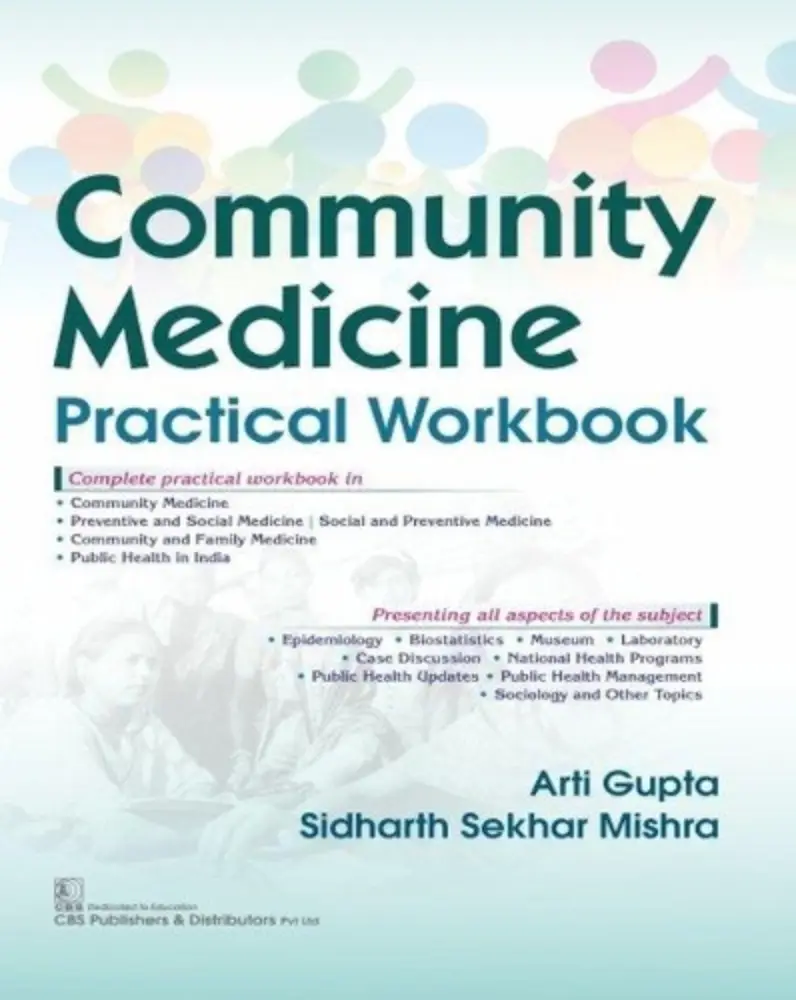
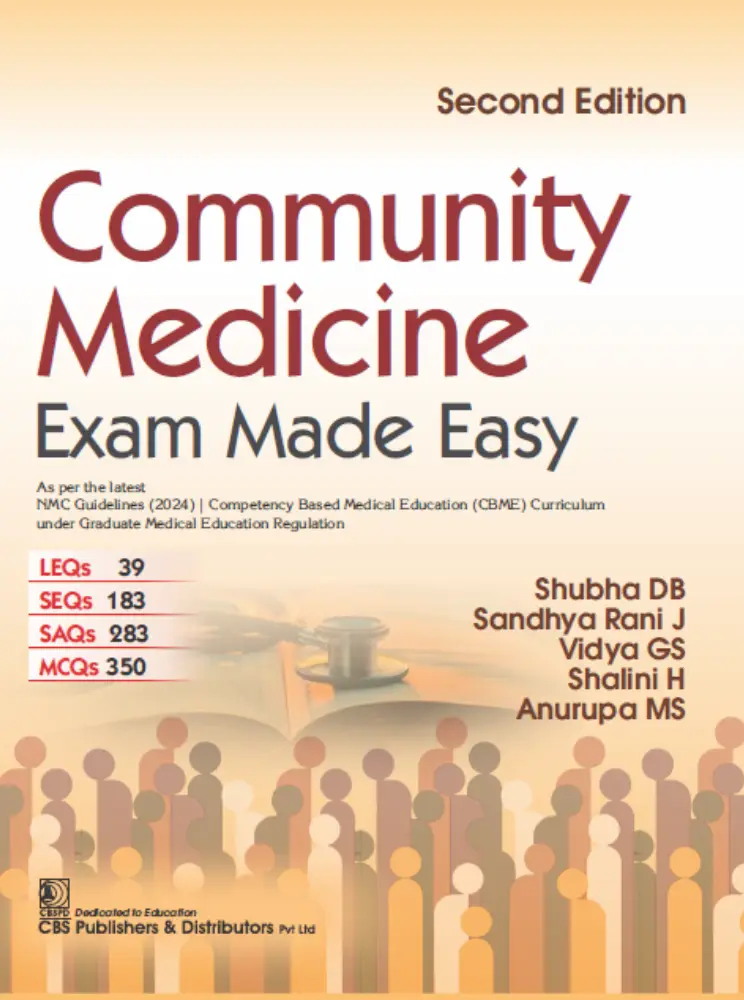
Community Medicine: Practical Workbook (PB) is a comprehensive, skill-oriented guide designed to help undergraduate medical students develop practical competencies in community medicine. Tailored especially for MBBS students following the Competency-Based Medical Education (CBME) curriculum, this workbook emphasizes hands-on learning, field-based activities, and application of theoretical knowledge to real-world public health scenarios.
The book serves as an essential companion during community postings, field visits, and practical examinations. Unlike conventional textbooks that focus mainly on theory, this workbook is structured to enhance experiential learning. It provides step-by-step guidance for performing various public health activities, such as conducting surveys, assessing nutritional status, calculating health indicators, and implementing national health programs. This practical approach ensures that students not only understand concepts but also gain the ability to apply them effectively in community settings.
One of the key highlights of the workbook is its structured format. Each section is organized into clearly defined exercises, activities, and case-based scenarios. Students are encouraged to actively participate by recording observations, analyzing data, and drawing conclusions. This interactive style promotes critical thinking and helps learners build confidence in handling real-life public health challenges.
The workbook covers a wide range of essential topics in community medicine, including epidemiology, biostatistics, environmental health, nutrition, maternal and child health, communicable and non-communicable diseases, and health education. It also provides guidance on important field activities such as family studies, health surveys, and community diagnosis. These exercises are aligned with the competencies prescribed by the National Medical Commission (NMC), ensuring that students meet the required learning outcomes.
Another important feature of this book is its focus on national health programs and policies. It includes practical exercises related to programs such as immunization, tuberculosis control, vector-borne disease control, and reproductive and child health services. By engaging with these exercises, students gain a deeper understanding of how public health initiatives are implemented at the grassroots level.
The workbook also Community Medicine incorporates essential tools used in community medicine, such as data collection forms, survey formats, and checklists. These tools help students learn how to systematically gather and analyze information. Additionally, sections on biostatistics provide guidance on calculating rates, ratios, and percentages, as well as interpreting data—skills that are crucial for both examinations and future medical practice.
Illustrations, tables, and flowcharts are used throughout the book to simplify complex concepts and enhance understanding. The language is clear, concise, and student-friendly, making it accessible even to beginners. The layout is designed for easy navigation, allowing students to quickly locate relevant sections during fieldwork or revision.
Another significant advantage of this workbook is its utility in exam preparation. It helps students prepare for practical and viva examinations by providing commonly asked questions, model answers, and important points to remember. By practicing these exercises, students can improve their presentation skills and perform confidently in exams.
In addition to benefiting students, the workbook is also a valuable resource for educators. Teachers can use it to guide practical sessions, evaluate student performance, and ensure that learning objectives are met effectively.
Overall, Community Medicine: Practical Workbook (PB) is an indispensable resource for MBBS students aiming to excel in community medicine. Its emphasis on practical learning, structured exercises, and real-world application makes it a highly effective tool for building essential public health skills. By combining theory with practice, the workbook prepares students to become competent and socially responsible healthcare professionals, capable of addressing community health needs with confidence and efficiency.



Reviews
There are no reviews yet