
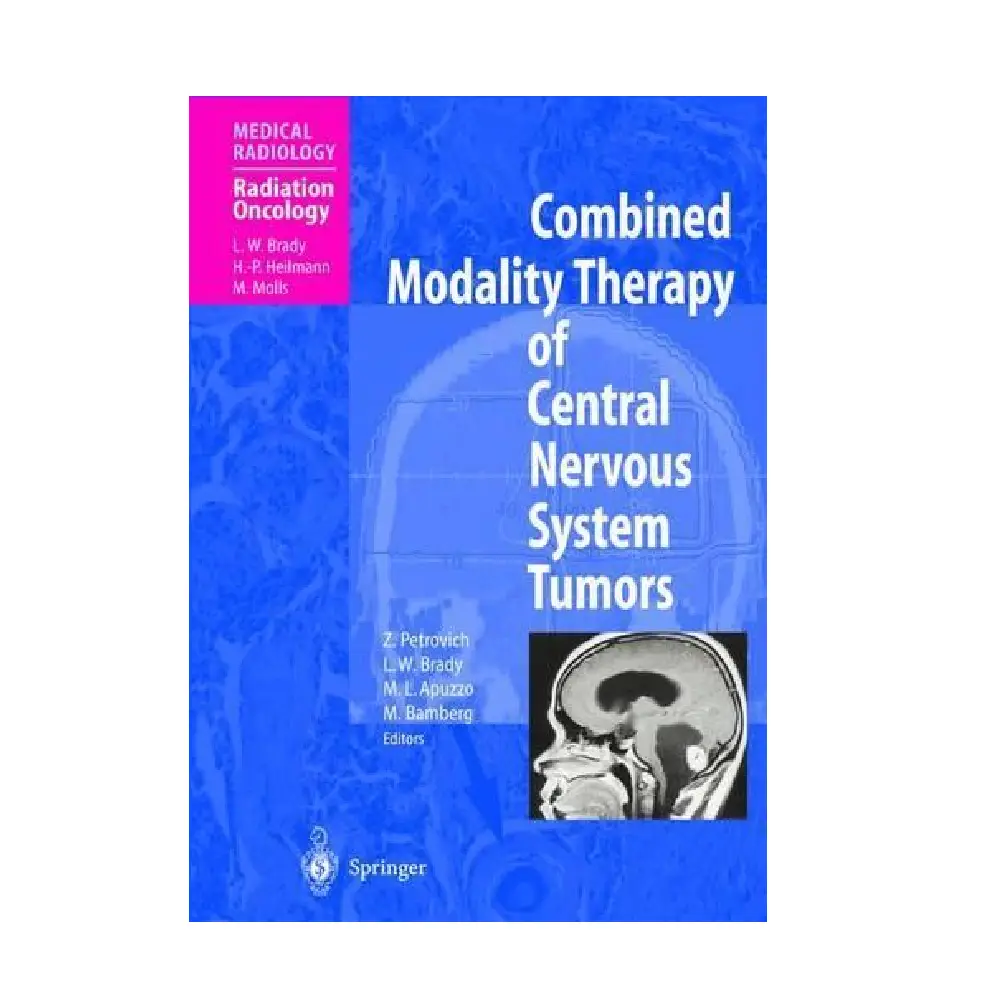

Combined Modality Therapy of Central Nervous System Tumors
Combined Modality Therapy of Central Nervous System (CNS) Tumors focuses on the integrated use of surgery, radiation therapy, and systemic treatments in the management of both primary and metastatic brain and spinal cord tumors. CNS tumors present unique therapeutic challenges due to the critical functional importance of neural tissue, the blood–brain barrier, and the often aggressive biological behavior of these malignancies. This book emphasizes that optimal outcomes are rarely achieved with a single treatment modality and instead require a carefully coordinated, multidisciplinary approach.
Rationale for Combined Modality Therapy
Historically, treatment of CNS tumors relied heavily on surgery or radiation alone. However, advances in neuroimaging, neurosurgical techniques, radiotherapy delivery, and systemic therapies have demonstrated that multimodal treatment strategies improve survival, local control, and neurological outcomes in many tumor types. The book explains that each modality addresses different aspects of tumor biology: surgery provides cytoreduction and tissue diagnosis, radiotherapy ensures local and regional disease control, and chemotherapy or targeted therapy addresses microscopic residual disease and infiltrative tumor cells.
The rationale for combination therapy is particularly strong in high-grade gliomas, medulloblastomas, primary CNS lymphomas, and metastatic brain tumors, where tumor infiltration and recurrence are common. By integrating multiple treatment approaches, clinicians can maximize tumor control while minimizing damage to surrounding healthy brain tissue.
Surgical Management and Its Integration
The text begins with a discussion of the evolving role of neurosurgery in CNS tumor management. Surgical resection remains a cornerstone of therapy, providing histological diagnosis, molecular profiling, and immediate relief of mass effect. The book highlights advances such as image-guided surgery, intraoperative MRI, and functional mapping, which allow for safer maximal resections.
Importantly, surgery is presented not as a standalone treatment but as the first step in a broader therapeutic strategy. The extent of resection directly influences subsequent radiotherapy planning and chemotherapy decisions, underscoring the need for close collaboration between neurosurgeons, radiation oncologists, and neuro-oncologists.
Radiation Therapy in Combined Treatment
Radiation therapy is described as a central component of combined modality therapy for CNS tumors. The book reviews conventional external beam radiotherapy as well as advanced techniques such as three-dimensional conformal radiotherapy, intensity-modulated radiotherapy (IMRT), stereotactic radiosurgery (SRS), and fractionated stereotactic radiotherapy.
Special attention is given to balancing tumor control and neurotoxicity, particularly in pediatric patients and long-term survivors. Topics such as dose fractionation, target volume definition, and normal tissue tolerance are discussed in detail. The integration of radiotherapy with surgery and chemotherapy is shown to significantly improve outcomes in both primary brain tumors and CNS metastases.
Chemotherapy and Systemic Therapies
The role of chemotherapy and other systemic treatments is explored extensively. The book addresses challenges posed by the blood–brain barrier and reviews agents capable of achieving therapeutic concentrations within the CNS. Alkylating agents, antimetabolites, and combination regimens are discussed alongside newer approaches such as targeted therapies and immunomodulatory treatments.
In tumors such as primary CNS lymphoma and medulloblastoma, chemotherapy plays a critical role in reducing radiation dose requirements and improving long-term survival. The text also discusses the sequencing of chemotherapy with surgery and radiotherapy, highlighting evidence-based strategies that optimize efficacy while limiting toxicity.
Tumor-Specific Approaches
A major strength of the book is its tumor-specific organization. Separate chapters address:
-
High-grade gliomas, focusing on maximal safe resection followed by concurrent chemoradiation
-
Low-grade gliomas, where treatment decisions balance disease control with preservation of neurological function
-
Medulloblastomas and pediatric CNS tumors, emphasizing risk-adapted therapy and long-term survivorship
-
Primary CNS lymphomas, highlighting the importance of systemic therapy combined with carefully selected radiotherapy
-
Brain metastases, where combinations of surgery, whole-brain radiotherapy, and stereotactic techniques are tailored to disease burden and prognosis
These chapters illustrate how combined modality therapy must be individualized based on tumor biology, patient age, functional status, and molecular characteristics.
Toxicity, Quality of Life, and Supportive Care
The book places strong emphasis on treatment-related toxicity and quality of life. Neurocognitive effects, endocrine dysfunction, and radiation-induced injury are discussed alongside strategies for prevention and management. Supportive care, rehabilitation, and neurocognitive monitoring are presented as integral components of comprehensive CNS tumor care.
Future Directions
Emerging trends such as molecular classification of CNS tumors, precision radiotherapy, and integration of immunotherapy are discussed as future directions that will further refine combined modality treatment. The book emphasizes ongoing clinical trials and translational research as key drivers of progress.
Conclusion
Combined Modality Therapy of Central Nervous System Tumors provides a thorough and clinically relevant exploration of modern CNS tumor management. By integrating surgery, radiotherapy, and systemic therapy within a multidisciplinary framework, the book highlights how coordinated treatment strategies can improve survival, preserve neurological function, and enhance quality of life. It serves as an essential reference for clinicians and trainees involved in neuro-oncology and advanced cancer care.




Reviews
There are no reviews yet