
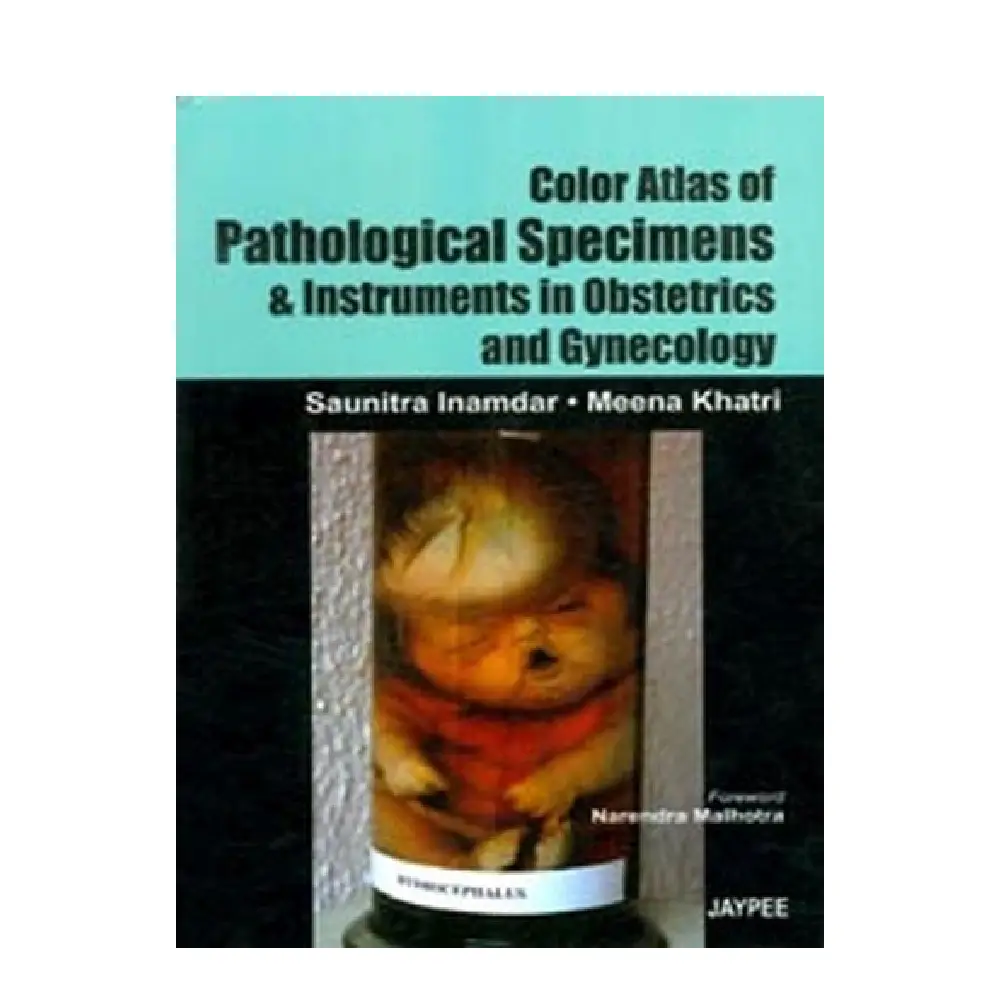


Color Atlas of Pathological Specimens & Instruments in Obstetrics and Gynecology
A Color Atlas of Pathological Specimens & Instruments in Obstetrics and Gynecology serves as an essential visual learning resource for undergraduate students, postgraduate trainees, nurses, midwives, and practicing clinicians. Obstetrics and gynecology is a specialty deeply rooted in clinical observation, surgical precision, and pathological correlation. An atlas that combines high-quality color photographs of pathological specimens with images of commonly used instruments bridges the gap between theoretical knowledge and real-life clinical practice.
The pathological specimen section typically presents gross specimens encountered in obstetric and gynecologic practice. In gynecology, this includes benign conditions such as uterine fibroids (leiomyomas), adenomyosis, ovarian cysts, endometrial polyps, and ectopic pregnancy specimens. Detailed images allow learners to appreciate size, shape, color, texture, and anatomical relationships. For example, a fibroid uterus may demonstrate multiple nodular masses with a characteristic whorled appearance on cut section. Similarly, ovarian cysts may be shown with smooth, thin walls or complex septations, aiding differentiation between benign and malignant lesions.
Malignant conditions form a crucial component of the atlas. High-resolution photographs of cervical carcinoma, endometrial carcinoma, ovarian malignancies, and vulvar cancers help students understand tumor morphology and staging. Gross pathology images are often supplemented with labeled diagrams to highlight tumor spread, lymph node involvement, and adjacent organ invasion. Recognizing these patterns enhances comprehension of clinical presentation, diagnostic imaging findings, and treatment planning.
In obstetrics, pathological specimens may include placenta previa, placental abruption, placenta accreta spectrum, hydatidiform mole, intrauterine fetal demise, and congenital anomalies. A visual display of abnormal placentas—such as velamentous cord insertion or succenturiate lobes—helps clinicians correlate antenatal ultrasound findings with actual specimens. Molar pregnancy specimens demonstrate characteristic grape-like vesicles, reinforcing textbook descriptions. Seeing these real specimens deepens understanding and improves retention.
An important advantage of a color atlas is the clarity provided by true-to-life coloration. Pathological changes such as hemorrhage, necrosis, inflammation, cystic degeneration, or calcification are more easily appreciated in color images than in monochrome diagrams. The ability to visualize differences between normal and abnormal tissues enhances diagnostic confidence and clinical reasoning.
Equally important is the section devoted to obstetric and gynecologic instruments. Mastery of instruments is fundamental for safe surgical practice. The atlas typically displays commonly used instruments such as Sims’ speculum, Cusco’s speculum, vulsellum forceps, uterine sound, dilators, curettes, ovum forceps, sponge-holding forceps, needle holders, artery forceps, and episiotomy scissors. Each instrument is shown with clear labeling, description of its design, and explanation of its specific use.
For example, students learn to distinguish between sponge-holding forceps and ovum forceps based on the presence or absence of a locking mechanism. The shape and angulation of different specula are compared to explain their appropriate clinical applications. Visual familiarity reduces confusion during practical examinations and operating room procedures. Many atlases also include instruments used in cesarean section, hysterectomy, laparoscopy, and assisted vaginal delivery, expanding their relevance.
Some editions incorporate step-by-step photographic sequences demonstrating procedures such as dilation and curettage, cervical biopsy, insertion of intrauterine contraceptive devices, and episiotomy repair. These procedural images enhance understanding of surgical technique and instrument handling. Additionally, modern atlases may include images of minimally invasive instruments used in hysteroscopy and laparoscopy, reflecting advancements in gynecologic surgery.
The educational value of a color atlas extends beyond examinations. For postgraduate trainees, it acts as a quick revision tool before surgeries or case presentations. For faculty members, it serves as a teaching aid during demonstrations and seminars. Nurses and operation theater technicians also benefit from clear identification of instruments, improving efficiency and patient safety.
Another strength lies in its structured organization. Specimens are usually categorized system-wise—vulva, vagina, cervix, uterus, fallopian tubes, ovaries, and breast—followed by obstetric pathology. Instruments may be grouped according to examination, minor procedures, major surgery, and emergency interventions. Concise descriptions accompany each image, emphasizing key clinical points without overwhelming detail.
In conclusion, a Color Atlas of Pathological Specimens & Instruments in Obstetrics and Gynecology is an indispensable educational resource. By integrating vivid pathological images with detailed instrument identification, it transforms abstract theoretical knowledge into tangible clinical understanding. Its visual approach enhances learning, sharpens diagnostic skills, and strengthens procedural competence, making it invaluable for anyone involved in women’s healthcare.








Reviews
There are no reviews yet