
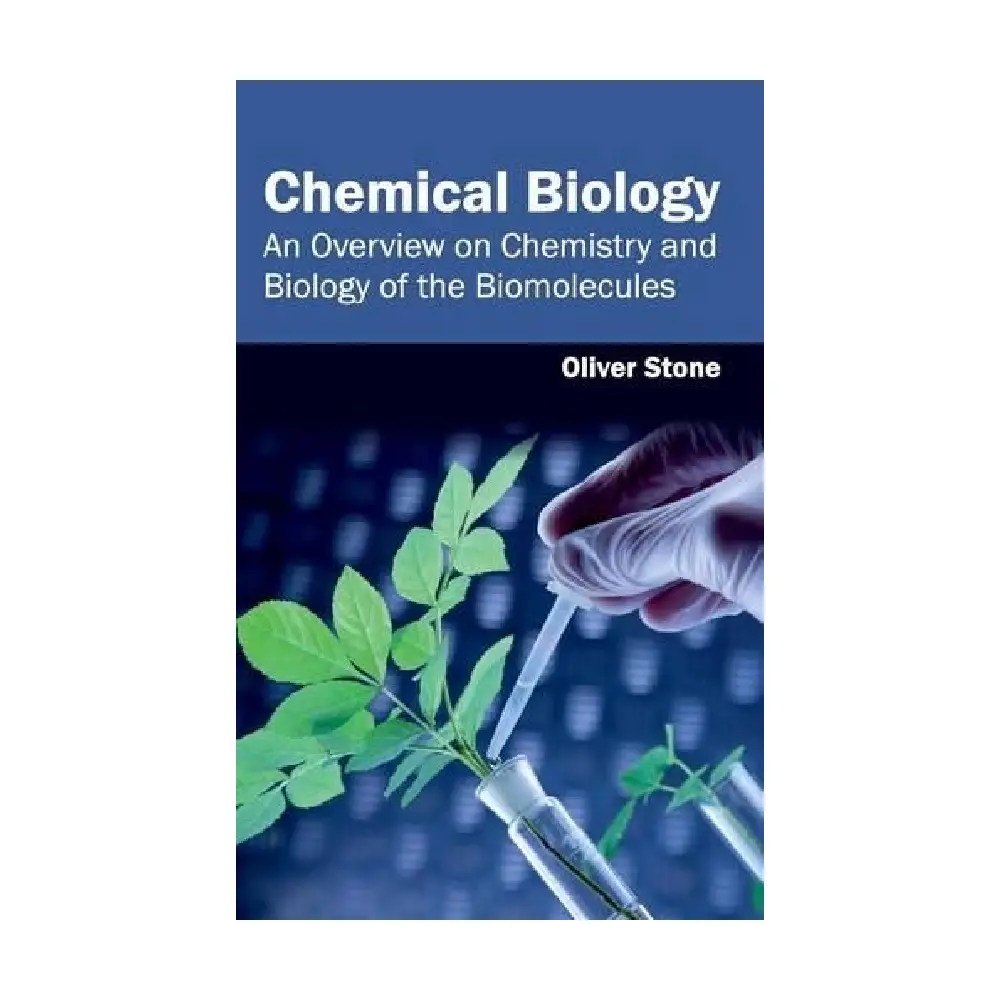


Chemical Biology: An Overview on Chemistry and Biology of the Biomolecules
Chemical Biology: An Overview on Chemistry and Biology of the Biomolecules is a multidisciplinary scientific text that bridges the foundational principles of chemistry with the complexity of biological systems. Designed for advanced undergraduate and graduate students, researchers, and professionals in chemical biology, biochemistry, biotechnology, and related fields, this book offers a comprehensive survey of how chemical principles explain and influence biological structure and function. It serves as a conceptual roadmap for understanding the interplay between molecular structure, reactivity, and biological activity—a central theme in modern life sciences.
Foundations of Chemical Biology
The book begins by defining chemical biology not merely as a hybrid of chemistry and biology, but as a field that uses chemical tools and concepts to probe and manipulate biological systems. Unlike traditional biochemistry—which often focuses on cataloging and describing biological molecules—chemical biology emphasizes mechanistic understanding and molecular intervention. It integrates synthetic chemistry, structural biology, enzymology, and molecular biology to decipher the chemical logic that underpins life processes.
A key early chapter introduces the major classes of biomolecules—proteins, nucleic acids, carbohydrates, and lipids—and explains their chemical properties, three-dimensional structures, and biological roles. For example, the text explores how amino acid side chains and peptide backbone conformations determine protein folding, stability, and function. The role of non-covalent interactions—hydrogen bonds, ionic interactions, van der Waals forces, and hydrophobic effects—is thoroughly discussed as the basis of molecular recognition and macromolecular assembly.
Proteins and Enzyme Catalysis
One of the central themes of the book is enzyme chemistry, detailing how proteins accelerate biochemical reactions by lowering activation energy through precise positioning of substrates and catalytic groups. The text explains classic models of enzyme kinetics (Michaelis–Menten, Lineweaver–Burk plots), the meaning of kinetic parameters (Km, Vmax), and how inhibitors affect reaction rates. Case studies of important enzymes—such as kinases, proteases, and polymerases—illustrate how chemical modifications impact activity and regulation.
Chemical mechanisms of catalysis are examined, including general acid–base catalysis, covalent catalysis, and metal ion cofactors. The book also addresses contemporary topics such as allosteric regulation, transition-state stabilization, and enzyme engineering, highlighting how chemical insights contribute to drug discovery and biotechnology.
Nucleic Acids and Genetic Information
The chemical biology of nucleic acids is covered in depth, beginning with the structure of DNA and RNA and moving into how chemical properties influence replication, transcription, and translation. The text explores base pairing, helical geometry, and backbone flexibility, linking these characteristics to genetic function.
Chemical modifications of nucleic acids—including methylation and oxidative lesions—are presented not only as natural regulatory phenomena but also as tools for probing gene expression and epigenetics. Techniques such as site-specific labeling, crosslinking, and chemical mutagenesis are described as methods to study nucleic acid structure and dynamics.
Carbohydrates and Glycobiology
Carbohydrates, often overlooked in introductory texts, receive special attention in this book. Their structural diversity—from simple monosaccharides to complex glycoproteins and glycolipids—is discussed in the context of cell signaling, immune recognition, and pathogen interactions. The text explains the challenges and chemical strategies for synthesizing defined oligosaccharides, a topic of interest in vaccine design and glycomics.
Lipids and Membranes
The chemical biology of lipids focuses on how amphiphilic molecules self-assemble into membranes and how membrane composition affects fluidity, signaling, and transport. The role of lipid rafts, membrane proteins, and lipid-mediated signaling pathways is elaborated with biochemical and biophysical perspectives.
Chemical Tools and Techniques
A distinct strength of Chemical Biology: An Overview on Chemistry and Biology of the Biomolecules is its emphasis on chemical tools for studying biology. It introduces foundational techniques such as:
-
Spectroscopy (UV–Vis, fluorescence, NMR) for structural characterization
-
Mass spectrometry for proteomics and metabolomics
-
X-ray crystallography and cryo-EM for high-resolution structural analysis
-
Chemical probes and small-molecule inhibitors as modulators of biological pathways
-
Bioorthogonal chemistry for labeling and tracking biomolecules in living systems
These techniques are not merely described; the book explains the chemical principles that make them powerful and how they are applied in experimental design.
Chemical Biology in Medicine and Biotechnology
Later sections of the book explore applications in medicine and biotechnology. Drug discovery is presented as a chemical biology enterprise, from target identification and high-throughput screening to lead optimization and structure-based design. The book examines how small molecules perturb biological pathways, exemplified by kinase inhibitors in cancer therapy and antivirals targeting viral proteases.
Biotechnology applications—such as engineered enzymes for industrial catalysis, biosensors, and synthetic biology constructs—demonstrate how chemical biology fuels innovation in diverse sectors.
Emerging Directions
The book closes by surveying emerging trends in the field: artificial enzymes, chemical genetics, metabolite signaling, and systems chemical biology. These topics reflect how chemistry continues to expand its role in deciphering complex biological networks and developing novel therapeutic strategies.
Conclusion
Chemical Biology: An Overview on Chemistry and Biology of the Biomolecules succeeds in providing a holistic and integrated view of how chemical principles underlie biological form and function. By linking molecular structure to biological behavior, and chemical tools to biological discovery, the book equips readers with both the conceptual framework and practical insights needed to navigate the interdisciplinary landscape of modern life sciences. Whether for students preparing for advanced study or researchers seeking a cohesive reference, this text is a valuable resource in understanding the chemistry of life’s molecules.


Reviews
There are no reviews yet