
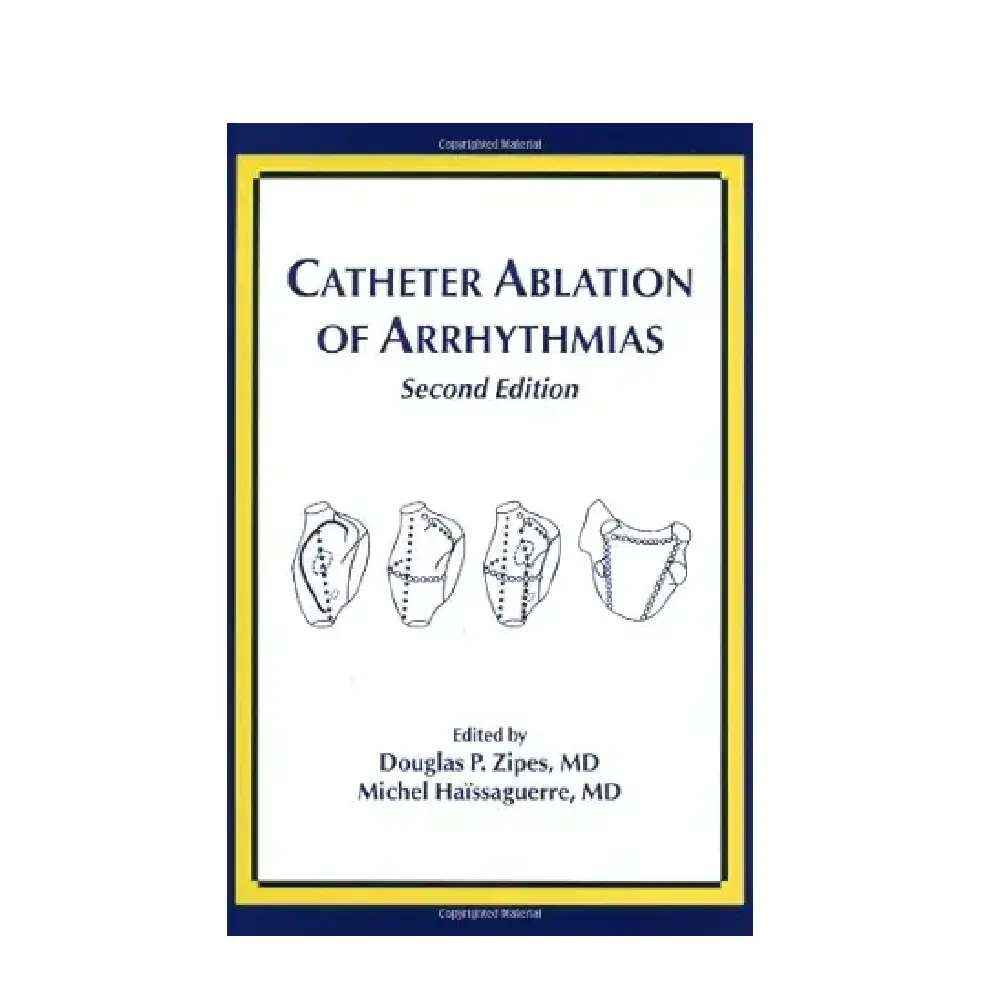

Catheter Ablation of Arrhythmias (Second Edition)
Catheter Ablation of Arrhythmias is a comprehensive, practice-oriented reference that reflects the maturation of catheter ablation from a niche intervention into a cornerstone therapy for cardiac rhythm disorders. The second edition builds on foundational concepts while incorporating advances in mapping technology, energy delivery, and procedural strategy, making it highly relevant for electrophysiologists, cardiology fellows, and clinicians involved in arrhythmia management.
Evolution and Rationale of Catheter Ablation
Catheter ablation aims to eliminate arrhythmias by precisely targeting and destroying myocardial tissue responsible for abnormal impulse generation or conduction. Since its early use in treating accessory pathways, ablation has expanded to encompass a broad spectrum of supraventricular and ventricular arrhythmias. The second edition emphasizes why ablation has become first-line therapy for many tachyarrhythmias—offering high success rates, durable outcomes, and freedom from long-term antiarrhythmic drug therapy.
The book begins with a clear explanation of arrhythmia mechanisms, including automaticity, triggered activity, and reentry. Understanding these electrophysiologic principles is essential for selecting appropriate ablation targets and strategies.
Technology and Mapping Systems
A major strength of the second edition is its detailed coverage of contemporary electrophysiology tools. Chapters explain intracardiac electrogram interpretation, pacing maneuvers, and entrainment mapping. The text highlights the transition from fluoroscopy-dependent procedures to advanced three-dimensional electroanatomical mapping systems, which improve precision while reducing radiation exposure.
Energy sources are discussed in depth. Radiofrequency ablation remains the most widely used modality, producing controlled thermal injury. Cryoablation is presented as an alternative with specific advantages—particularly in atrioventricular nodal reentrant tachycardia (AVNRT) and pediatric cases—because it allows reversible lesion testing before permanent application.
Supraventricular Arrhythmias
The book devotes substantial attention to supraventricular tachycardias, reflecting their prevalence and high ablation success rates. Separate chapters cover:
-
Atrioventricular nodal reentrant tachycardia (AVNRT): Emphasis is placed on slow-pathway modification, anatomical landmarks, and avoidance of atrioventricular block.
-
Accessory pathway–mediated tachycardia (Wolff-Parkinson-White syndrome): The text details mapping of pathway potentials, left- and right-sided approaches, and management of septal pathways.
-
Atrial tachycardia and atrial flutter: Both focal and macro-reentrant mechanisms are explained, including cavotricuspid isthmus ablation for typical flutter.
Each section integrates anatomy, electrogram interpretation, and step-by-step procedural guidance.
Atrial Fibrillation Ablation
A hallmark of the second edition is its expanded treatment of atrial fibrillation (AF) ablation. Pulmonary vein isolation (PVI) is presented as the procedural cornerstone, with detailed discussion of lesion sets, confirmation of entrance and exit block, and strategies to minimize complications. The text addresses patient selection, differences between paroxysmal and persistent AF, and adjunctive approaches such as linear lesions or substrate modification.
Complication prevention—including esophageal injury, pulmonary vein stenosis, and thromboembolism—is emphasized, reflecting the complexity and risk profile of AF ablation.
Ventricular Arrhythmias
Ventricular tachycardia (VT) ablation is covered with a balanced approach that acknowledges both its life-saving potential and technical challenges. The book explains substrate-based mapping in scar-related VT, pace mapping, and activation mapping. Special attention is given to VT in structural heart disease versus idiopathic VT arising from the outflow tracts or fascicles.
Epicardial ablation techniques are also discussed, highlighting indications, access methods, and safety considerations.
Special Populations and Settings
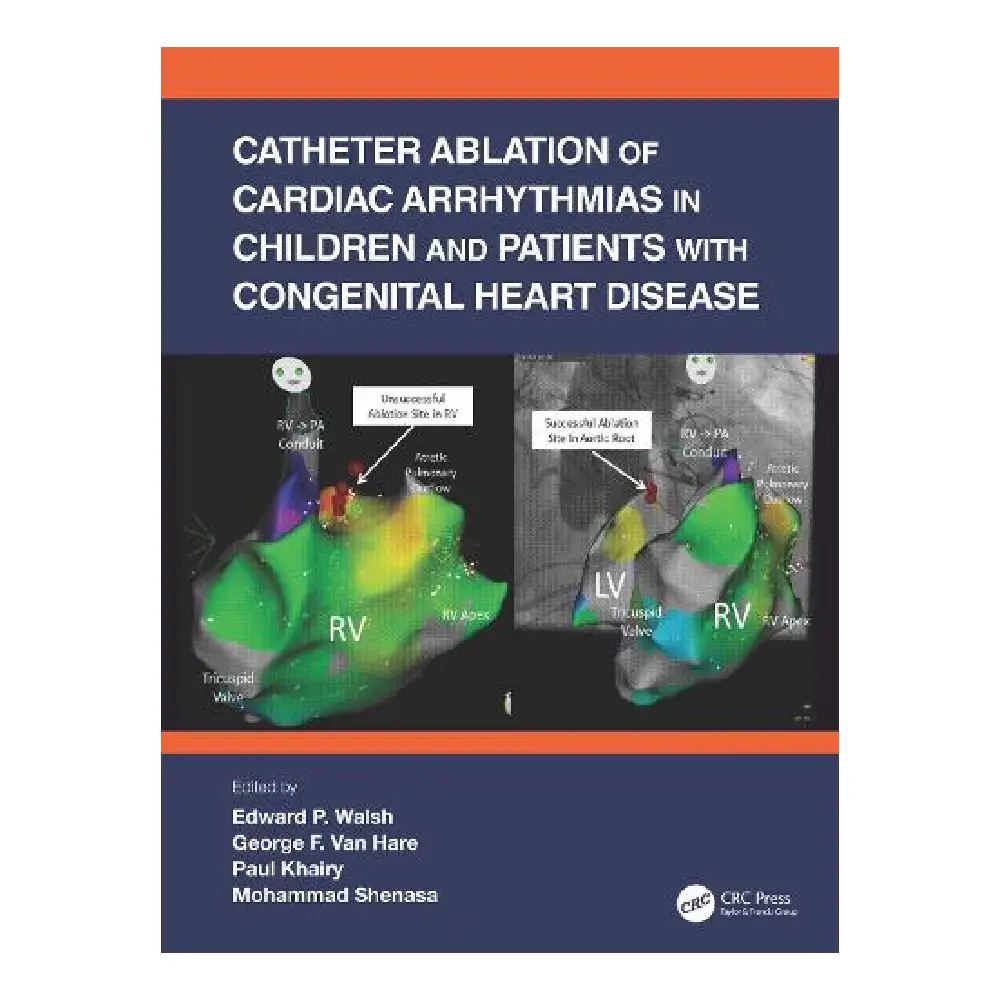
The second edition includes dedicated sections on catheter ablation in special populations, such as pediatric patients and those with congenital heart disease. These chapters underscore anatomical variability, growth considerations, and long-term follow-up needs.
Ablation in the context of heart failure and device therapy (implantable cardioverter-defibrillators and cardiac resynchronization therapy) is also explored, emphasizing the role of ablation in reducing arrhythmia burden and improving quality of life.
Complications and Outcomes
No procedural text is complete without a frank discussion of complications. The book systematically reviews vascular injury, cardiac perforation, thromboembolism, and arrhythmia recurrence. Strategies for prevention, early recognition, and management are clearly outlined. Long-term outcomes and success rates are presented in the context of evidence and clinical experience, reinforcing realistic expectations.
Educational Value and Clinical Impact
Throughout the text, diagrams, electrogram examples, and clinical pearls reinforce learning. The second edition’s practical tone makes it suitable not only as a reference but also as a procedural guide during training. It emphasizes thoughtful decision-making—when to ablate, when to defer, and how to tailor strategies to individual patients.
Conclusion
Catheter Ablation of Arrhythmias, Second Edition represents a mature, clinically grounded exploration of modern electrophysiology practice. By combining fundamental mechanisms, advanced technology, and hands-on procedural guidance, it equips clinicians to perform catheter ablation safely and effectively. The book reflects the central role of ablation in contemporary arrhythmia management and serves as an essential resource for both trainees and experienced practitioners in cardiac electrophysiology.





Reviews
There are no reviews yet