
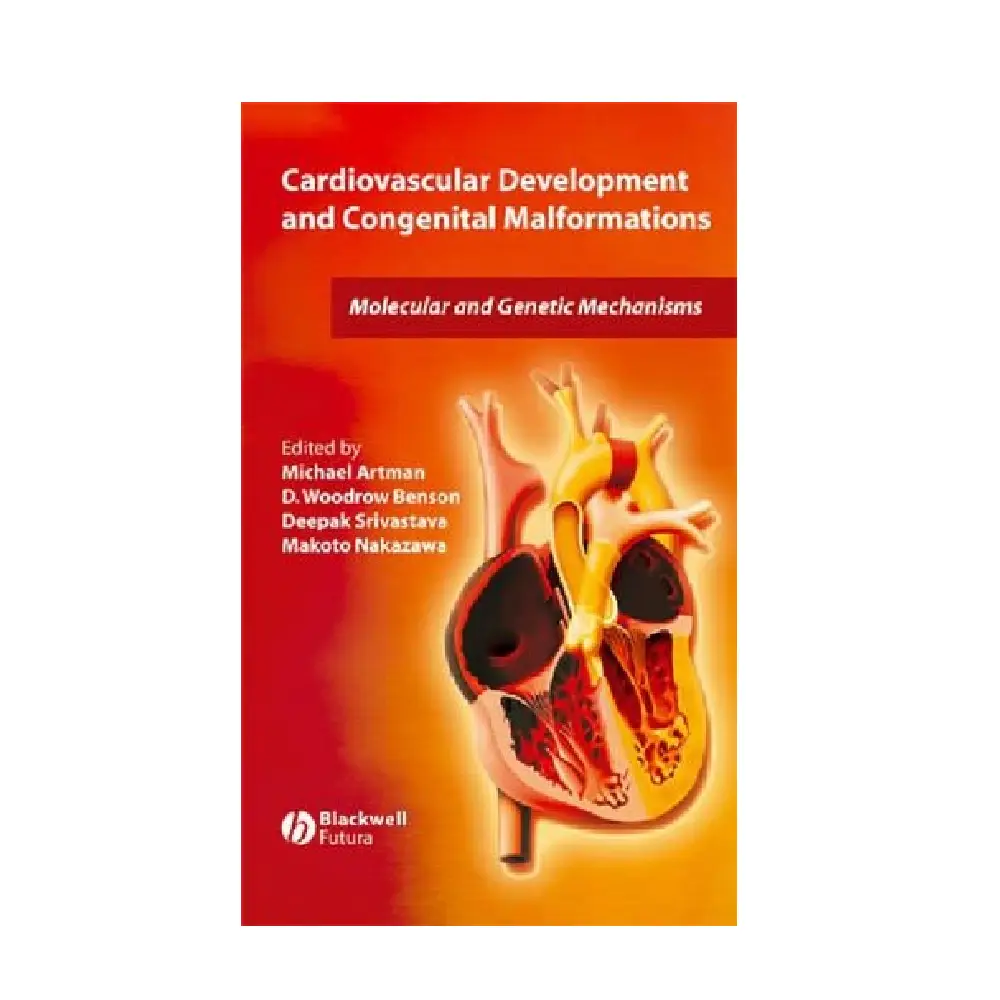


Cardiovascular Development and Congenital Malformations: Molecular and Genetic Mechanisms
Cardiovascular Development and Congenital Malformations: Molecular and Genetic Mechanisms is a comprehensive academic text that examines the intricate biological processes underlying the formation of the heart and vasculature, alongside the genetic and molecular bases of congenital heart disease (CHD). It bridges developmental biology, molecular genetics, and clinical cardiology, making it an essential resource for researchers, geneticists, cardiologists, and pediatric specialists.
Overview
Congenital heart disease remains the most common type of birth defect, affecting approximately 1% of live births globally. Despite advances in surgical and interventional management, the molecular and genetic mechanisms driving these malformations are critical to understanding disease etiology, prognosis, and potential preventative strategies.
The book emphasizes that normal cardiac development is a highly orchestrated process involving spatial and temporal regulation of cell proliferation, migration, differentiation, and apoptosis. Disruptions at any of these stages can result in structural malformations ranging from simple septal defects to complex anomalies such as tetralogy of Fallot or hypoplastic left heart syndrome.
Molecular Mechanisms of Heart Development
The early chapters detail the molecular pathways that guide cardiac morphogenesis:
-
Transcription Factors: Genes such as NKX2-5, GATA4, TBX5, and MEF2 regulate cardiomyocyte differentiation, chamber specification, and conduction system formation. Mutations in these genes are strongly associated with CHDs like atrial or ventricular septal defects and conduction abnormalities.
-
Signaling Pathways: Key pathways, including Notch, Wnt/β-catenin, BMP (Bone Morphogenetic Protein), and Hedgehog, orchestrate interactions between endocardial, myocardial, and neural crest cells, essential for proper septation, valve formation, and outflow tract alignment.
-
Epigenetic Regulation: Emerging evidence shows that histone modifications, DNA methylation, and noncoding RNAs (microRNAs, lncRNAs) modulate gene expression during heart development. Epigenetic dysregulation can predispose to malformations even without primary genetic mutations.
-
Cellular Interactions: The book details the role of endocardial cushions, epicardium, and cardiac neural crest in shaping valves, septa, and the outflow tracts, emphasizing that defects in cell migration or signaling lead to structural anomalies.
Genetic Basis of Congenital Heart Disease
The text systematically reviews the genetic causes of CHD, which include:
-
Single-gene mutations: Rare but highly penetrant mutations affecting transcription factors or structural proteins. For instance, NKX2-5 mutations can cause septal defects with conduction system disease.
-
Chromosomal anomalies: Trisomy 21 (Down syndrome), Turner syndrome (monosomy X), and 22q11.2 deletion (DiGeorge syndrome) are associated with specific cardiac malformations.
-
Polygenic and multifactorial inheritance: Many CHDs arise from complex interactions between multiple genes and environmental factors (maternal diabetes, teratogens, or hypoxia).
The book emphasizes genotype-phenotype correlations, which aid clinicians in predicting associated anomalies and potential outcomes.
Developmental Pathophysiology
The book explores how disruptions in morphogenesis lead to functional consequences:
-
Septal defects: Failure of atrial or ventricular septation results in left-to-right shunting, volume overload, and risk of pulmonary hypertension.
-
Outflow tract malformations: Abnormal rotation or alignment produces tetralogy of Fallot or transposition of the great arteries.
-
Valve abnormalities: Improper endocardial cushion formation results in atrioventricular or semilunar valve stenosis or regurgitation.
Each malformation is explained in terms of cellular and molecular defects, highlighting how basic science informs clinical understanding.
Diagnostic and Research Implications
The book integrates insights from animal models, stem cell research, and molecular genetics to elucidate heart development. Techniques discussed include:
-
Mouse and zebrafish genetic models: Key for studying gene function and developmental pathways.
-
CRISPR and gene editing: Enabling functional validation of candidate genes.
-
Imaging technologies: High-resolution fetal echocardiography and 3D imaging provide real-time assessment of structural development and congenital anomalies.
This translational approach informs both prenatal diagnosis and potential therapeutic interventions, including molecular or gene-targeted strategies.
Environmental and Epigenetic Modifiers
The book addresses non-genetic factors that influence cardiac development:
-
Maternal health conditions (e.g., diabetes, obesity, hypertension)
-
Exposure to teratogens (alcohol, medications, chemicals)
-
Hypoxia and nutritional deficiencies
It underscores the interaction between genetic susceptibility and environmental triggers, reinforcing the importance of early maternal care and potential preventive strategies.
Clinical Relevance
While largely focused on developmental biology, the book provides insights for clinicians:
-
Understanding the molecular basis of CHD can guide risk assessment in families.
-
Knowledge of genotype-phenotype correlations aids in personalized management and surgical planning.
-
Emerging therapies targeting molecular pathways may eventually complement or reduce reliance on surgical correction.
Educational and Research Value
Cardiovascular Development and Congenital Malformations combines detailed illustrations of cardiac morphogenesis with genetic and molecular explanations. Case studies, tables, and pathway diagrams allow students, researchers, and clinicians to link cellular events with clinical presentations, fostering a comprehensive understanding of CHD.
Conclusion
This book positions cardiac development as a finely tuned molecular process, where precise timing, gene regulation, and cell-cell interactions determine heart structure and function. By connecting molecular and genetic mechanisms to congenital malformations, it provides an essential framework for understanding the origins of CHD, informing research, prenatal diagnostics, and future therapeutic strategies. It is indispensable for cardiologists, pediatricians, geneticists, and developmental biologists seeking an integrated view of heart development and its clinical implications.



Reviews
There are no reviews yet