
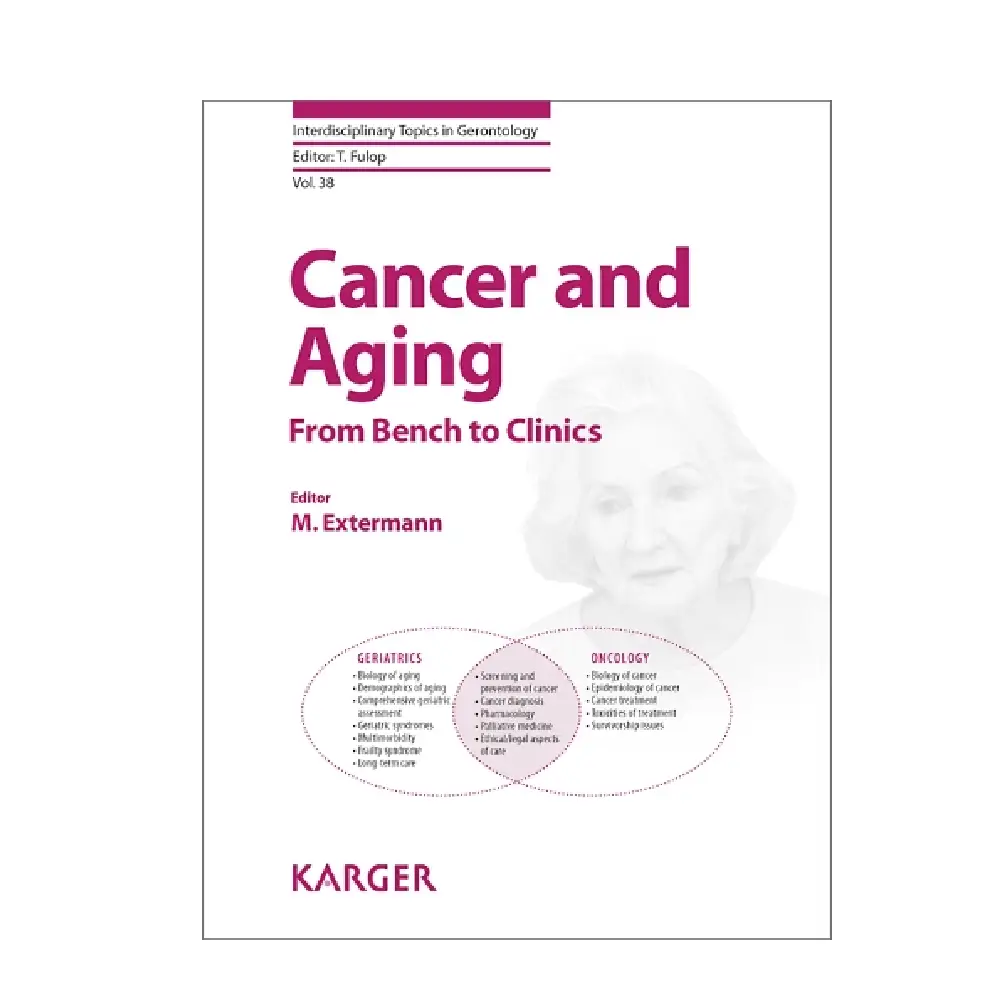

Cancer and Aging: From Bench to Clinics is a comprehensive scholarly volume in the Interdisciplinary Topics in Gerontology and Geriatrics series (Volume 38) that explores the intricate relationship between cancer and the aging process. Edited by leading experts in gerontology and oncology, this book bridges basic scientific research (“bench”) with clinical implications (“clinics”) to provide a nuanced understanding of how aging influences cancer development, progression, treatment responses, and patient care. As populations worldwide continue to age, the convergence of cancer and geriatric medicine has never been more relevant both scientifically and clinically.
At its core, the book recognizes that aging and cancer are deeply interlinked biological phenomena. Aging is the greatest risk factor for most cancers, and many molecular and cellular changes that accompany aging create an environment conducive to malignant transformation. Early chapters set the stage by outlining fundamental biological mechanisms of aging—such as genomic instability, telomere attrition, epigenetic alterations, stem cell decline, and changes in intercellular communication—and show how these processes overlap with hallmarks of cancer. For example, genomic instability increases mutation accumulation, promoting oncogenesis, while altered epigenetic regulation affects gene expression patterns that can drive uncontrolled cellular proliferation.
The volume then delves into the biology of cancer in the aging organism. Contributors examine how age-related changes in the immune system (immunosenescence) impair tumor surveillance and weaken responses to emerging malignant cells. The book also discusses chronic inflammation (“inflammaging”) as a driver of both tissue degeneration and tumor promotion. Metabolic shifts that occur with age—such as altered nutrient sensing and mitochondrial dysfunction—are shown to influence cancer cell metabolism and may create vulnerabilities that could be targeted therapeutically.
One of the key themes is the concept that aging not only increases cancer risk but also alters tumor behavior and response to therapy. Age-associated changes in tissue architecture and stromal environments influence how tumors grow and invade surrounding structures. Moreover, cancer in elderly patients often displays distinct biological features compared with cancer in younger individuals. These differences can affect prognosis and necessitate age‐tailored treatment approaches.
A major strength of the book is its integration of geriatric principles with oncology practice. Traditional oncology research and treatment paradigms are often based on studies in younger adult populations, yet many cancer patients are elderly and may have multiple coexisting medical conditions (comorbidities) that complicate treatment decisions. The clinical chapters emphasize the importance of comprehensive geriatric assessment (CGA) to evaluate functional status, cognition, social support, and other factors that influence treatment tolerance and outcomes. The book argues that incorporating geriatric evaluation tools into oncology practice leads to better individualized care plans and improved quality of life for older cancer patients.
The volume also addresses therapeutic challenges and emerging strategies in the context of aging. Chemotherapy, radiotherapy, targeted therapies, and immunotherapies all carry unique risks and benefits in elderly populations. Age-related declines in organ function (e.g., renal and hepatic function) impact drug metabolism and toxicity profiles, requiring careful dose adjustments and monitoring. At the same time, advances in molecularly targeted agents and immunomodulatory drugs offer new opportunities for more effective, less toxic treatments. Several chapters review current evidence on how these therapies perform in older adults and discuss ongoing efforts to design clinical trials that include elderly patients more representative of real-world populations.
Beyond biological and clinical topics, psychosocial and ethical considerations are thoughtfully explored. Aging cancer patients often face complex emotional, social, and end-of-life decisions that extend beyond medical treatment. Issues such as patient autonomy, quality versus quantity of life, caregiver burden, and access to supportive care services are examined, highlighting the need for multidisciplinary care teams that address not just the disease but the whole person.
An important aspect of the book is its forward-looking perspective. The contributors emphasize that research efforts must continue to unravel the complex interplay between cancer and aging at molecular, cellular, and systemic levels. Improved understanding of age-related vulnerabilities could lead to preventive interventions that delay both aging and cancer onset. Furthermore, the authors advocate for increased inclusion of elderly patients in clinical research to generate evidence that is truly applicable to the demographic most affected by cancer.
Overall, Cancer and Aging: From Bench to Clinics serves as a valuable reference for researchers, clinicians, and students at the intersection of oncology and gerontology. It synthesizes current scientific knowledge while addressing real-world clinical challenges, making it a key resource for anyone involved in the care of older adults with cancer. By linking foundational research with practical applications, the book contributes to a more holistic and effective approach to managing cancer in aging populations. Its interdisciplinary framework underscores the importance of combining biological insights with compassionate, patient-centered care as the global burden of cancer continues to rise alongside increasing life expectancy.


Reviews
There are no reviews yet