
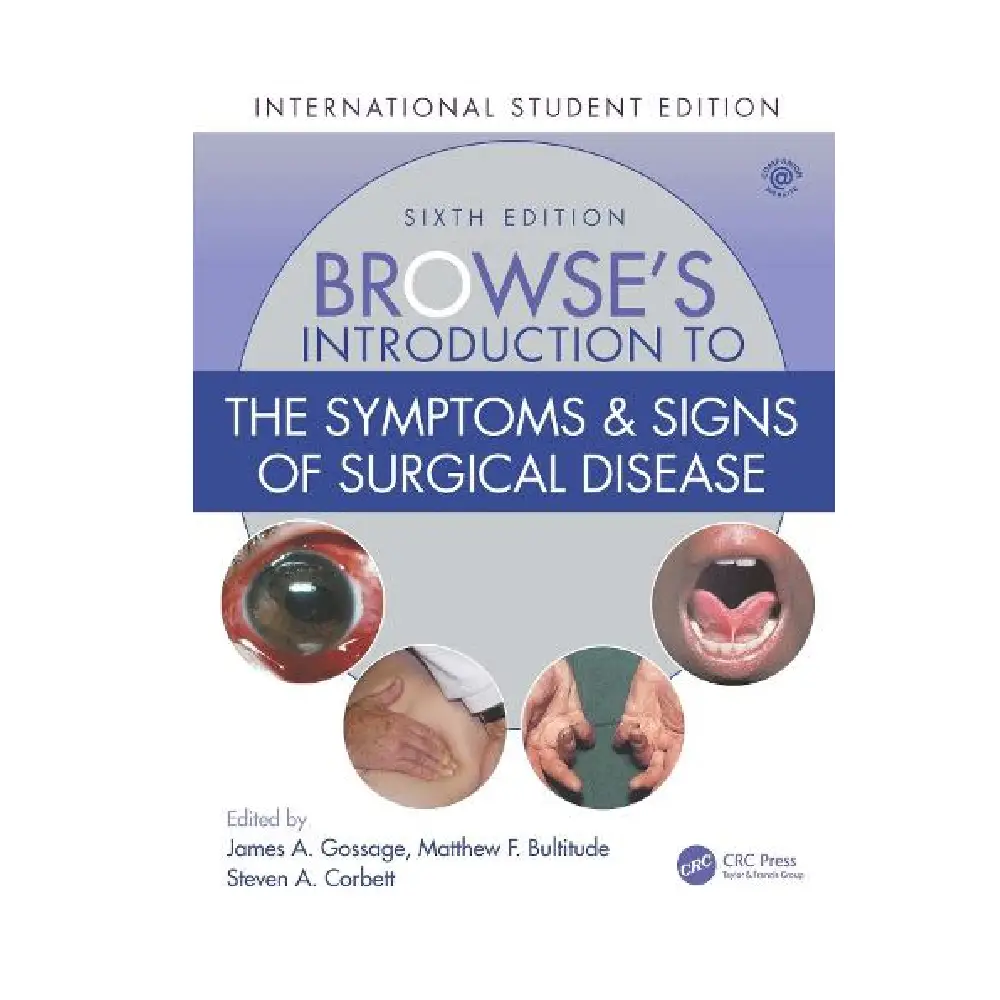

Browse’s Introduction to the Symptoms & Signs of Surgical Disease
Browse’s Introduction to the Symptoms & Signs of Surgical Disease is a cornerstone clinical text designed to strengthen the diagnostic skills of medical students, surgical trainees, and practicing clinicians. It focuses on the fundamental art of recognizing and interpreting the symptoms (what the patient experiences) and signs (what the clinician observes or measures) that indicate underlying surgical pathology. Rather than serving as an encyclopedic surgical atlas, the book emphasizes clinical reasoning: how to gather information, formulate differential diagnoses, and decide on appropriate investigations or referrals.
The Rationale and Clinical Importance
Surgery is not only about operative technique—it begins with astute clinical evaluation. A patient’s history and physical signs often provide the most vital clues to the nature, location, and urgency of disease. With increasing reliance on imaging and laboratory tests, there is a risk that core clinical skills may be underemphasized. Browse’s counters this trend by rooting surgical decision-making in careful observation, history taking, and physical examination.
The book bridges basic science, anatomy, and clinical medicine. By explaining how disease produces specific symptoms and signs, it reinforces the connection between pathophysiology and clinical presentation. This approach helps students build a framework that is both practical and enduring.
Structure and Scope
The text is organized anatomically and systemically. Each chapter typically begins with a review of relevant anatomy and physiology, followed by a discussion of how diseases affecting that region manifest clinically. Sections blend clinical vignettes with structured discussion, facilitating learning through real-world examples.
Key sections include chapters on:
-
General surgical symptoms — pain, fever, weight loss, fatigue
-
Abdominal symptoms and signs — pain, distension, tenderness, peritonism
-
Chest symptoms — dyspnea, chest pain, cough, haemoptysis
-
Vascular and limb findings — ischemia, edema, pulses, neurological deficits
-
Skin and soft tissue manifestations — rashes, ulcers, infection
This organization allows readers to approach problems from multiple angles—whether beginning with a presenting complaint or a detected sign.
History Taking: Beyond Yes/No
The first substantive part of the book is devoted to the history of present illness. Patients’ narratives are rich with information if clinicians know what to ask and how to interpret answers. The author emphasizes the art of open-ended questioning, listening for detail, and structuring the story without imposing bias.
For example, abdominal pain isn’t just a location—it has quality (sharp, colicky), timing (onset, duration), radiation, and relationships to food or bowel movements. The book instructs readers to probe for these subtleties and to seek patterns that point toward specific diagnoses such as appendicitis, biliary colic, or pancreatitis.
Chapters on systemic symptoms such as fever and weight loss discuss not just their surgical relevance—e.g., abscess, occult malignancy—but also how to distinguish infectious, inflammatory, metabolic, and neoplastic causes.
Physical Examination: The Power of Observation
Physical examination is presented as a set of systematic observations that together narrow the differential diagnosis. The book reintroduces skills that might otherwise be overlooked in modern practice:
-
Inspection — posture, gait, skin changes
-
Palpation — masses, tenderness, organomegaly
-
Percussion — detecting fluid, air, or solid organs
-
Auscultation — bowel sounds, vascular bruits
Real examples illustrate how subtle findings can be decisive. For example, a rigid abdomen suggests peritoneal irritation requiring urgent surgical review, while the quality of bowel sounds informs obstruction versus ileus.
The text also stresses the importance of vital signs, positioning them not as routine numbers but as clues to systemic physiology—tachycardia and fever can signal sepsis; hypoxia may accompany chest pathology or shock.
Differential Diagnosis and Clinical Reasoning
Perhaps the book’s greatest strength lies in its guidance on clinical reasoning. For each symptom or sign, the author provides structured differential diagnoses and a logical sequence of questions or tests to refine diagnostic thinking.
The book encourages clinicians to think of probabilities rather than certainties and to constantly revise hypotheses as new data emerge. Tables and flow diagrams are used extensively to help learners connect presenting features with likely pathological processes.
Diagnostic Strategy and Decision Making
Browse’s emphasizes a pragmatic approach to investigations. While imaging and lab tests are indispensable, they are most valuable when guided by a clear clinical question. A thoughtful clinical evaluation can prioritize tests that will meaningfully influence management rather than generating incidental findings.
The text also discusses risk stratification, triage, and urgency assessment—skills that are essential in emergency and acute care settings. Recognizing when a symptom signals imminent danger versus a condition that can be investigated electively is a recurrent theme.
Learning Tools and Pedagogy
The book uses clinical cases, checklists, and summary boxes to make key points memorable. Diagrams of anatomy and pathological processes reinforce how disease produces symptoms. End-of-chapter questions encourage self-assessment and integration of learning.
Its balanced tone makes it useful both as a teaching text for students and a reference guide for residents and practicing clinicians.
Conclusion
Browse’s Introduction to the Symptoms & Signs of Surgical Disease is a foundational text that champions clinical excellence. By grounding surgical evaluation in diagnostic reasoning and physical skills, it provides a robust framework for understanding how disease presents and evolves. Its focus on integrating patient history, physical findings, and pathophysiology makes it a valuable asset for anyone involved in surgical care. In an era of advanced technology, this guide reminds clinicians that the most powerful diagnostic tools often remain the brain, the eyes, and the hands.

Reviews
There are no reviews yet