
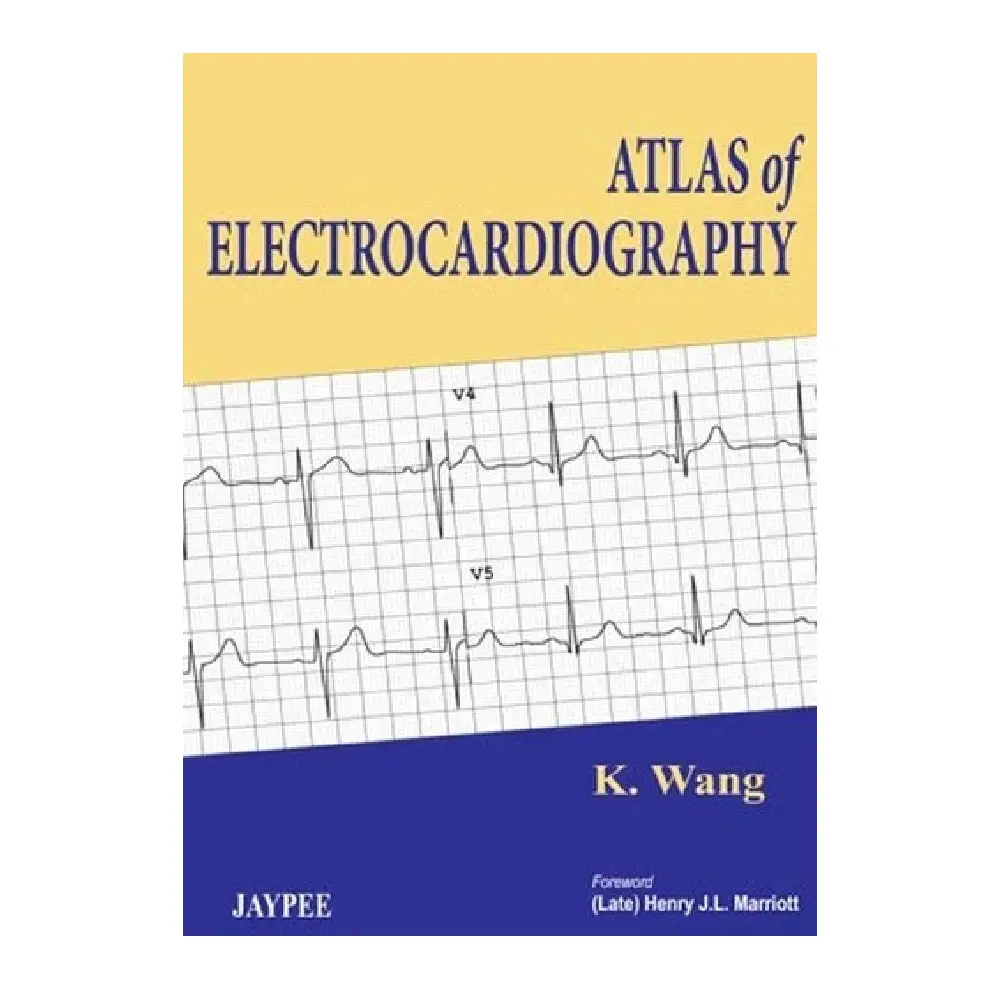


Atlas of Electrocardiography
Electrocardiography (ECG) is one of the most widely used, noninvasive diagnostic tools in clinical medicine. It provides vital information about the electrical activity of the heart, helping clinicians detect arrhythmias, myocardial ischemia, conduction abnormalities, electrolyte disturbances, and structural heart disease. An Atlas of Electrocardiography serves as a visual and interpretative guide, combining clear ECG tracings with systematic explanations to enhance understanding, pattern recognition, and clinical decision-making.
Purpose and Importance of an ECG Atlas
An ECG atlas is designed to bridge the gap between theoretical knowledge and real-world interpretation. While textbooks explain principles, an atlas emphasizes visual learning, allowing clinicians and students to recognize normal and abnormal patterns quickly. Because many cardiac emergencies rely on rapid ECG interpretation, familiarity with classic and atypical ECG presentations is essential for timely diagnosis and management.
Basics of Electrocardiography
The atlas typically begins with a review of ECG fundamentals. This includes the standard 12-lead ECG system, electrode placement, calibration, paper speed, and voltage settings. Understanding the electrical vectors represented by limb and precordial leads is crucial for accurate interpretation.
Normal ECG components—P wave, PR interval, QRS complex, ST segment, T wave, and QT interval—are illustrated with examples of normal variants across different age groups. This foundation allows the reader to distinguish normal physiological changes from pathology.
Normal ECG Variants
An important section of the atlas focuses on normal variants that may mimic disease. These include sinus arrhythmia, early repolarization, juvenile T-wave patterns, athlete’s heart changes, and age-related variations. Recognizing these patterns prevents overdiagnosis and unnecessary investigations.
Disorders of Rhythm (Arrhythmias)
A major portion of the atlas is devoted to cardiac arrhythmias, presented with clear ECG tracings and step-by-step interpretation. Common arrhythmias include:
-
Sinus bradycardia and tachycardia
-
Atrial fibrillation and atrial flutter
-
Supraventricular tachycardia
-
Ventricular tachycardia and ventricular fibrillation
-
Premature atrial and ventricular complexes
Each rhythm is illustrated with characteristic ECG features, clinical significance, and key differentiating points. Emergency arrhythmias are highlighted to emphasize rapid recognition.
Conduction Abnormalities
The atlas also details conduction system disorders, including atrioventricular (AV) blocks and bundle branch blocks. First-, second-, and third-degree AV blocks are presented with annotated tracings showing PR interval changes and dropped beats.
Right and left bundle branch blocks, hemiblocks, and bifascicular blocks are explained using lead-specific patterns. These sections help clinicians localize conduction defects and assess their clinical implications.
Ischemic Heart Disease and Myocardial Infarction
One of the most clinically critical uses of ECG is in the diagnosis of myocardial ischemia and infarction. The atlas provides detailed ECG examples of:
-
ST-segment elevation myocardial infarction (STEMI)
-
Non-ST elevation myocardial infarction (NSTEMI)
-
Unstable angina
-
Evolution of ECG changes over time
Territorial localization—anterior, inferior, lateral, and posterior infarctions—is illustrated using lead correlations. Subtle ischemic changes and atypical presentations are also included to improve diagnostic accuracy.
Chamber Enlargement and Hypertrophy
ECG features of atrial and ventricular enlargement are demonstrated with representative tracings. Criteria for left ventricular hypertrophy, right ventricular hypertrophy, left atrial enlargement, and right atrial enlargement are explained using voltage criteria, axis deviation, and waveform morphology.
These patterns are correlated with underlying conditions such as hypertension, valvular heart disease, and pulmonary hypertension.
Electrolyte and Metabolic Abnormalities
Electrolyte disturbances can produce characteristic ECG changes. The atlas illustrates ECG findings in:
-
Hyperkalemia and hypokalemia
-
Hypercalcemia and hypocalcemia
-
Hypothermia and drug toxicity
Recognizing these patterns is critical, as timely correction can be life-saving.
Pacemakers and Special ECGs
Modern ECG practice includes interpretation of pacemaker rhythms and ECGs in patients with implanted cardiac devices. The atlas explains pacing spikes, capture, sensing, and common pacemaker malfunctions.
Special situations such as ECGs in pregnancy, pediatric ECGs, and post-cardiac surgery tracings may also be included.
Clinical Integration and Practical Use
An effective ECG atlas emphasizes clinical correlation, linking ECG findings with symptoms, physical examination, and laboratory data. Each tracing is accompanied by key learning points and diagnostic tips to reinforce pattern recognition.
Conclusion
An Atlas of Electrocardiography is an indispensable learning and reference tool for medical students, residents, nurses, emergency physicians, internists, and cardiologists. By combining high-quality ECG tracings with clear, systematic explanations, it enhances diagnostic confidence and clinical efficiency. Mastery of ECG interpretation through atlas-based learning ultimately leads to faster diagnosis, better patient care, and improved cardiovascular outcomes.




Reviews
There are no reviews yet