
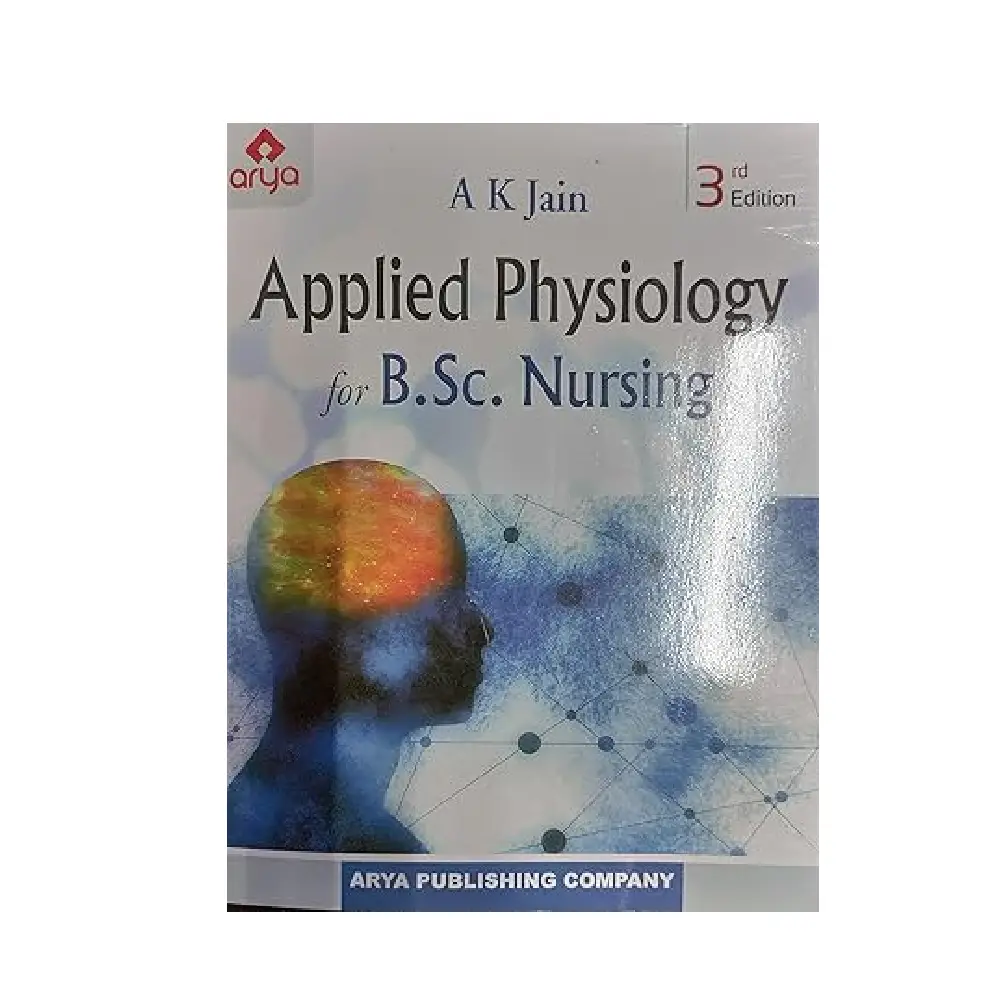

Applied Physiology for B.Sc. Nursing (3rd Edition) is a core academic textbook tailored specifically for undergraduate nursing students. It bridges fundamental physiological concepts with clinical applications relevant to nursing practice, ensuring that learners not only understand how body systems function but also how physiological changes manifest in health and disease. Designed to align with the nursing curriculum and competency-based education models, this third edition emphasizes clarity, clinical relevance, and practical insight.
The book begins by laying the foundation of physiology, introducing key principles such as homeostasis, cellular environment, membrane transport mechanisms, and cellular communication. Nursing students are guided through the structural and functional organization of the human body—from cells and tissues to organs and systems. The introductory chapters also cover basic concepts in bioelectricity and body fluid compartments (intracellular and extracellular fluids), which are critical for understanding fluid balance, electrolyte dynamics, and nerve conduction in later sections.
A central feature of this text is its systemic approach. Each major body system is explored in detail with clear, student-friendly explanations, supported by tables, flowcharts, and diagrams that simplify complex processes.
The cardiovascular system chapter begins with the anatomy of the heart and blood vessels, followed by the cardiac cycle, heart sounds, blood pressure regulation, and cardiac output. The text explains electrophysiology (including the conduction system and electrocardiogram interpretation), the role of baroreceptors and autonomic regulation, and peripheral vascular resistance. Clinical correlations describe conditions such as shock, hypertension, and heart failure, enabling students to connect physiological alterations with clinical signs and nursing implications.
The respiratory system section covers pulmonary ventilation, gas exchange, oxygen and carbon dioxide transport, and the mechanics of breathing. Regulatory mechanisms such as chemoreceptor control of respiration and neural regulation are clearly outlined. Disorders like asthma, COPD (chronic obstructive pulmonary disease), and hypoxia are discussed with emphasis on how respiratory changes affect overall physiology and patient care.
Next, the renal and urinary systems are examined in terms of nephron function, glomerular filtration, tubular reabsorption and secretion, and the regulation of body fluids and electrolytes. Acid–base balance, with its clinical interpretation (acidosis and alkalosis), is carefully explained using normal arterial blood gas values. Nursing applications include fluid therapy, electrolyte management, and assessment of urine output in conditions like dehydration and renal failure.
Gastrointestinal physiology is presented with attention to digestive enzymes, absorption processes, motility, and liver functions such as bile secretion and metabolism of carbohydrates, proteins, and fats. The discussion includes neural and hormonal regulation of digestion and common dysfunctions like malabsorption and jaundice, along with nursing considerations.
The endocrine system chapter explains hormone classifications, mechanisms of action, and the physiological roles of major glands including the hypothalamus, pituitary, thyroid, parathyroid, pancreas, adrenal glands, and gonads. Conditions such as diabetes mellitus, hypothyroidism, and adrenal insufficiency are correlated with physiological imbalances, reinforcing the nurse’s role in monitoring and education.
The text then covers the nervous system and special senses, detailing neuronal communication, reflex arcs, sensory reception, and pathways. The autonomic nervous system is discussed in relation to stress responses and homeostatic balance. Students learn how alterations in neural physiology contribute to neurological disorders such as stroke, neuropathy, and sensory deficits.
Musculoskeletal physiology explains the biomechanics of muscle contraction, bone growth and remodeling, and calcium homeostasis. Nursing implications include understanding immobility’s effects and rehabilitation principles following fractures or muscular injuries.
The reproductive systems section highlights hormonal control, menstrual cycle physiology, fertilization, and pregnancy. Key physiological changes during pregnancy and lactation are correlated with clinical observations and nursing care procedures, preparing students for obstetrical practice.
Throughout the book, clinical correlations are integrated within each topic, helping students link basic physiology with pathophysiological states and nursing practice. Boxes titled “Nursing Implications” or “Clinical Pearls” summarize essential points that nurses must observe during patient assessment and care planning.
Learning tools such as flowcharts, tables, summary points, review questions, and illustrative diagrams enhance comprehension and retention. The language is precise yet accessible—ideal for students encountering complex concepts for the first time. End-of-chapter questions, including multiple-choice and short-answer formats, support exam preparation and self-assessment.
Overall, Applied Physiology for B.Sc. Nursing (3rd Edition) is an indispensable academic resource that blends physiological theory with clinical application. It empowers nursing students to understand how body systems operate, how physiological alterations present in patient conditions, and how to apply this knowledge in assessment, monitoring, and patient education. Whether used for first-time learning or revision before exams, this textbook equips students with a solid foundation in physiology essential for safe, competent, and evidence-based nursing practice.



Reviews
There are no reviews yet