

Introduction
-
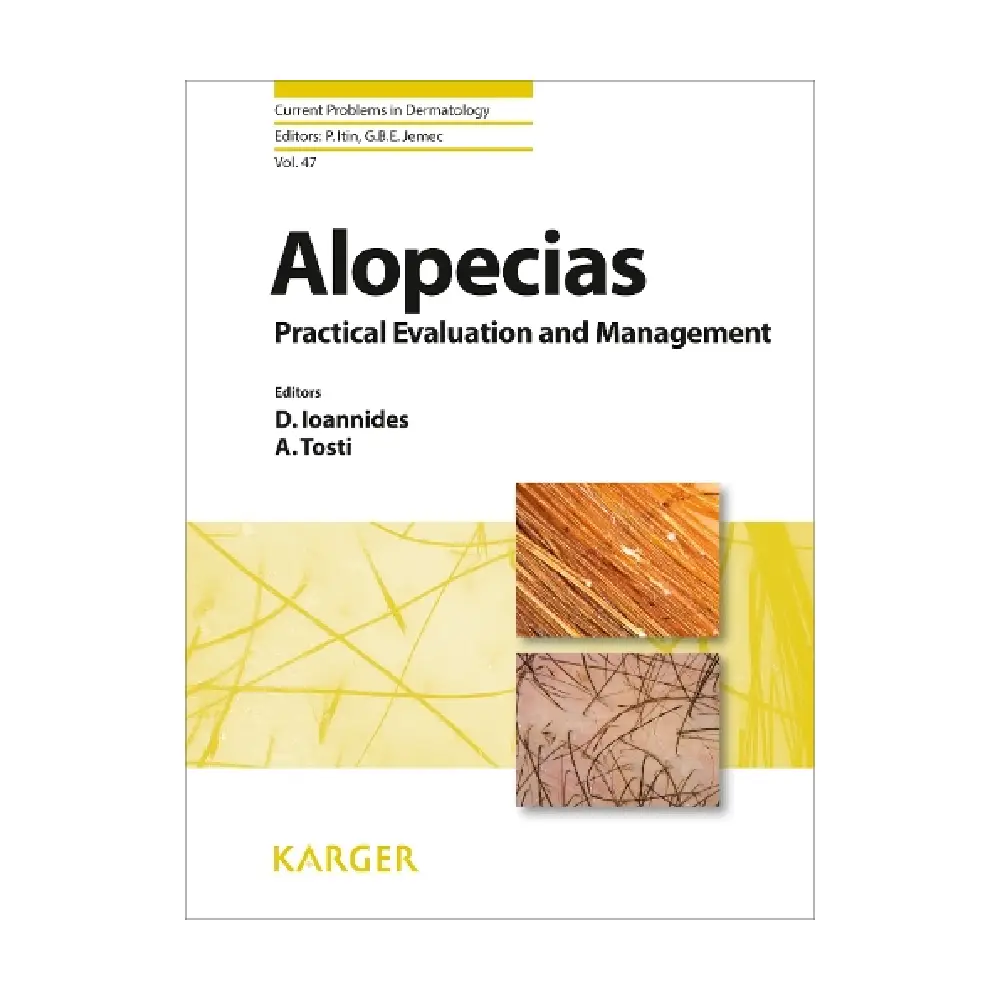
Alopecias – Practical Evaluation and Management is part of the Current Problems in Dermatology series (Volume 47), published in 2015 by S. Karger AG.
-
Edited by internationally recognized experts Dimitrios Ioannides and Antonella Tosti, the book addresses the full spectrum of alopecia — from basic biology to advanced clinical strategies.
-
Its primary goal is to provide practical, evidence-based guidance for clinicians who evaluate and treat hair loss in patients of all ages.
Hair loss (alopecia) is a common complaint in dermatology with broad etiologies, ranging from genetic predispositions to environmental triggers and systemic disorders. Because the psychosocial impact of hair loss can be profound — affecting self-esteem and quality of life — accurate diagnosis and effective management are essential.
Structural Overview
The book comprises multiple chapters authored by specialists covering every major form of alopecia and associated clinical considerations. The chapters are logically arranged to guide the clinician from foundational concepts to complex conditions and interventions.
1. Hair Biology and Aging
The opening section reviews normal hair biology, including the hair growth cycle and structural anatomy of hair follicles. It also addresses intrinsic (physiological) aging and extrinsic (external) influences such as ultraviolet radiation, air pollutants, smoking, and nutritional factors, all of which can adversely affect hair health and contribute to thinning or shedding.
Understanding the biology of hair is crucial because it provides the baseline from which pathological changes are assessed, and because many treatments hinge on modulating growth-cycle dynamics.
2. Diagnostic Evaluation
A significant portion of the text is devoted to clinical evaluation methods for alopecia. Dermatologists are guided through history taking, physical examination, and the use of dermoscopy (trichoscopy) — a non-invasive imaging technique that helps reveal subtle follicular patterns and scalp changes.
These diagnostic tools allow clinicians to distinguish between non-scarring alopecias (e.g., androgenetic alopecia, telogen effluvium) and scarring (cicatricial) alopecias, where permanent follicle destruction has occurred — a critical difference that alters management strategies.
3. Non-Scarring Alopecias
The editors dedicate several chapters to common non-scarring forms of alopecia:
-
Androgenetic Alopecia: Often called male-pattern or female-pattern hair loss, this hereditary condition involves progressive miniaturization of hair follicles, typically treated with topical minoxidil, oral 5-alpha reductase inhibitors, or combination regimens.
-
Telogen Effluvium: Characterized by diffuse shedding triggered by physiological or environmental stressors (e.g., postpartum, surgery, nutritional deficiency), telogen effluvium requires evaluation of underlying causes and supportive care.
-
Alopecia Areata: A multifactorial autoimmune condition producing patchy hair loss — often unpredictable — where immunotherapy (topical or intralesional steroids) and emerging treatments are discussed.
Each chapter combines clinical features, differential diagnosis, and practical management recommendations relevant to daily practice.
4. Scarring (Cicatricial) Alopecias
The book also tackles primary scarring alopecias, where inflammatory or destructive processes permanently damage hair follicles. Recognizing these conditions early — often through biopsy and histological evaluation — is essential because irreversible hair loss may occur without prompt intervention.
Management principles discussed include appropriate anti-inflammatory therapies, when to refer for surgical options, and how to monitor treatment response.
5. Special Populations and Related Topics
-
Pediatric Hair Loss: Hair disorders in children may differ from adult patterns, with congenital abnormalities or syndrome-associated alopecias requiring distinct approaches.
-
Drug-Induced Alopecia and Systemic Conditions: Many systemic diseases and medications can trigger hair loss. The book highlights how to identify these cases and modify treatment when possible.
-
Environmental & Lifestyle Impacts: Ultraviolet exposure, smoking, and nutritional status influence hair quality and graying and are reviewed to help clinicians counsel patients effectively.
6. Hair Care and Cosmetic Considerations
Beyond pathology, practical topics such as hair care, cosmetic camouflage techniques, and the implications of hair dyeing and styling are included. These chapters acknowledge that patients often pursue cosmetic solutions alongside medical treatments.
Clinical Value and Audience
This volume is designed for dermatologists, trichologists, and clinicians who regularly evaluate patients with hair loss. Its strengths lie in:
-
Comprehensive scope: covering common and rare alopecias.
-
Clinical practicality: real-world guidance and clear algorithms.
-
Multidisciplinary insight: integrating biology, diagnosis, and management approaches.
Whether used as a reference for diagnostic dilemmas or as an educational tool for trainees, the book provides a balanced mix of pathophysiology, clinical insight, and therapeutic guidance aimed at improving patient care.




Reviews
There are no reviews yet