
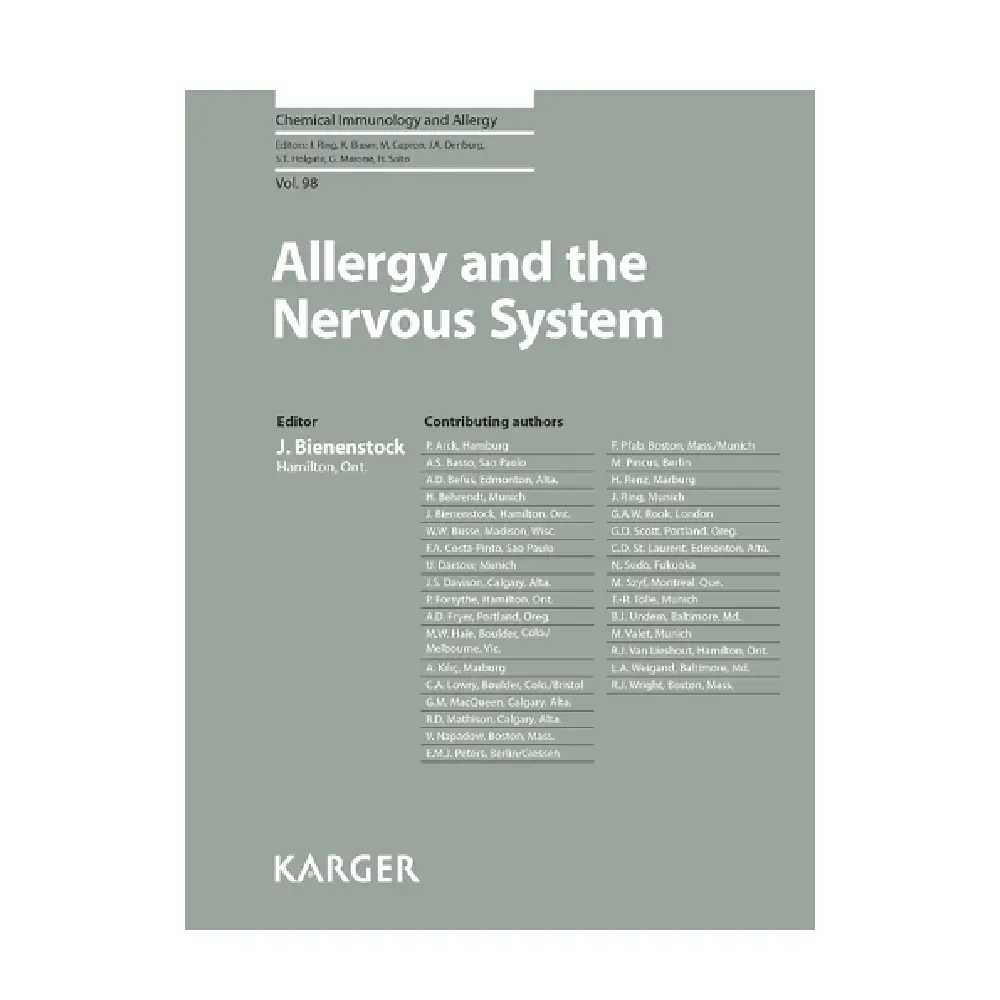

Allergy and the Nervous System (Volume 98, Chemical Immunology and Allergy) is a specialized academic volume in the renowned series Chemical Immunology and Allergy, published by S. Karger AG. This volume explores the increasingly recognized and complex interactions between the immune system and the nervous system in the context of allergic disease. By integrating immunology, neurology, and clinical allergy, the book provides a multidisciplinary perspective on how neural pathways influence allergic inflammation and how immune mediators affect neural function.
Traditionally, allergy has been viewed primarily as a dysregulated immune response involving immunoglobulin E (IgE), mast cells, basophils, eosinophils, and T helper 2 (Th2) lymphocytes. However, emerging research demonstrates that the nervous system plays a critical regulatory and amplifying role in allergic reactions. This volume emphasizes the concept of neuroimmune communication, describing how peripheral sensory nerves, autonomic pathways, and central nervous system circuits interact with immune cells to modulate inflammation, hypersensitivity, and symptom perception.
One of the central themes of the book is the bidirectional communication between immune cells and neurons. Sensory nerve endings in the skin, airways, and gastrointestinal tract release neuropeptides such as substance P, calcitonin gene-related peptide (CGRP), and neurokinins. These mediators can influence mast cell activation, vascular permeability, and cytokine production. Conversely, inflammatory mediators such as histamine, prostaglandins, leukotrienes, and cytokines directly stimulate nerve fibers, contributing to symptoms such as itching, sneezing, bronchospasm, and pain. This reciprocal interaction forms the foundation of neurogenic inflammation, a key mechanism discussed in detail throughout the volume.
The book devotes considerable attention to allergic diseases in which neural mechanisms are particularly prominent. In allergic rhinitis and asthma, for example, cholinergic reflexes and sensory nerve activation contribute significantly to airway hyperresponsiveness and mucus secretion. The authors explore how neural pathways amplify bronchoconstriction and how stress-related neural signaling can worsen respiratory symptoms. In atopic dermatitis, itch is highlighted as a prototypical neuroimmune phenomenon, where cytokines such as IL-31 interact with peripheral nerves to perpetuate scratching and skin inflammation.
Another major focus of the volume is stress and its impact on allergic disease. Psychological stress activates the hypothalamic–pituitary–adrenal (HPA) axis and the sympathetic nervous system, leading to the release of glucocorticoids and catecholamines. While acute stress responses may transiently suppress immune activity, chronic stress can dysregulate immune balance and exacerbate allergic inflammation. The book reviews experimental and clinical data linking stress, anxiety, and depression with worsened outcomes in asthma, urticaria, and eczema.
The volume also examines central nervous system involvement in allergy. Neuroimaging studies suggest that allergic inflammation may influence brain function, affecting cognition, mood, and sleep. The concept of “sickness behavior,” mediated by cytokines acting on the brain, is discussed in relation to allergic disease. The authors analyze how chronic inflammation may alter neurotransmitter systems and neural plasticity, thereby influencing symptom perception and disease chronicity.
From a mechanistic standpoint, the book delves into molecular signaling pathways that mediate neuroimmune crosstalk. Receptors such as Toll-like receptors (TLRs), transient receptor potential (TRP) channels, and neuropeptide receptors are described as critical points of interaction. The role of mast cells as key intermediaries between nerves and immune responses receives particular emphasis. Mast cells are strategically located near nerve endings and can rapidly respond to neural signals, releasing mediators that further stimulate sensory neurons.
Clinical implications are carefully explored. Understanding neuroimmune interactions opens possibilities for novel therapeutic approaches targeting neural pathways in allergic disease. The volume discusses pharmacological agents that modulate neuropeptide signaling, cholinergic transmission, and sensory nerve activation. It also considers non-pharmacological interventions, such as stress management and behavioral therapies, as adjunct strategies for improving allergic disease control.
Animal models and translational research are presented to support clinical observations. Experimental models of asthma and dermatitis demonstrate how disrupting neural signaling pathways can attenuate inflammation and symptom severity. These findings underscore the potential for therapies that target both immune and neural components of allergic disease.
Each chapter is authored by experts in immunology, neurology, dermatology, pulmonology, and psychoneuroimmunology, ensuring comprehensive and authoritative coverage. The volume includes detailed figures, pathway diagrams, and extensive references, making it a valuable resource for researchers and clinicians seeking to understand the evolving science of neuroimmune interactions.
In summary, Allergy and the Nervous System (Volume 98, Chemical Immunology and Allergy) provides a sophisticated examination of how the immune and nervous systems interact in allergic disease. By highlighting neurogenic inflammation, stress-related modulation, and molecular cross-talk, the book expands the traditional understanding of allergy beyond purely immunological mechanisms. It serves as an essential reference for allergists, immunologists, neurologists, dermatologists, and researchers interested in the dynamic interface between immunity and neural regulation.



Reviews
There are no reviews yet