


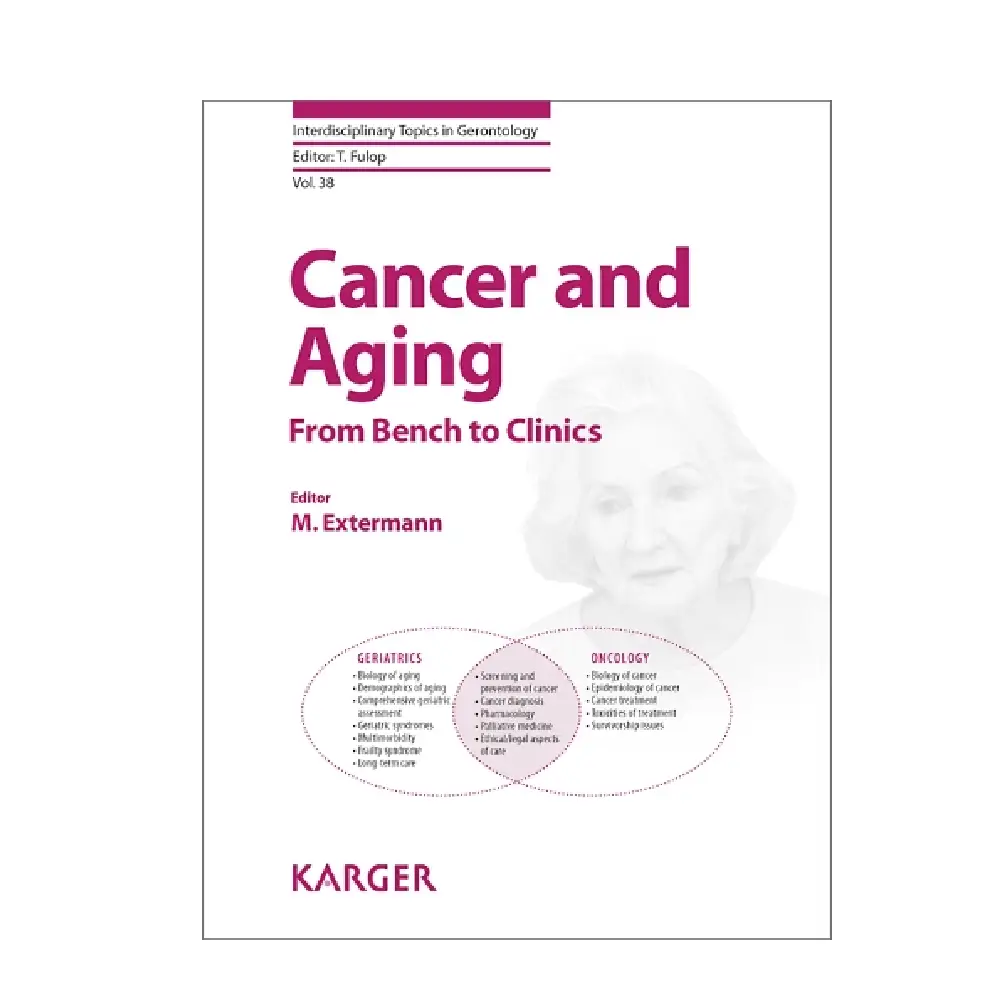
Aging: Facts and Theories is a scholarly volume in the respected series Interdisciplinary Topics in Gerontology and Geriatrics, published by S. Karger AG. This work brings together leading researchers to examine the biological foundations of aging while also addressing broader theoretical, clinical, and societal perspectives. As part of a long-standing academic series dedicated to gerontology and geriatrics, Volume 39 focuses specifically on clarifying what is firmly established in aging research (“facts”) and what remains under debate (“theories”).
The book begins by exploring fundamental biological mechanisms that underlie aging. It discusses cellular and molecular processes such as oxidative stress, mitochondrial dysfunction, telomere shortening, genomic instability, and cellular senescence. These mechanisms are presented not merely as isolated phenomena but as interconnected pathways contributing to the gradual functional decline seen with advancing age. By evaluating experimental data from animal models and human studies, the contributors differentiate well-supported biological findings from hypotheses that require further validation.
A significant portion of the volume is devoted to evolutionary and genetic theories of aging. Classic concepts such as antagonistic pleiotropy, mutation accumulation, and disposable soma theory are reviewed and critically assessed. The authors explain how evolutionary biology helps clarify why aging occurs despite natural selection. Rather than viewing aging solely as deterioration, the book presents it as a complex trade-off shaped by evolutionary pressures, genetic programming, and environmental interactions.
The work also examines metabolic and endocrine influences on aging. Topics include caloric restriction, nutrient-sensing pathways such as insulin/IGF-1 signaling, mTOR regulation, and the role of sirtuins. Evidence from laboratory research demonstrating lifespan extension through dietary or pharmacological interventions is discussed alongside the challenges of translating these findings into safe, effective therapies for humans. This balanced analysis helps readers distinguish between promising research avenues and premature claims.
Importantly, the book addresses age-related diseases and their relationship to the aging process itself. Conditions such as cardiovascular disease, neurodegeneration, osteoporosis, and metabolic disorders are considered in the context of whether they are inevitable consequences of aging or modifiable pathologies. By separating primary aging processes from disease states, the authors emphasize the potential for preventive strategies and healthy aging interventions.
In addition to biological perspectives, the volume includes interdisciplinary viewpoints that reflect the broader scope of gerontology. Psychological adaptation, cognitive aging, social determinants of health, and demographic transitions are incorporated to provide a comprehensive understanding of aging in individuals and populations. This interdisciplinary approach underscores that aging is not solely a cellular process but also a lived human experience influenced by environment, lifestyle, and social structure.
One of the book’s strengths is its critical approach. Rather than promoting a single unifying theory, it presents competing explanations and evaluates the strength of available evidence. This encourages readers to think analytically about scientific claims and understand the evolving nature of gerontological research. The distinction between established facts and speculative models makes the text particularly valuable for advanced students and professionals seeking clarity in a rapidly developing field.
The editors and contributors—recognized experts in aging research—ensure scientific rigor while maintaining accessibility for readers with a background in medicine, biology, or health sciences. The structured chapters, extensive references, and clear explanations make it suitable as both a teaching resource and a research reference.
Overall, Aging: Facts and Theories provides a comprehensive and balanced examination of why aging occurs, how it manifests biologically, and what implications it holds for healthcare and society. It bridges laboratory science with clinical and societal considerations, making it highly relevant for geriatricians, gerontologists, biomedical researchers, and policy planners. By integrating established knowledge with ongoing debates, the book contributes meaningfully to understanding one of humanity’s most universal and complex biological processes—the process of aging itself.


Reviews
There are no reviews yet