
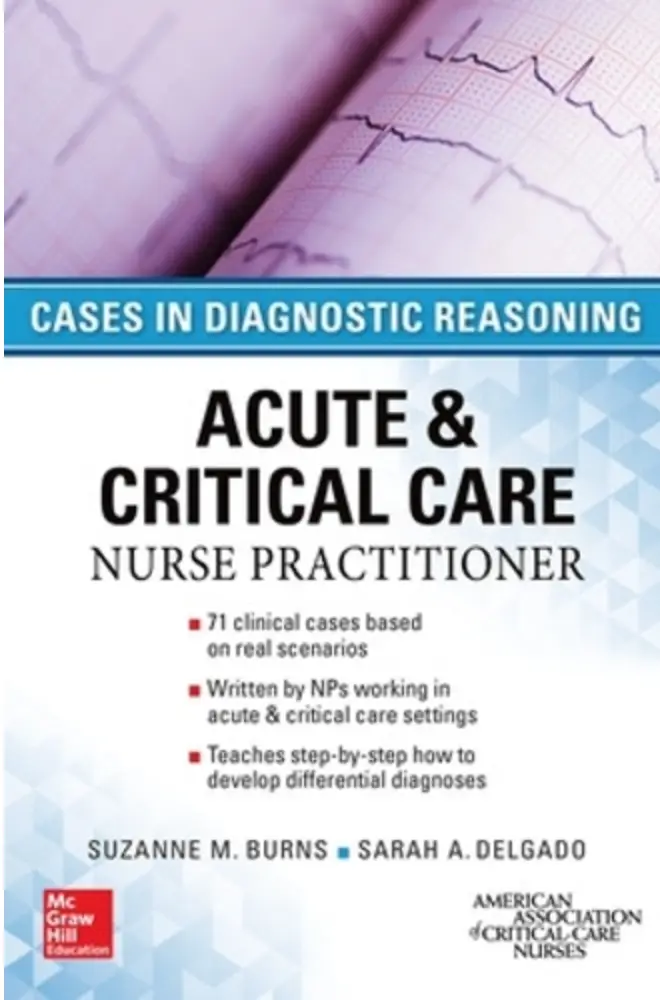
Acute & Critical Care Nurse Practitioner: Cases in Diagnostic Reasoning
Acute and critical care nurse practitioners (ACNPs) play a vital role in managing patients with complex, rapidly evolving conditions. Cases in Diagnostic Reasoning is an essential learning approach that strengthens clinical judgment by presenting real-world scenarios requiring timely assessment, prioritization, and intervention. Through case-based learning, practitioners refine their ability to synthesize patient data, identify life-threatening conditions, and implement evidence-based management strategies.
The foundation of diagnostic reasoning in acute and critical care lies in a structured yet flexible clinical approach. This includes comprehensive history-taking, focused physical examination, interpretation of laboratory and imaging findings, and continuous patient reassessment. Unlike routine care settings, critical care environments demand rapid decision-making, often with incomplete or evolving information. Therefore, practitioners must rely on pattern recognition, clinical experience, and analytical thinking to arrive at accurate diagnoses.
Case-based scenarios typically present patients with acute symptoms such as chest pain, respiratory distress, altered mental status, or hemodynamic instability. For example, a patient presenting with sudden shortness of breath may have multiple potential diagnoses, including pulmonary embolism, acute respiratory distress syndrome (ARDS), pneumonia, or heart failure. The nurse practitioner must quickly evaluate vital signs, oxygen saturation, arterial blood gases, and imaging results while initiating stabilizing interventions. Prioritization is key—ensuring airway, breathing, and circulation are maintained before proceeding to detailed diagnostic workup.
Diagnostic reasoning also involves recognizing subtle clinical cues that may indicate deterioration. In critical care, small changes in parameters such as urine output, mental status, or blood pressure can signal worsening conditions. Case studies emphasize the importance of trend analysis rather than relying on single data points. For instance, a gradual decline in blood pressure combined with rising lactate levels may indicate the onset of septic shock, prompting immediate intervention with fluid resuscitation and antibiotics.
Another critical aspect highlighted in case-based learning is differential diagnosis. Practitioners must generate a list of possible conditions and systematically rule them out based on clinical findings and investigations. This process reduces diagnostic errors and ensures comprehensive patient care. For example, in a patient with chest pain, distinguishing between myocardial infarction, aortic dissection, and gastrointestinal causes is crucial, as each requires vastly different management strategies.
Interprofessional collaboration is also central to effective diagnostic reasoning. ACNPs work closely with physicians, respiratory therapists, pharmacists, and nursing staff to coordinate care. Case discussions often illustrate how teamwork enhances patient outcomes by integrating diverse expertise. For instance, managing a critically ill patient with multi-organ failure requires coordinated efforts in ventilation management, medication adjustment, and nutritional support.
In addition to clinical skills, ethical decision-making and patient-centered care are emphasized. Critical care scenarios often involve end-of-life considerations, requiring practitioners to balance aggressive treatment with quality of life. Case studies encourage reflection on communication strategies with patients and families, ensuring that care aligns with patient values and preferences.
Technology and advanced monitoring tools further support diagnostic reasoning. Continuous cardiac monitoring, bedside ultrasound, and advanced imaging provide real-time data that guide clinical decisions. However, reliance on technology must be balanced with clinical judgment, as overinterpretation or misinterpretation of data can lead to errors.
Ultimately, Acute & Critical Care Nurse Practitioner: Cases in Diagnostic Reasoning equips practitioners with the skills needed to navigate complex clinical situations. By engaging with realistic scenarios, ACNPs develop confidence, improve critical thinking, and enhance their ability to deliver high-quality, timely care. This approach not only improves diagnostic accuracy but also contributes to better patient outcomes in high-stakes environments where every decision can be life-saving.






Reviews
There are no reviews yet