
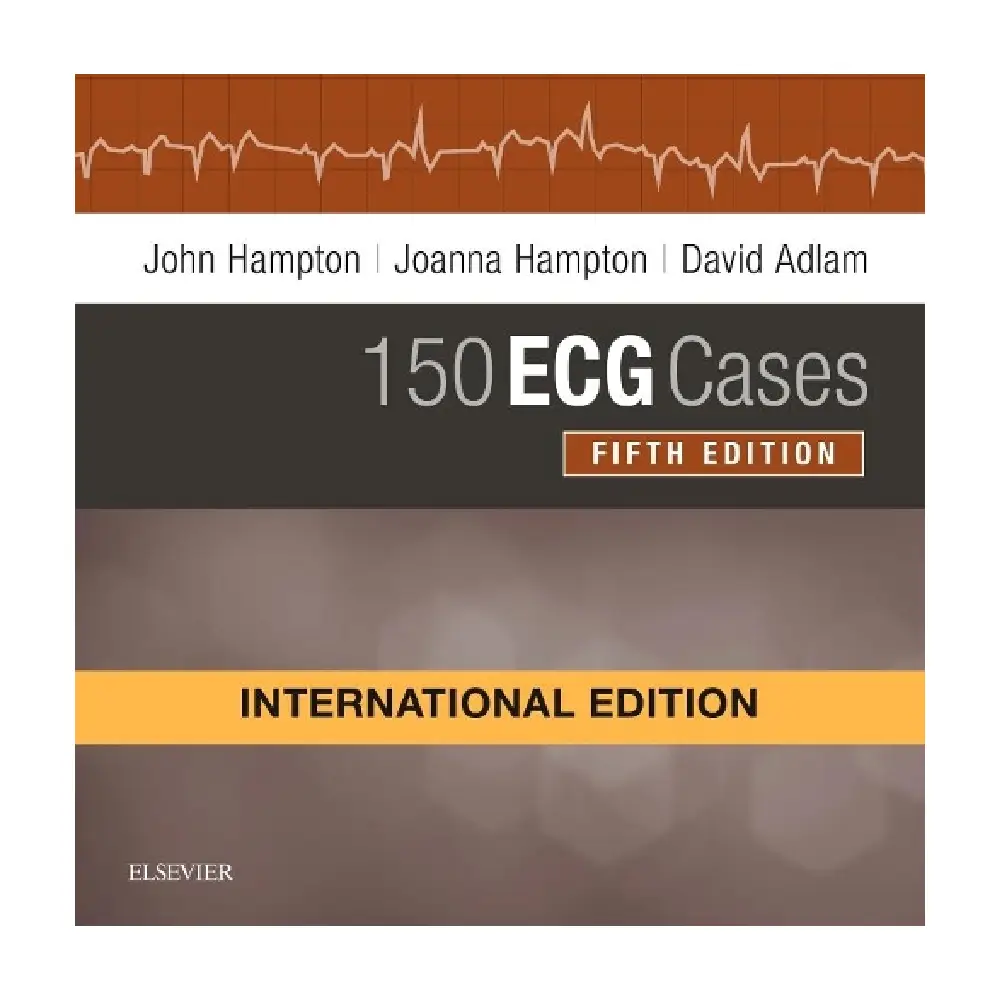

150 ECG Cases
150 ECG Cases is a practical, case-based learning resource designed to help medical students, residents, emergency physicians, and cardiology trainees master the interpretation of electrocardiograms (ECGs). The book adopts a structured and clinically oriented approach, presenting real-world ECG tracings alongside patient histories and focused clinical questions. By combining theory with application, it strengthens diagnostic reasoning and improves confidence in everyday clinical practice.
Structure and Format
The book is organized into 150 individual ECG cases, each typically presented in a standardized format:
-
Clinical Scenario – A concise patient history including age, symptoms, relevant medical background, and presenting complaint.
-
ECG Tracing – A clearly reproduced 12-lead ECG.
-
Questions – Focused prompts guiding readers to interpret rhythm, rate, axis, intervals, waveform abnormalities, and possible diagnoses.
-
Discussion and Explanation – A detailed breakdown of the ECG findings, clinical significance, differential diagnosis, and management considerations.
-
Key Learning Points – Bullet-point summaries highlighting important takeaways.
This case-based design encourages active engagement rather than passive reading. Learners are prompted to interpret each ECG independently before reviewing the explanation, simulating real-life clinical decision-making.
Core Topics Covered
The 150 cases encompass a wide range of cardiovascular conditions and ECG abnormalities, including:
-
Normal ECG Variants
-
Sinus rhythms and sinus arrhythmias
-
Atrial arrhythmias (atrial fibrillation, atrial flutter, multifocal atrial tachycardia)
-
Supraventricular tachycardia (SVT)
-
Ventricular tachycardia and ventricular fibrillation
-
Bradyarrhythmias and AV blocks
-
Bundle branch blocks
-
Axis deviations
-
Ischemic changes and myocardial infarction
-
Electrolyte abnormalities (e.g., hyperkalemia, hypokalemia)
-
Drug effects (e.g., digoxin toxicity)
-
Pacemaker rhythms
-
Inherited channelopathies (e.g., Long QT syndrome, Brugada syndrome)
The breadth of content ensures that readers are exposed to both common and rare ECG presentations, preparing them for diverse clinical scenarios.
Stepwise ECG Interpretation
A central theme throughout the book is the importance of a systematic approach to ECG interpretation. Readers are encouraged to analyze:
-
Rate
-
Rhythm
-
Axis
-
P wave morphology
-
PR interval
-
QRS complex duration and morphology
-
ST segment changes
-
T wave abnormalities
-
QT interval
By reinforcing this structured method across all 150 cases, the book helps prevent missed diagnoses and promotes consistent interpretation skills.
Clinical Relevance
One of the strengths of 150 ECG Cases is its emphasis on clinical context. Rather than presenting ECG tracings in isolation, each case integrates patient symptoms and risk factors. For example:
-
A young patient with palpitations and narrow-complex tachycardia prompts discussion of AV nodal re-entrant tachycardia.
-
An elderly patient with chest pain and ST-segment elevation illustrates acute myocardial infarction.
-
A patient with syncope and prolonged QT interval introduces the concept of torsades de pointes.
This contextual approach mirrors real clinical practice, where ECG interpretation must be aligned with the patient’s presentation.
Emergency and Critical Care Applications
The book is particularly valuable in emergency settings. Rapid recognition of life-threatening conditions such as:
-
ST-elevation myocardial infarction (STEMI)
-
Ventricular tachycardia
-
Complete heart block
-
Hyperkalemia
-
Pulmonary embolism patterns
can be lifesaving. The case-based format reinforces pattern recognition, which is crucial during acute care situations.
Exam Preparation Tool
150 ECG Cases is widely used for examination preparation, including:
-
Undergraduate medical exams
-
Postgraduate entrance exams
-
Internal medicine and cardiology board exams
-
Objective Structured Clinical Examinations (OSCEs)
By exposing learners to varied and progressively challenging ECG patterns, the book enhances both theoretical understanding and practical diagnostic skills.
Learning Benefits
The key educational advantages include:
-
Repetition and reinforcement across multiple cases
-
Exposure to common pitfalls and diagnostic errors
-
Emphasis on real-world applicability
-
Improved confidence in ECG interpretation
-
Development of analytical and pattern-recognition skills
The question-and-answer format also makes it suitable for group study, teaching rounds, and self-assessment.
Who Should Read This Book?
The book is ideal for:
-
Medical students learning ECG basics
-
Junior doctors in emergency or internal medicine
-
Cardiology trainees
-
Critical care professionals
-
General practitioners seeking to refine ECG interpretation skills
Even experienced clinicians may find value in reviewing rare or subtle ECG presentations.
Conclusion
150 ECG Cases is an essential case-based learning resource that transforms ECG interpretation from a theoretical exercise into a practical clinical skill. By presenting diverse real-world scenarios, reinforcing a systematic approach, and linking ECG findings with patient management, the book equips healthcare professionals with the knowledge and confidence needed for accurate and timely cardiac diagnosis.
Through repetition, structured analysis, and clinically relevant discussions, it serves as both a foundational learning tool and an advanced revision guide for anyone involved in cardiovascular care.




Reviews
There are no reviews yet