
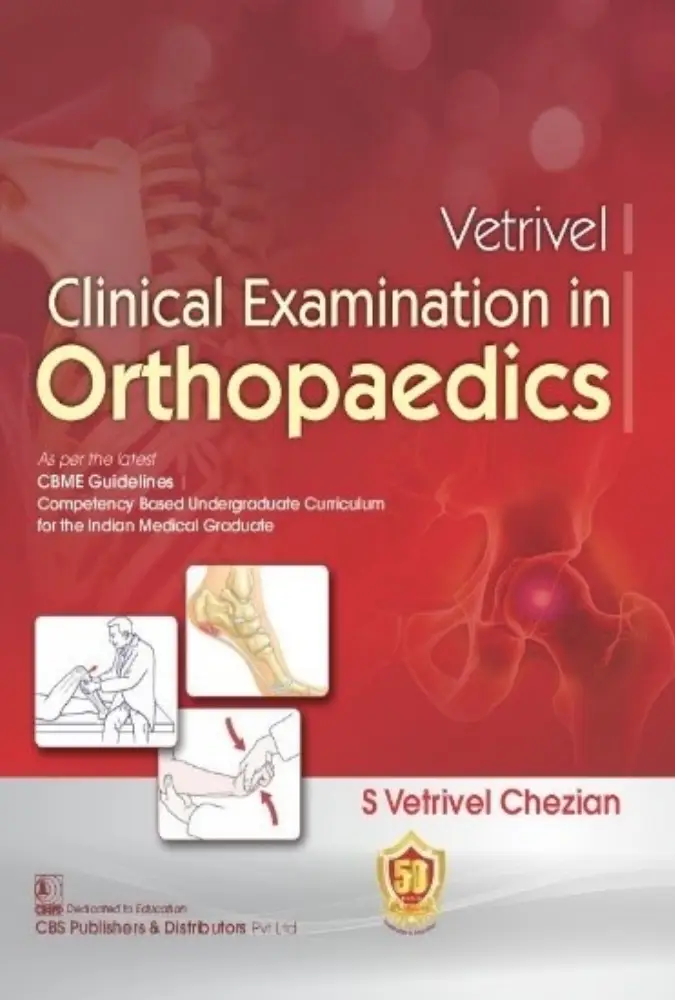
Vetrivel Clinical Examination in Orthopaedics (PB) is a comprehensive and practical guide designed to help medical students and clinicians master the art of clinical examination in orthopaedics. Widely appreciated for its clarity and systematic approach, this book is especially useful for MBBS students, postgraduate aspirants, interns, and practicing doctors who want to develop strong clinical skills and excel in examinations.
The book focuses on the fundamental principles of orthopaedic clinical examination, emphasizing a step-by-step approach to patient assessment. It begins with the basics of history taking, which is a crucial component of diagnosis. Students are guided on how to elicit relevant information about symptoms such as pain, swelling, deformity, stiffness, and functional limitations. The importance of understanding the mechanism of injury and patient history is clearly explained, helping readers correlate clinical findings with possible diagnoses.
One of the key strengths of this book is its structured format for physical examination. Each joint and region of the body—such as the shoulder, elbow, wrist, hip, knee, ankle, and spine—is discussed in detail. The examination process is broken down into inspection, palpation, movement, and special tests. This systematic approach ensures that students do not miss any important steps during clinical evaluation.
The book provides clear descriptions of various special tests used in orthopaedics, along with their clinical significance. Tests for ligament injuries, meniscal tears, nerve involvement, and joint instability are explained in a simple and easy-to-understand manner. These tests are essential for identifying specific conditions and are frequently asked in practical and viva examinations.
Illustrations and diagrams play a significant role in this book. Well-drawn images demonstrate examination techniques, positioning of the patient, and hand placements for different tests. These visual aids enhance understanding and help students perform examinations more accurately. The diagrams also make it easier to remember procedures during exams.
Another important feature is the inclusion of case-based discussions and viva questions. These sections simulate real examination scenarios and help students prepare effectively for clinical exams. By practicing these cases, students can improve their diagnostic reasoning and communication skills, which are critical during viva voce and bedside examinations.
The book also emphasizes the interpretation of clinical findings. It teaches students how to analyze signs and symptoms to arrive at a probable diagnosis. This integration of examination and reasoning is essential for developing clinical competence and confidence.
In addition to covering common orthopaedic conditions, the book includes sections on trauma, deformities, infections, and neurological involvement affecting the musculoskeletal system. It provides guidance on how to approach different clinical situations and prioritize findings based on their importance.
The language used is simple, concise, and student-friendly, making it accessible even for beginners. Complex concepts are explained in a straightforward manner, ensuring that readers can easily grasp and retain information. The content is focused on high-yield topics, making it particularly useful for exam preparation and quick revision.
This book is also aligned with modern medical education trends, including competency-based learning. It encourages students to develop practical skills rather than relying solely on theoretical knowledge. This approach is essential for becoming a competent and confident clinician.
Overall, Vetrivel Clinical Examination in Orthopaedics (PB) is an essential resource for anyone looking to master orthopaedic clinical examination. Its structured approach, clear explanations, and emphasis on practical skills make it a valuable companion for medical students and professionals alike. By combining theoretical knowledge with hands-on techniques, the book helps readers build a strong foundation in orthopaedics and perform effectively in both examinations and clinical practice.



Reviews
There are no reviews yet