
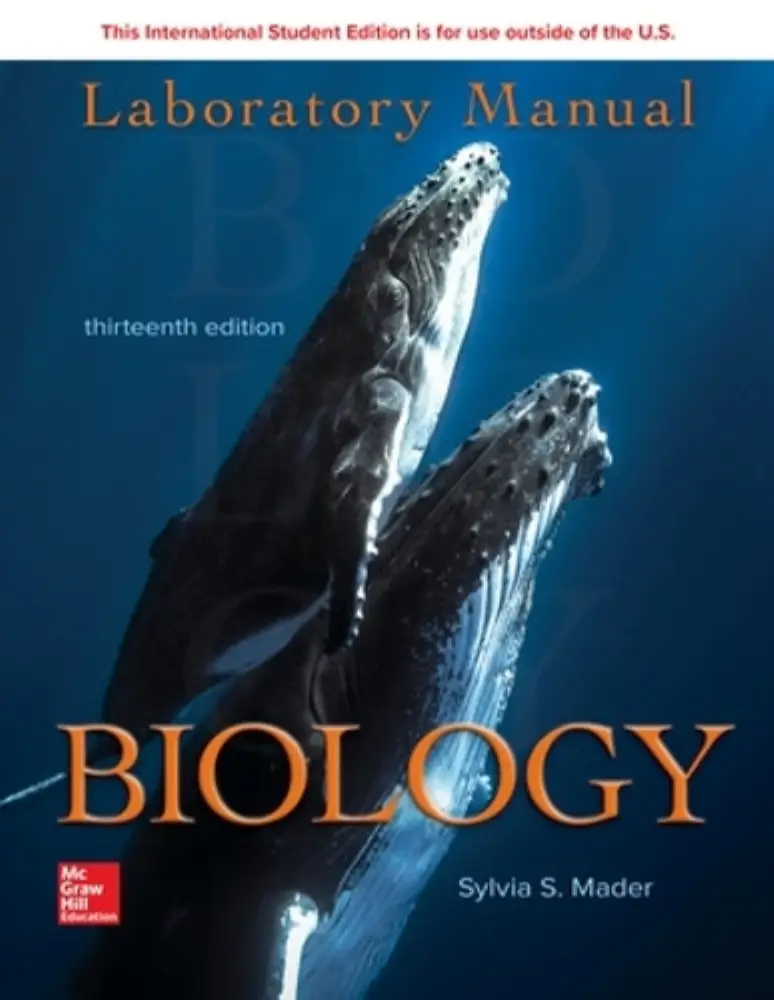
Laboratory Manual in Biology, Thirteenth Edition
The Laboratory Manual in Biology, Thirteenth Edition is a comprehensive and practical guide designed to support students in developing essential laboratory skills and a deeper understanding of biological concepts through hands-on experimentation. Widely used in undergraduate and pre-professional courses, this manual serves as an indispensable companion to theoretical biology textbooks by emphasizing experiential learning and scientific inquiry.
This edition continues the tradition of providing well-structured laboratory exercises that cover a broad range of topics in biology, including cell structure and function, genetics, evolution, ecology, plant and animal physiology, and microbiology. Each experiment is carefully designed to reinforce key theoretical concepts while encouraging students to observe, analyze, and interpret biological phenomena. The manual fosters critical thinking by guiding students through hypothesis formulation, experimental design, data collection, and result interpretation.
One of the defining features of this laboratory manual is its clear and student-friendly format. Each exercise begins with an introduction that outlines the objectives and background information necessary to understand the experiment. This is followed by a detailed list of materials required, step-by-step procedures, and safety precautions. The instructions are written in a straightforward manner, ensuring that students can perform experiments accurately and confidently, even with minimal supervision.
The thirteenth edition incorporates updated content to reflect advancements in biological sciences and modern laboratory techniques. It includes new experiments and revised protocols that align with current educational standards and scientific practices. Emphasis is placed on accuracy, reproducibility, and proper documentation, which are essential components of scientific research. The manual also integrates the use of modern tools such as microscopes, digital imaging, and basic molecular biology techniques, providing students with exposure to contemporary laboratory methods.
Another significant aspect of this manual is its focus on skill development. Students are trained in essential laboratory practices such as specimen handling, slide preparation, staining techniques, and measurement of biological parameters. Additionally, the manual encourages the use of observation tables, diagrams, and graphs to record findings systematically. This structured approach helps students develop good scientific habits and improves their ability to communicate experimental results effectively.
The manual also includes pre-lab and post-lab questions designed to enhance understanding and promote active learning. Pre-lab questions prepare students for the experiment by prompting them to review relevant concepts, while post-lab questions encourage reflection and analysis of the results obtained. These questions are valuable for self-assessment and help instructors evaluate student comprehension.
Safety is given due importance throughout the manual. Clear guidelines are provided to ensure that students follow proper laboratory protocols and handle equipment and biological materials responsibly. This not only minimizes risks but also instills a sense of discipline and professionalism in the laboratory environment.
Illustrations, diagrams, and tables are used extensively to aid comprehension and provide visual clarity. These elements help students better understand complex biological structures and processes, making learning more engaging and effective. The layout of the manual is organized and easy to navigate, allowing students to quickly locate relevant sections during laboratory sessions.
In addition to supporting academic coursework, the Laboratory Manual in Biology, Thirteenth Edition is also valuable for students preparing for competitive examinations and practical assessments. Its emphasis on hands-on learning and conceptual clarity makes it a reliable resource for building a strong foundation in biology.
In conclusion, this laboratory manual is a well-rounded and practical resource that enhances the study of biology through active experimentation. Its updated content, clear instructions, and focus on skill development make it an essential tool for students and educators alike. By bridging the gap between theory and practice, it plays a crucial role in fostering scientific curiosity and competence in the field of biology.




Reviews
There are no reviews yet