
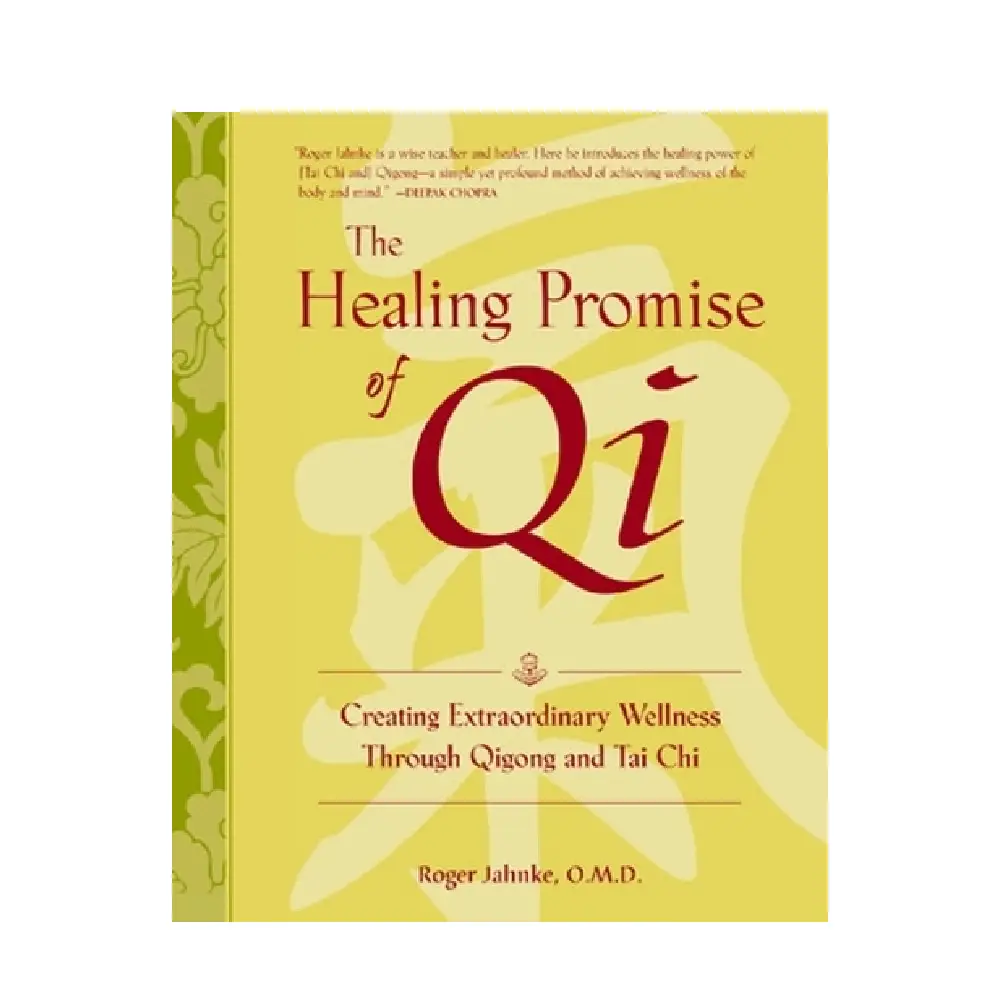

The Healing Promise of Qi: Creating Extraordinary Wellness Through Qigong and Tai Chi
The Healing Promise of Qi: Creating Extraordinary Wellness Through Qigong and Tai Chi by Roger Jahnke is a comprehensive guide to understanding and cultivating vital energy—known as Qi—through the ancient Chinese practices of Qigong and Tai Chi. Blending traditional Chinese medicine (TCM) philosophy with modern scientific research, the book presents a practical and accessible pathway to physical vitality, emotional balance, and spiritual well-being.
Understanding Qi and the Foundations of Healing
In Traditional Chinese Medicine, Qi is described as the essential life force that animates all living beings. According to this philosophy, health arises when Qi flows freely and harmoniously throughout the body, while illness develops when this flow is blocked or deficient. Dr. Jahnke introduces readers to these foundational principles in a way that is clear and relatable, bridging Eastern wisdom with Western biomedical perspectives.
The book explains key TCM concepts such as yin and yang balance, the meridian system, and the interconnection between mind, body, and spirit. Rather than presenting these ideas as abstract theories, the author integrates them into practical health strategies. He emphasizes that cultivating Qi is not limited to illness recovery but is a proactive method for achieving “extraordinary wellness”—a state that goes beyond the absence of disease.
Qigong and Tai Chi as Healing Practices
Central to the book is the exploration of Qigong and Tai Chi as powerful, evidence-informed mind-body practices. Qigong consists of gentle movements, breathing techniques, focused intention, and meditation designed to enhance energy circulation. Tai Chi, often described as “meditation in motion,” is a flowing martial art that shares similar energetic principles.
Dr. Jahnke presents what he calls the “Four Pillars of Practice”:
-
Movement and Posture – Simple, deliberate movements that enhance circulation and strengthen the body.
-
Breathing – Conscious breathing techniques that calm the nervous system and optimize oxygenation.
-
Self-Massage – Gentle tapping and rubbing techniques to stimulate energy points and meridians.
-
Meditation and Intention – Focused awareness to cultivate inner peace and clarity.
These pillars form a structured yet adaptable framework that readers can integrate into daily life. The exercises described are suitable for people of all ages and fitness levels, including those with chronic illness or limited mobility.
Scientific Validation and Modern Research
One of the book’s strengths is its emphasis on scientific validation. Dr. Jahnke references clinical studies demonstrating the benefits of Qigong and Tai Chi in managing chronic pain, hypertension, arthritis, cardiovascular disease, and mental health conditions such as anxiety and depression. He highlights how these practices influence stress hormones, immune function, inflammatory pathways, and neuroplasticity.
By presenting peer-reviewed research alongside traditional teachings, the author builds credibility and reassures skeptical readers. He argues that ancient healing systems anticipated many modern discoveries about mind-body medicine, particularly the role of stress reduction and relaxation in disease prevention.
Empowerment and Self-Care
A recurring theme throughout the book is empowerment. Rather than relying solely on external medical interventions, individuals are encouraged to take an active role in their own healing. The daily practice of Qigong or Tai Chi becomes a form of self-care that fosters resilience and self-awareness.
Dr. Jahnke shares patient stories and real-world examples illustrating how consistent practice can lead to transformative health improvements. These narratives reinforce the idea that healing is a dynamic, ongoing process rather than a one-time event.
Emotional and Spiritual Dimensions
Beyond physical benefits, The Healing Promise of Qi explores the emotional and spiritual aspects of wellness. The practices cultivate mindfulness, gratitude, and inner calm, which can enhance relationships and overall life satisfaction. The integration of breath, movement, and intention fosters a sense of harmony that extends beyond the individual to the surrounding environment.
The author emphasizes that Qi cultivation is not religious but experiential. It invites practitioners to develop direct awareness of their own vitality and interconnectedness.
Practical Application and Accessibility
The book is written in a clear, instructional style that makes complex concepts accessible to beginners while still offering depth for experienced practitioners. Step-by-step descriptions, illustrations, and structured routines enable readers to begin practicing immediately.
Importantly, the exercises require no special equipment and minimal space, making them highly adaptable to home practice. This accessibility aligns with the book’s broader message: extraordinary wellness is available to anyone willing to engage consistently in simple, mindful practices.
Conclusion
The Healing Promise of Qi presents Qigong and Tai Chi as powerful tools for achieving holistic well-being. By integrating ancient Chinese medical philosophy with contemporary scientific research, Roger Jahnke offers a compelling vision of health that is proactive, empowering, and deeply restorative. The book encourages readers to cultivate their own life force through gentle movement, conscious breathing, and mindful intention, ultimately demonstrating that extraordinary wellness is both attainable and sustainable through daily practice.




Reviews
There are no reviews yet