
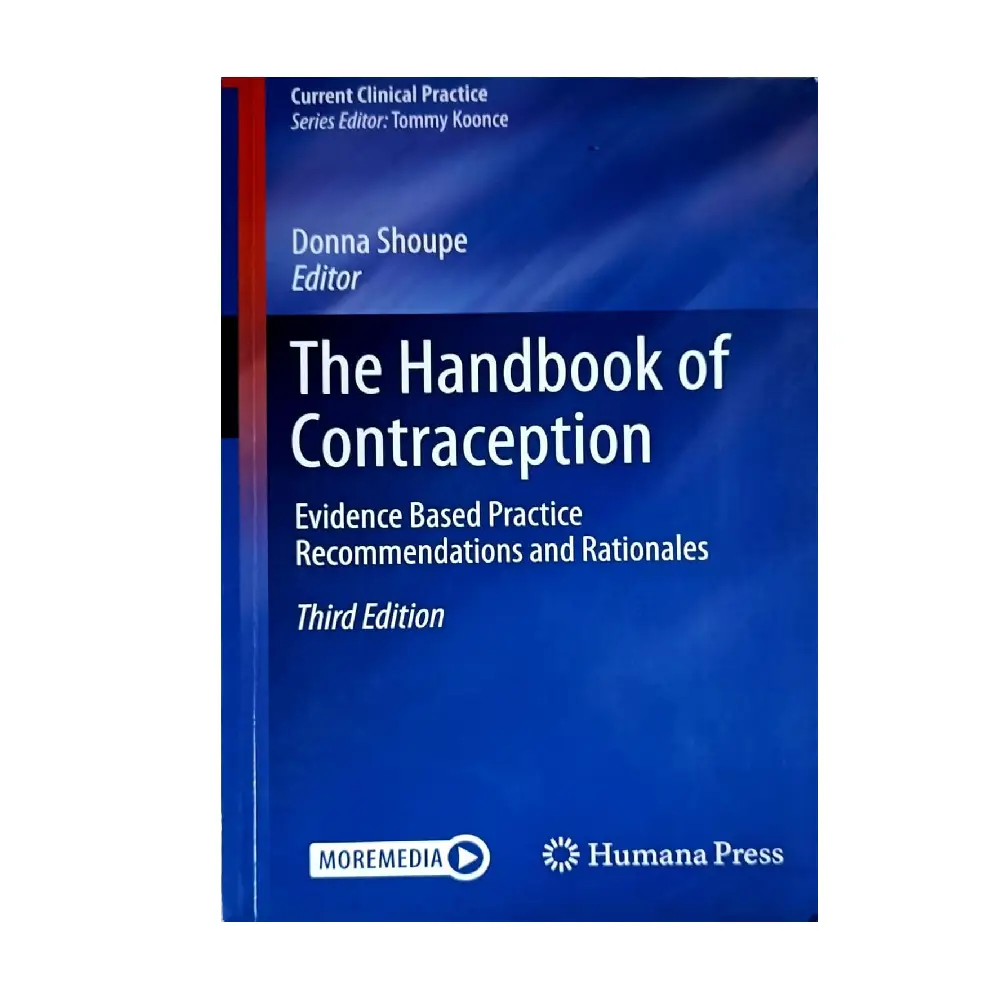

The Handbook of Contraception: Evidence-Based Practice Recommendations and Rationales (3rd Edition)
Contraception is a cornerstone of reproductive health, empowering individuals and couples to control if and when they have children. The Handbook of Contraception (3rd Edition) serves as an authoritative, evidence-based guide for clinicians, providing practical recommendations, scientific rationales, and a framework to deliver high-quality contraceptive care. This handbook bridges the gap between research evidence and day-to-day clinical practice by offering concise guidance rooted in the best available data.
Purpose and Scope
The primary aim of this handbook is to equip healthcare professionals — including obstetricians and gynecologists, family physicians, nurse practitioners, midwives, and public health workers — with reliable, up-to-date recommendations for contraceptive counseling and management. It emphasizes evidence-based practice, clinical decision-making, safety, and individualized care. The book is particularly useful in diverse clinical settings, from specialized reproductive health clinics to primary care offices.
Structure and Content Overview
The handbook is organized in a way that facilitates rapid reference and easy navigation. It begins with foundational concepts and progresses through method-specific recommendations, clinical considerations, and special populations.
Foundations of Contraceptive Practice
The initial chapters lay the groundwork for understanding contraception from both clinical and public health perspectives. These include:
-
Contraceptive Counseling
Effective counseling is central to successful contraceptive use. The handbook advocates for a patient-centered approach — one that respects autonomy, addresses individual preferences, assesses misconceptions, and balances risks and benefits. Shared decision-making tools and structured counseling techniques are emphasized. -
Reproductive Life Planning
Clinicians are encouraged to integrate reproductive life planning into routine care. This means discussing patients’ fertility goals, timing of pregnancies, and how contraception fits into their broader health objectives. -
Epidemiology and Public Health Impact
The book underscores the significance of contraception in reducing unintended pregnancies, maternal morbidity, and socioeconomic disparities.
Contraceptive Methods and Recommendations
The core of the handbook focuses on specific contraceptive methods. Each section provides evidence-based guidelines on mechanism of action, effectiveness, contraindications, side effects, and follow-up care.
-
Barrier Methods
Condoms, diaphragms, and cervical caps are described with practical advice on correct use, counseling on failure rates, and dual protection against sexually transmitted infections (STIs). -
Hormonal Contraceptives
Extensive guidance is offered on combined hormonal contraceptives (CHCs) and progestin-only methods, including pills, patches, and vaginal rings. Key recommendations include:-
Initiation and Timing: Strategies for starting contraception (e.g., Sunday start, quick start protocols).
-
Safety and Screening: Identifying contraindications such as migraine with aura, hypertension, smoking status, and thromboembolic risk.
-
Side Effect Management: Evidence-based approaches to managing breakthrough bleeding, mood changes, and other common complaints.
-
-
Long-Acting Reversible Contraception (LARC)
A major emphasis of the handbook is on LARC methods, namely intrauterine devices (IUDs) and contraceptive implants. These methods offer superior effectiveness and high continuation rates due to minimal user dependency. The handbook provides clear recommendations for:-
Eligibility and Counseling: Who can safely use LARC.
-
Insertion and Removal: Best practices to minimize complications.
-
Adverse Effects: How to manage irregular bleeding and other concerns.
-
-
Emergency Contraception
The handbook highlights the importance of emergency contraceptive options such as levonorgestrel pills, ulipristal acetate, and copper IUDs — with details on effectiveness windows and indications. -
Permanent Sterilization
Both male and female sterilization techniques are reviewed, including laparoscopic tubal ligation and vasectomy. The rationale for ensuring informed consent and confirming permanence is emphasized.
Special Clinical Considerations
The handbook recognizes that contraceptive care must be tailored to individual needs, especially for certain populations:
-
Adolescents: Guidance on confidentiality, developmental counseling, and method suitability.
-
Postpartum and Lactating Women: Recommendations on timing and choice of methods to support healthy lactation without compromising contraceptive effectiveness.
-
Women with Medical Conditions: Customized approaches for those with hypertension, diabetes, cardiovascular disease, obesity, or a history of thromboembolism.
-
Women with HIV: Evidence-based guidance that balances contraceptive needs with antiretroviral therapy interactions.
Implementation in Practice
Beyond clinical recommendations, the handbook stresses quality improvement and accessibility:
-
Reducing Barriers to Access
Strategies such as same-day initiation of contraception, removal of unnecessary medical barriers, and integration of services into primary care and community health programs. -
Cultural Competence
Guidance for respectful, non-judgmental care that acknowledges cultural beliefs, language barriers, and health literacy. -
Monitoring and Follow-Up
Practical advice on when and how to reassess contraceptive suitability, manage complications, and support continued use.
Evidence Base and Rationale
A defining strength of this handbook is its grounding in high-quality research. Each recommendation is supported by evidence drawn from randomized controlled trials, cohort studies, systematic reviews, and consensus guidelines from leading bodies such as the World Health Organization (WHO) and professional medical societies. Rationales explain not only the “what,” but the “why,” enabling clinicians to apply recommendations intelligently and adapt to evolving evidence.
Conclusion
The Handbook of Contraception: Evidence-Based Practice Recommendations and Rationales (3rd Edition) is an indispensable resource for anyone involved in reproductive health care. Its evidence-based approach, practical recommendations, and patient-centered philosophy make it essential for clinicians seeking to provide safe, effective, and respectful contraceptive care. Ultimately, it supports better health outcomes by empowering providers with the knowledge and tools needed to guide patients through informed contraceptive choices.






Reviews
There are no reviews yet