
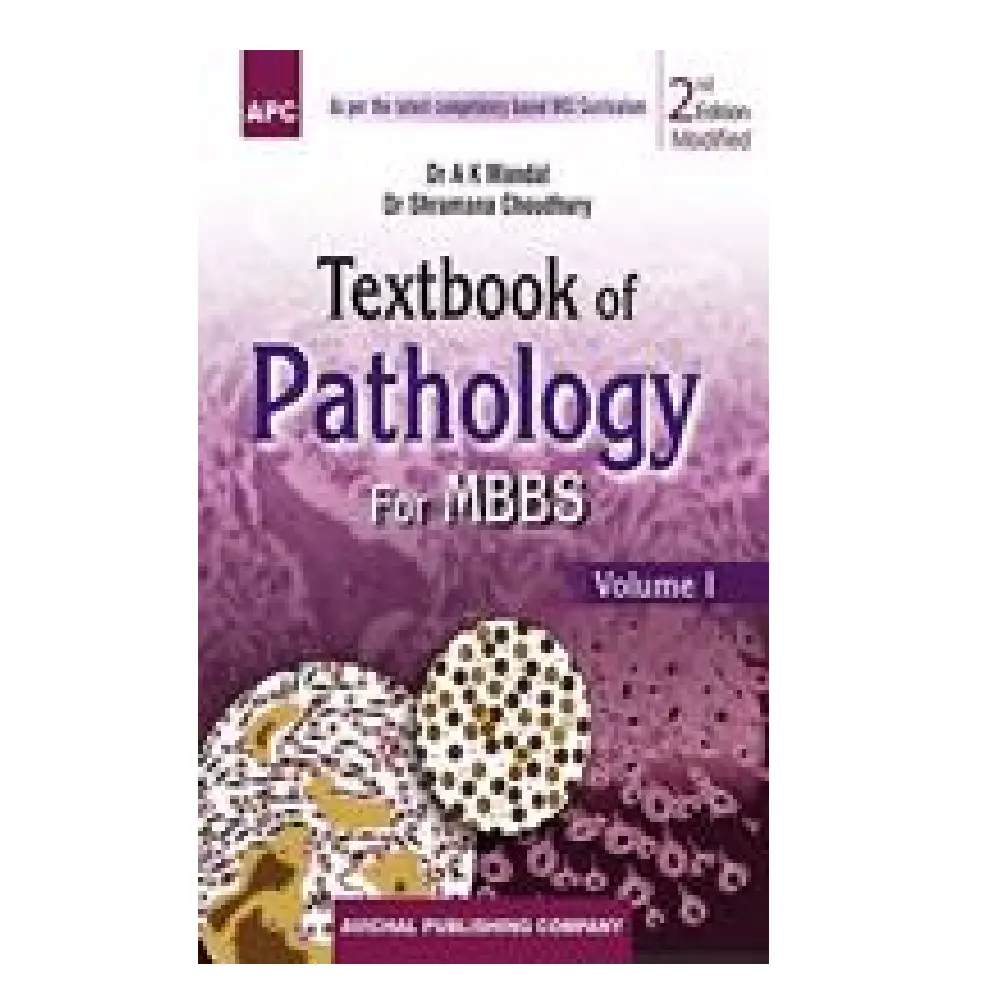
Textbook of Pathology for MBBS (Volumes I and II)
Textbook of Pathology for MBBS (Volumes I and II) is a comprehensive and exam-oriented resource designed specifically for undergraduate medical students. Pathology forms the scientific foundation of clinical medicine, bridging the gap between basic sciences and clinical practice. This two-volume set provides a detailed yet student-friendly understanding of disease mechanisms, morphological changes, and clinical correlations essential for MBBS training.
Overview
The textbook is structured to align with the MBBS curriculum prescribed by medical universities and regulatory bodies. It presents pathology in a systematic and logical manner, integrating etiology, pathogenesis, morphology, clinical features, and laboratory diagnosis. The language is clear, concise, and focused on helping students grasp both conceptual understanding and examination requirements.
Volume I generally covers General Pathology, while Volume II focuses on Systemic Pathology. Together, they provide a complete framework for understanding disease processes in the human body.
Volume I: General Pathology
General Pathology lays the groundwork by explaining the basic mechanisms of disease. It introduces students to fundamental concepts that apply to all organ systems.
Key topics typically include:
-
Cell Injury and Adaptation: Mechanisms of reversible and irreversible injury, necrosis, apoptosis, and cellular responses.
-
Inflammation and Repair: Acute and chronic inflammation, mediators, wound healing, and tissue regeneration.
-
Hemodynamic Disorders: Edema, thrombosis, embolism, infarction, and shock.
-
Immunopathology: Hypersensitivity reactions, autoimmune diseases, and immunodeficiency disorders.
-
Infectious Diseases: Host–pathogen interactions and pathological manifestations.
-
Neoplasia: Tumor biology, carcinogenesis, tumor markers, grading and staging.
-
Environmental and Nutritional Disorders: Effects of toxins, radiation, and nutritional deficiencies.
This volume emphasizes understanding disease mechanisms at cellular and molecular levels, which helps students interpret clinical findings logically.
Volume II: Systemic Pathology
Systemic Pathology applies general principles to specific organ systems. It describes pathological changes affecting each system and correlates them with clinical presentation.
Major systems covered include:
-
Cardiovascular system
-
Respiratory system
-
Gastrointestinal tract and liver
-
Renal and urinary system
-
Hematopoietic and lymphoid system
-
Endocrine system
-
Nervous system
-
Musculoskeletal system
-
Reproductive system
Each chapter discusses common diseases, their causes, pathological features, complications, and laboratory diagnosis. For example, students learn about myocardial infarction, tuberculosis, cirrhosis, glomerulonephritis, leukemia, diabetes mellitus, and brain tumors in a structured format.
Histopathology and Laboratory Correlation
The book places strong emphasis on histopathology, including descriptions of gross specimens and microscopic features. Photomicrographs and diagrams help students recognize important pathological patterns. Laboratory investigations such as hematology tests, cytology, and biopsy interpretation are also explained.
Understanding laboratory techniques enhances students’ ability to correlate pathology findings with clinical practice.
Teaching and Learning Features
The textbook is designed with several student-friendly elements:
-
Clear headings and subheadings for easy navigation
-
Flowcharts and summary tables for quick revision
-
High-quality images of gross and microscopic specimens
-
Highlighted key points and definitions
-
Long-answer, short-answer, and multiple-choice questions for exam preparation
Many editions also incorporate recent advances in molecular pathology, genetics, and immunohistochemistry, reflecting modern developments in medical science.
Clinical Relevance
Pathology is essential for understanding diagnosis, prognosis, and treatment strategies. By studying this textbook, MBBS students develop the ability to:
-
Interpret disease mechanisms
-
Understand complications and disease progression
-
Correlate symptoms with pathological findings
-
Analyze laboratory reports effectively
-
Prepare for clinical postings and university examinations
The strong clinical orientation makes it valuable not only for theoretical exams but also for viva voce and practical assessments.
Target Audience
This book is primarily intended for:
-
MBBS students
-
Medical interns
-
Postgraduate entrance exam aspirants
-
Allied health science students
It is also a helpful reference for early postgraduate trainees seeking to revise fundamental concepts.
Conclusion
Textbook of Pathology for MBBS (Volumes I and II) serves as a complete and reliable guide for mastering pathology at the undergraduate level. By combining foundational theory with system-based application and clinical correlation, it equips students with the essential knowledge required to understand disease processes comprehensively. Its structured presentation, illustrative support, and exam-focused approach make it an indispensable companion throughout medical education.


Reviews
There are no reviews yet